
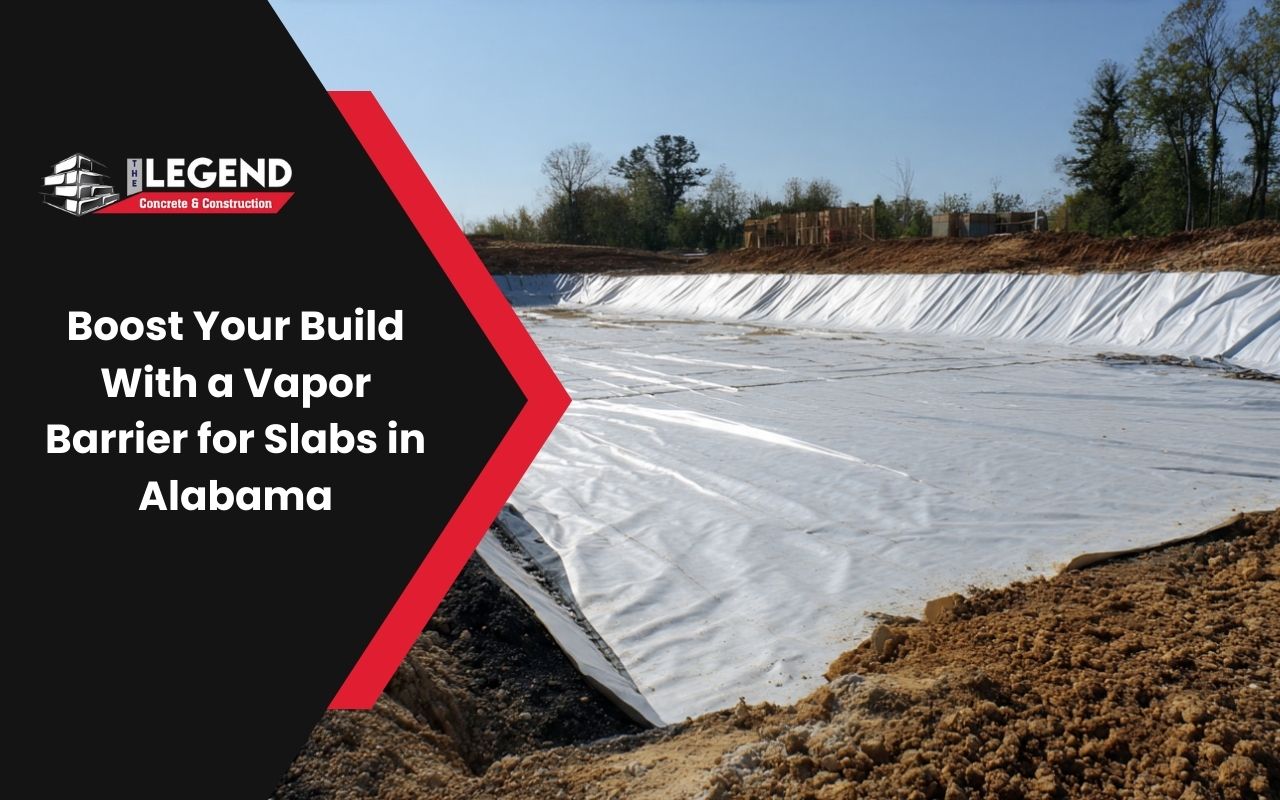
Consider the impact of moisture seeping into concrete slabs beneath your floors. It’s a silent invader. Often, you notice it only after it causes flooring damage and weakens the building. In Alabama, humidity can run high. Because of that, using a vapor barrier for slabs in Alabama is essential.
When choosing a barrier, the 10-mil vs 6-mil debate matters. Understanding the differences can prevent future headaches and help your floors last longer. A thicker, 10-mil barrier may add protection. However, a thinner, 6-mil option may still work. This guide explains both, based on Alabama’s climate.
Why Vapor Barriers Matter in Alabama Builds
Install a quality layer between the ground and your slab. This helps block moisture from rising into living spaces. In Alabama, humidity and frequent rainfall make it easier for water vapor to move upward. As a result, flooring can fail, mold can grow, and repairs can get expensive.
A vapor barrier for slabs in Alabama works like a shield. It reduces dampness and helps keep indoor conditions drier. In addition, it can improve comfort and support better building performance.
- Helps reduce moisture that can trigger mold
- Protects adhesives and finishes under many flooring types
- Supports fewer callbacks by limiting moisture-related failures
- Helps floors and walls stay stable over time
How Moisture Moves Through Concrete Slabs
Protecting a slab starts with knowing how moisture travels. Water in the soil can turn into vapor. Then, it moves upward through small paths inside the concrete. Without a barrier, that vapor can reach your flooring and cause problems.
Too much moisture under a floor can lead to mold. It can also weaken adhesives and cause efflorescence, which looks like a white powder on the slab. Therefore, stopping vapor at the source is a smart move.
- Soil moisture can turn into vapor and rise
- Vapor can pass through concrete and reach finishes
- Moisture can weaken glue, grout, and underlayment
- Damp areas can hurt indoor air quality
How Alabama Humidity Affects Flooring
Resist Alabama’s high humidity to keep floors looking new. Wood and laminate can swell and shrink. Over time, that can cause gaps, buckling, and cupping. Even tile or vinyl may lift or crack if the slab shifts or stays damp.
That’s why moisture control starts below the surface. By limiting moisture from the ground, a vapor barrier for slabs in Alabama helps create a steadier base for flooring. As a result, your materials can last longer and look better.
- Hardwood may cup or buckle with moisture swings
- Laminate can gap or warp over time
- Tile and vinyl may lift when the substrate shifts
- Mold under floors can create odors and health risks
10-mil vs 6-mil: Picking the Right Thickness
Selecting thickness is a key step. A 6-mil sheet offers basic protection and is common in light-duty residential work. Meanwhile, a 10-mil barrier is thicker and tougher. It can resist punctures better and may last longer in harsher conditions.
Even so, the best choice depends on the job. Site conditions, traffic, and flooring type all matter. In other words, it’s not only about thickness. It’s about fit.
When a 6-mil Vapor Barrier Makes Sense
Choose 6-mil when you need solid moisture protection with easier handling. It is light and simple to lay out. That makes it popular for standard residential slabs. Also, its thin profile can help keep slab height and floor transitions consistent.
In addition, it often costs less and installs faster. For homes with light use and stable soil, 6-mil can be a practical option.
When a 10-mil Vapor Barrier Is the Better Call
Select 10-mil when durability matters most. The thicker sheet is tougher against tears during installation and pours. If the base is rough, or if heavy equipment is on site, 10-mil can reduce risk.
It can also be a better fit for commercial spaces or high-traffic areas. In Alabama, where soil and moisture conditions can vary, that extra strength can add peace of mind.
How to Decide: Key Factors to Review
Assess your project before you choose. Start with soil type, moisture conditions, and expected traffic. For example, rough subgrades or heavier loads often push you toward thicker material. Also consider the flooring you plan to install.
If your finish is moisture-sensitive, lean toward stronger protection. A vapor barrier for slabs in Alabama should match your site needs, not just your budget.
- Soil type and moisture levels on the site
- Load needs, including storage racks or machinery
- Flooring type, especially wood, vinyl, or engineered planks
- Installation risk, including punctures during rebar placement
Installation Tips That Help Vapor Barriers Work Better
Start with a clean, level base. Remove sharp rocks and debris that could puncture the sheet. Next, overlap seams by at least 6 inches and seal them with compatible tape. Also, extend the barrier slightly up footings and walls for better coverage.
Handle rolls carefully. If you find a tear, patch it right away. Then, keep the surface smooth before placing steel or pouring concrete. Because of that, the barrier stays continuous and dependable.
Keeping Your Vapor Barrier Effective Over Time
Protect the sheet before the pour. Avoid dragging tools across it. Limit foot traffic when possible. After the slab cures, manage indoor humidity so moisture pressure stays controlled. Dehumidifiers and HVAC can help support long-term results.
Before flooring goes down, check for damp spots or discoloration. If something looks off, investigate early. Small fixes now can prevent bigger flooring problems later.
Frequently Asked Questions
Do I really need a vapor barrier for slabs in Alabama?
Yes, in most cases. Alabama’s humidity and rainfall increase the risk of moisture moving up through slabs. A barrier helps protect flooring and indoor air quality.
Is 10-mil always better than 6-mil?
Not always. 10-mil is tougher, but 6-mil can work well for standard residential slabs with stable site conditions. The best choice depends on your project needs.
What flooring is most affected by moisture?
Wood, laminate, and many vinyl products are more sensitive. Moisture can weaken adhesives and cause warping, lifting, or gaps over time.
How do I reduce punctures during installation?
Clean the subgrade, remove sharp debris, and keep the sheet flat. Patch holes right away. Also, place reinforcement carefully to avoid tears.
Can a vapor barrier help with mold and odors?
It can help reduce the damp conditions that support mold growth. While it is not the only factor, it is a strong first step in moisture control.
Build With Confidence and Protect Your Floors
Choosing between 6-mil and 10-mil comes down to site conditions, flooring goals, and budget. A 6-mil sheet can be reliable for many homes. However, a 10-mil barrier can offer stronger defense for tougher sites or heavier use.
If you’re planning a slab pour, it helps to review your foundation details first. You can also explore your options for local work scopes and timelines. For deeper guidance, see foundation and footer basics for residential slabs. If you need a wider view of what’s available, review concrete and construction services available. For local project support, check construction services in Dothan, Alabama.
When you’re ready to plan your slab protection, reach out through the contact page to discuss the right vapor barrier for your build.