
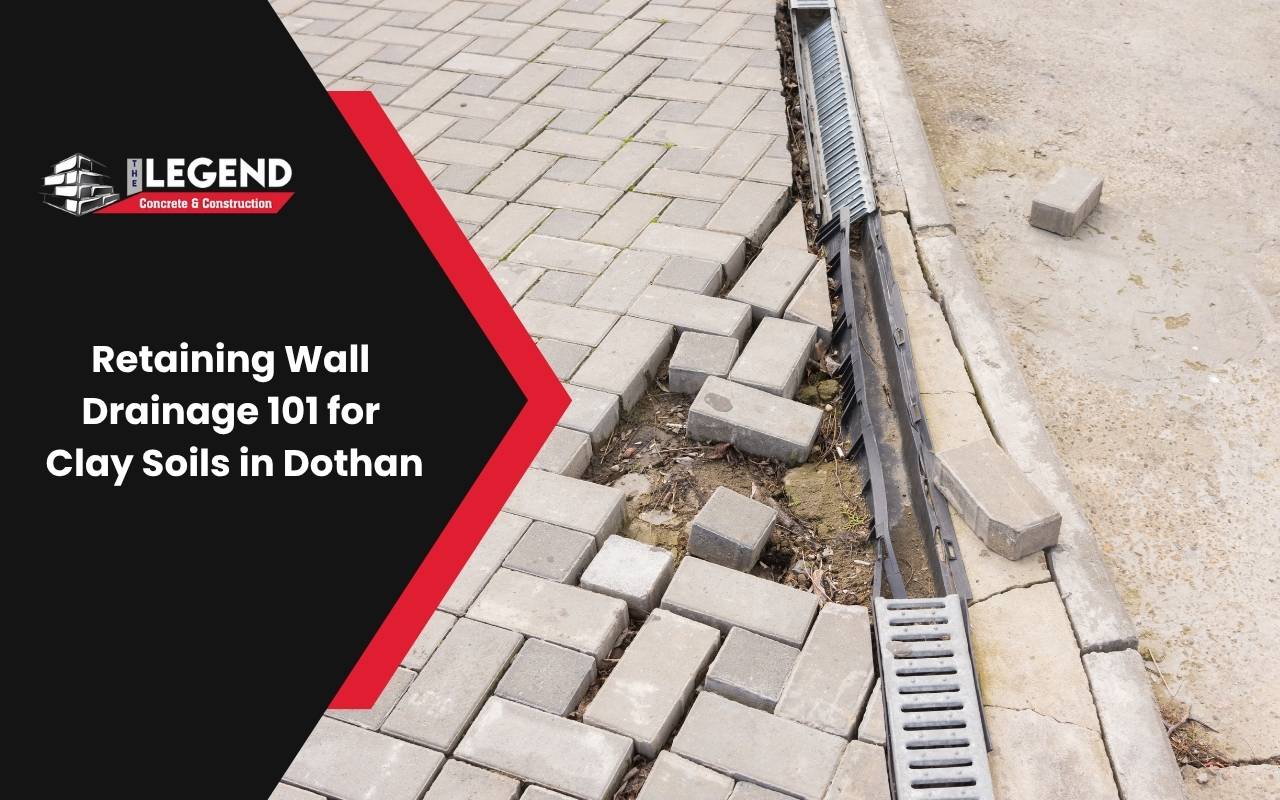
Understand the challenges that clay soils pose when constructing strong and reliable retaining walls in Dothan. Clay tends to retain water, which can lead to pressure buildup and instability. Without effective drainage, this pressure can cause cracks or even wall failure. When building retaining walls in such conditions, ensuring proper drainage is essential for safety and longevity. Learn the importance of including features such as weep holes and gravel backfill in your design. These elements reduce pressure and allow water to escape naturally. The use of geogrid provides added stability. By mastering the basics of retaining wall drainage Dothan homeowners need, you can prevent costly issues and ensure long-term success.
Understanding Clay Soils in Dothan
Clay soils in Dothan are dense and prone to holding water. When rain falls, the soil swells, increasing pressure on retaining walls. As it dries, it contracts and may create gaps behind the wall. This constant expansion and shrinkage weakens the wall foundation. Clay’s fine particles slow down drainage, causing moisture buildup. This leads to hydrostatic pressure that pushes outward, risking failure. Understanding these soil traits helps you plan effective retaining wall drainage Dothan projects depend on.
Importance of Proper Drainage in Retaining Walls
- Proper drainage reduces hydrostatic pressure behind the wall.
- It prevents bulging, cracking, and structural failure.
- It channels water away efficiently.
- It extends the wall’s lifespan and reduces future repair costs.
Installing drainage features early saves money and maintains stability. In Dothan’s clay-heavy areas, combining geogrid layers with gravel backfill ensures efficient water management and structural strength.
Common Challenges Faced Without Adequate Drainage
- Hydrostatic pressure builds when water cannot escape, pushing walls outward.
- Soil erosion occurs as standing water removes fine particles.
- Frozen ground expands, worsening cracks during cold seasons.
Ignoring proper drainage can weaken your wall. Without solutions like weep holes, gravel backfill, or geogrid, water accumulation causes severe long-term damage. Each of these features is vital for efficient retaining wall drainage Dothan structures require.
Incorporating Weep Holes for Effective Drainage
Weep holes allow trapped water to escape, reducing hydrostatic pressure. Placed at the base, they prevent moisture buildup behind the wall. Proper spacing ensures consistent drainage and wall protection. Each weep hole connects to a gravel or pipe channel guiding water safely away. Including this system improves retaining wall drainage Dothan homeowners rely on for durability.
Utilizing Gravel Backfill: Benefits and Considerations
Gravel backfill creates a porous drainage layer behind the wall. It lets water flow freely toward weep holes and prevents clogging from clay particles. Properly graded gravel ensures steady drainage and reduces wall pressure.
- Choose gravel between ¾ and 1½ inches in size.
- Use filter fabric to prevent clay from mixing with gravel.
- Compact each layer gently to maintain porosity.
This setup promotes effective retaining wall drainage Dothan residents can count on.
Strengthening Retaining Walls with Geogrid
Geogrid is a synthetic mesh placed between soil layers to reinforce the structure. It evenly distributes weight and enhances wall stability. In Dothan’s clay soils, geogrid reduces the risk of shifting and collapse. Layering geogrid behind each wall course adds resilience. When paired with gravel backfill and weep holes, it creates a durable retaining wall system.
Best Practices for Drainage Maintenance
Regular inspection keeps drainage systems effective. Check weep holes for blockages and clear them using a small rod. Monitor gravel backfill for clogs or settling, and add fresh material as needed. Look for cracks or tilts that may indicate drainage issues. Remove plant roots near weep holes to prevent obstruction. Consistent maintenance ensures lasting retaining wall drainage Dothan property owners can depend on.
Case Studies: Successful Retaining Wall Projects in Clay Soils
One Dothan homeowner faced wall bulging after rain. Adding weep holes, connecting pipes, and a gravel backfill restored stability. Later, a geogrid layer reinforced the wall, preventing future issues. Another project in a local park suffered erosion. By replacing soil with coarse gravel and installing filter fabric and geogrid, the team stabilized the wall and improved water flow. These examples highlight the value of strong retaining wall drainage Dothan-wide.
Essential Tools and Materials for Drainage Installation
- Shovel for digging trenches.
- Level to ensure slope toward outlets.
- Rod or auger for clearing weep holes.
- Filter fabric, gravel, drainage pipe, and geogrid.
Having tools and materials ready ensures a smoother installation process. Each component plays a part in effective retaining wall drainage Dothan contractors trust.
FAQs
What makes clay soil challenging for retaining wall construction?
Clay soils retain water and expand, increasing pressure behind the wall. Without drainage, they cause cracking and movement.
How often should I inspect my retaining wall’s drainage system?
Inspect your drainage system every few months, especially after heavy rain, to clear any blockages or sediment buildup.
Why are weep holes essential for retaining walls?
Weep holes release trapped water, lowering hydrostatic pressure. They help maintain wall integrity in wet soil conditions.
Can gravel backfill improve wall stability?
Yes. Gravel backfill enhances water flow and prevents clogging. It supports the wall’s foundation and reduces soil pressure.
Should I use geogrid in clay soil conditions?
Yes. Geogrid distributes soil load evenly and strengthens the structure. It’s ideal for Dothan’s clay-heavy environments.
Ensuring Longevity and Stability in Retaining Wall Construction
By focusing on proper drainage through weep holes, gravel backfill, and geogrid, you can manage Dothan’s clay soil challenges effectively. Preventing hydrostatic pressure and erosion ensures long-term stability. For professional installation or assistance, reach out through our contact page. You can also explore our concrete services to learn more about expert retaining wall solutions designed for Dothan’s unique soil conditions.