
Monolithic Slab vs Stem Wall is one of the biggest choices under your home. Although it feels hidden, it shapes safety and comfort. Therefore, it helps to compare speed, stability, and future access.
Also, small site details can change the outcome. With the right plan, you protect structure and budget for years.
Monolithic Slab vs Stem Wall: What Each One Is
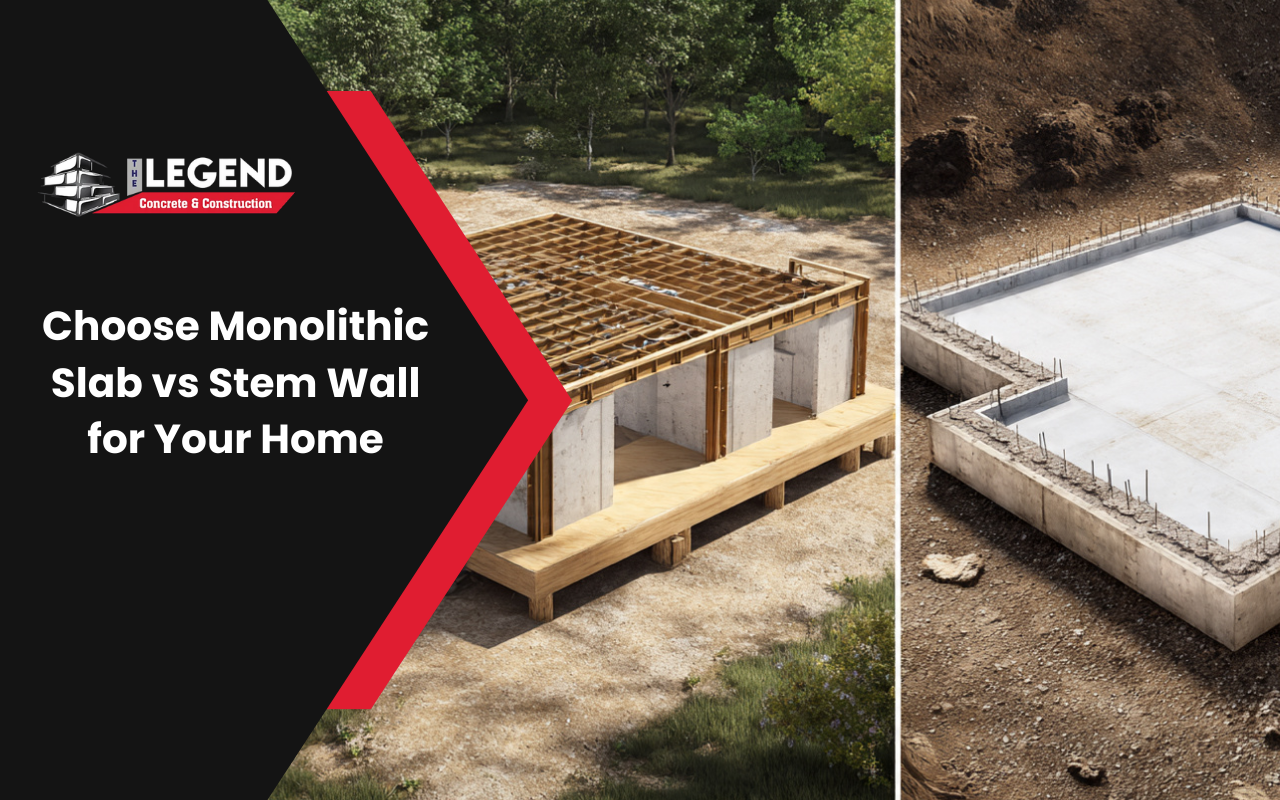
A monolithic slab is poured in one continuous step, so the slab and edges act together. Meanwhile, a stem wall uses a footing plus a short wall that lifts the home above grade. As a result, it often creates a crawl space and more access for repairs.
Advantages of a Monolithic Slab Foundation
A monolithic slab can be a simple, fast path to a finished foundation. Because it is a single pour, it can reduce jobsite steps and coordination. In addition, the base spreads loads evenly across the footprint.
- Fewer construction stages, so scheduling can be easier.
- A single mass with fewer joints where cracks may start.
- Shallower excavation tied to typical Footing depth needs for many sites.
Disadvantages of a Monolithic Slab Foundation
However, a slab can be less forgiving when site conditions are difficult. If the ground shifts, the slab may crack or settle unevenly. Also, plumbing and conduit inside the concrete can be harder to change later.
In colder regions, frost protection can add complexity. Therefore, local code and engineering should guide the final design.
Advantages of a Stem Wall Foundation
A stem wall can support homes on a wider mix of sites. Since it raises the structure, it can create a crawl space for access to systems. Moreover, the wall can help manage moisture and protect framing when water collects near grade.
- Access to plumbing, wiring, and ductwork for future changes.
- Raised floor height that can help with drainage planning.
- Design flexibility for sloped lots and varied grade lines.
Disadvantages of a Stem Wall Foundation
On the other hand, stem walls usually take more time and coordination. Because there are multiple stages, formwork and inspection points increase. In addition, crawl spaces need good ventilation and moisture control to stay healthy over time.
- More steps, which can stretch the build timeline.
- Extra detailing for waterproofing, drainage, and pest control.
- More site work and layout precision across the perimeter.
Cost Considerations
Foundation cost often tracks complexity. A slab can start lower because it is a single pour with less formwork. Still, special site prep can shift the cost range, especially when grading, compaction, or insulation needs increase.
A stem wall may start higher, yet it can pay back through easier access to future repairs. Therefore, look beyond day-one spend when planning the full build.
Soil Stability and Site Risk
Soils matter as much as the concrete design. For example, firm, well-draining soils can suit a slab. In contrast, expansive clays or mixed fill can push homeowners toward deeper support. In the Monolithic Slab vs Stem Wall decision, the biggest red flag is unexpected soil movement, so testing and engineering are essential.
Before you choose a layout, review the basics of footers and loads using Residential foundation footer basics.
Durability and Maintenance Over Time
A slab can perform for decades when reinforced and cured well. Since it is one mass, it has fewer seams. Meanwhile, a stem wall can shine when you need periodic access and inspections. Therefore, the “best” option depends on how your site behaves and how you plan to maintain the home.
Climate Considerations
Climate can tilt Monolithic Slab vs Stem Wall in a clear direction. In mild areas, slabs often work well. However, freeze-thaw regions can require deeper protection and more detailing. Also, wetter climates may benefit from raised systems and careful drainage planning.
- Warm climates: slabs can help stabilize indoor temperature swings.
- Cold climates: footings often need to sit below local frost depth.
- Rainy sites: raised designs can help keep living areas drier.
Frequently Asked Questions
Which foundation is faster to build?
Usually, a monolithic slab is faster because it uses one main pour. However, site prep can still add time.
Which option is easier to repair later?
A stem wall can be easier to maintain because a crawl space offers access. In contrast, slab-embedded lines are harder to reach.
Can I use a slab for a home addition?
Yes, many additions use slabs when the site supports it. For related planning ideas, see home addition concrete slab guidance.
How do I know what my site needs?
Start with soil testing and local code rules. Then, match the design to drainage, grade, and structural loads.
Who should I call to plan the work?
Work with a contractor who can align design, permits, and schedule. To see broader options, explore construction services in Dothan, AL.
Making the Best Choice for Your Home
To choose Monolithic Slab vs Stem Wall, line up your soil report, climate risks, and long-term plans. A slab can be simple and efficient, while a stem wall can add access and flexibility. Therefore, the smartest path is the one that fits your lot and your lifestyle.
If you want help comparing options for your build, share your site details through contact Legend Concrete Construction.