
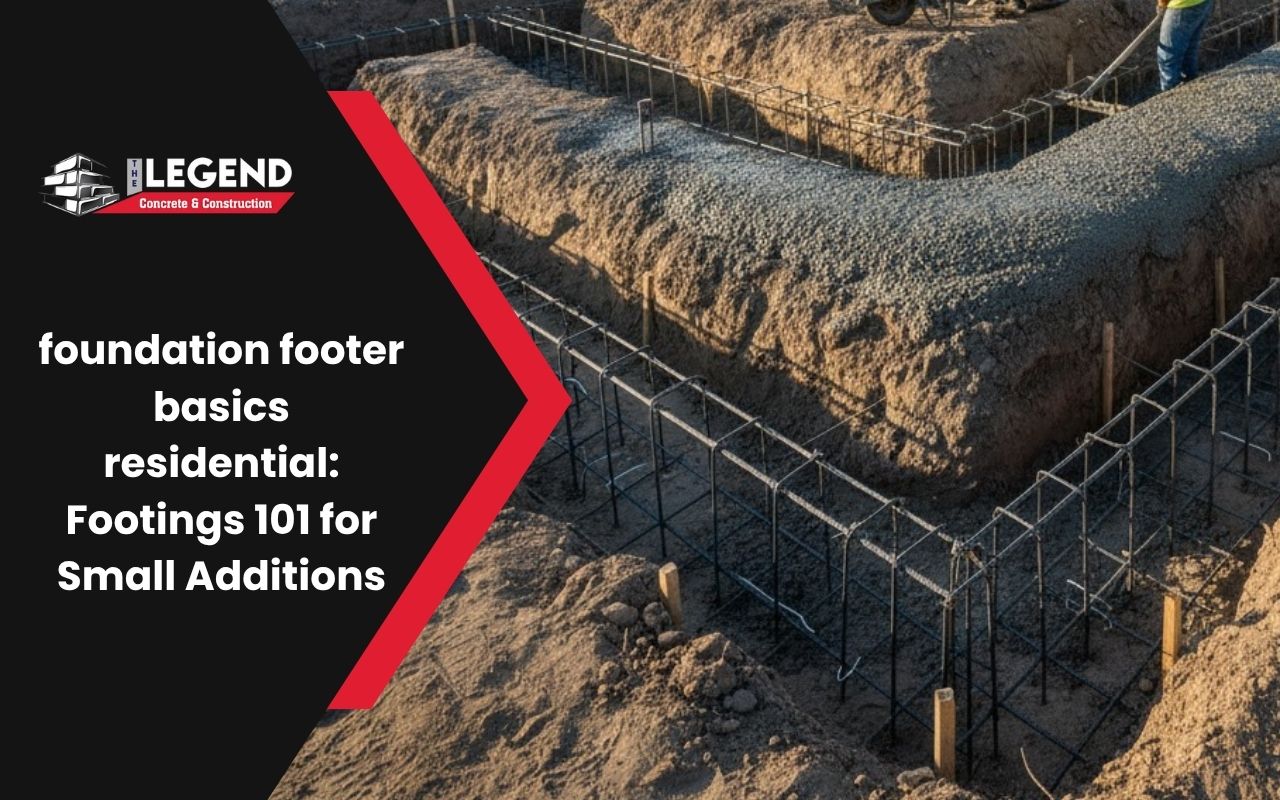
Planning a small home addition starts with solid support in the ground. That’s why, before you frame a single wall, it helps to understand what’s happening below the surface. Here we break down foundation footer basics residential so you understand what’s under your new space. In this guide, you’ll learn how proper footings manage loads, resist movement, and meet local codes before you pour the first batch of concrete. With the right footing design, your project stays level, durable, and safe from the start.
What Are Foundation Footings?
Simply put, footings spread loads into stable soil. As a result, they keep additions from settling or cracking. Mastering foundation footer basics residential, therefore, protects your investment.
Typically, these supports sit below grade. They can be continuous strips or isolated pads. Even tiny sunrooms depend on foundation footer basics residential for long-term stability.
Why Footing Depth Matters
Correct footing depth prevents movement over time. By contrast, shallow footings heave or fail. Therefore, always tie footing depth to undisturbed soil and local codes.
- First, reach firm, undisturbed soil layers.
- Next, account for frost line (AL) to stop heave.
- Finally, confirm code minimums for additions.
In short, follow guidance for footing depth; rebar; frost line (AL). When you align these choices with foundation footer basics residential, you ensure long-term performance.
Materials: Concrete, Gravel, and Rebar
To begin with, concrete provides compressive strength. A gravel base, meanwhile, improves drainage. In addition, rebar boosts tensile strength and limits cracking.
- Use ready-mix concrete with consistent slump for predictable results.
- Then add compacted gravel for drainage and leveling.
- Finally, place rebar correctly to create a strong composite.
When combined properly, these materials support foundation footer basics residential across varied soils and small additions.
Factors That Shape Your Footing Design
Several factors influence footing design. Soil capacity, climate, and structural loads all drive dimensions. In weaker areas, poor soils may need wider footings to spread weight.
- Start by verifying bearing capacity with testing.
- Also consider groundwater and site drainage paths.
- Additionally, watch for nearby trees and root zones.
When you thoughtfully integrate these factors with foundation footer basics residential, you create a resilient layout instead of a risky one.
Rebar Placement Tips
For best results, center rebar within concrete. Always maintain required cover to prevent corrosion. Then tie bars at prescribed intervals.
In doing so, you build a rigid cage that resists bending. This simple step keeps rebar practice aligned with foundation footer basics residential.
Frost Line (AL): Regional Considerations
Alabama frost depths are modest; however, freeze cycles still matter. To avoid heave, extend footings below the active zone.
Furthermore, improve grading and drainage. Keep water away from footings whenever possible. Together, these actions support foundation footer basics residential in mild climates.
Common Mistakes to Avoid
- Skipping soil tests and relying on guesswork instead of data.
- Using poor form bracing and rushing pours.
- Loading green concrete before proper curing.
- Ignoring code rules for footing depth and rebar.
By avoiding these errors, you honor foundation footer basics residential principles and reduce the risk of costly repairs.
Pro Tips for a Stable Build
- First, review plans with an engineer.
- Then order a little extra concrete to avoid shortages.
- Consolidate mixes to remove air pockets before finishing.
- Also moist cure for at least seven days.
- Finally, schedule inspections at each key stage.
Together, these practices strengthen outcomes and reflect foundation footer basics residential best standards.
Service Options and Next Steps
If you’d like expert help, explore professional placement, forming, and reinforcement. You can view our Concrete Services to plan your addition.
Ready to start? Then Contact Legend Concrete Construction for a site review and estimate.
Frequently Asked Questions
How deep should residential footings be?
Depth should reach undisturbed soil and meet local codes. In addition, consider frost line (AL) to prevent seasonal movement.
Do I always need rebar in small footings?
In most cases, yes. Most residential footings benefit from rebar because it adds tensile strength and reduces cracking risks.
What concrete mix is best for footings?
Use code-compliant mixes with adequate strength. Also maintain consistent slump for proper placement and consolidation.
Can poor drainage damage footings?
Yes. Standing water weakens soils and invites heave. Therefore, install grading and drains to divert water.
When can I build on new footings?
Build only after required inspections and initial curing. Above all, follow your engineer’s timeline and concrete strength targets.
Get a Quote or Ask an Expert
If you still have questions, discuss foundation footer basics residential with a specialist today. To take the next step, start with our Concrete Services or Contact Legend Concrete Construction.