
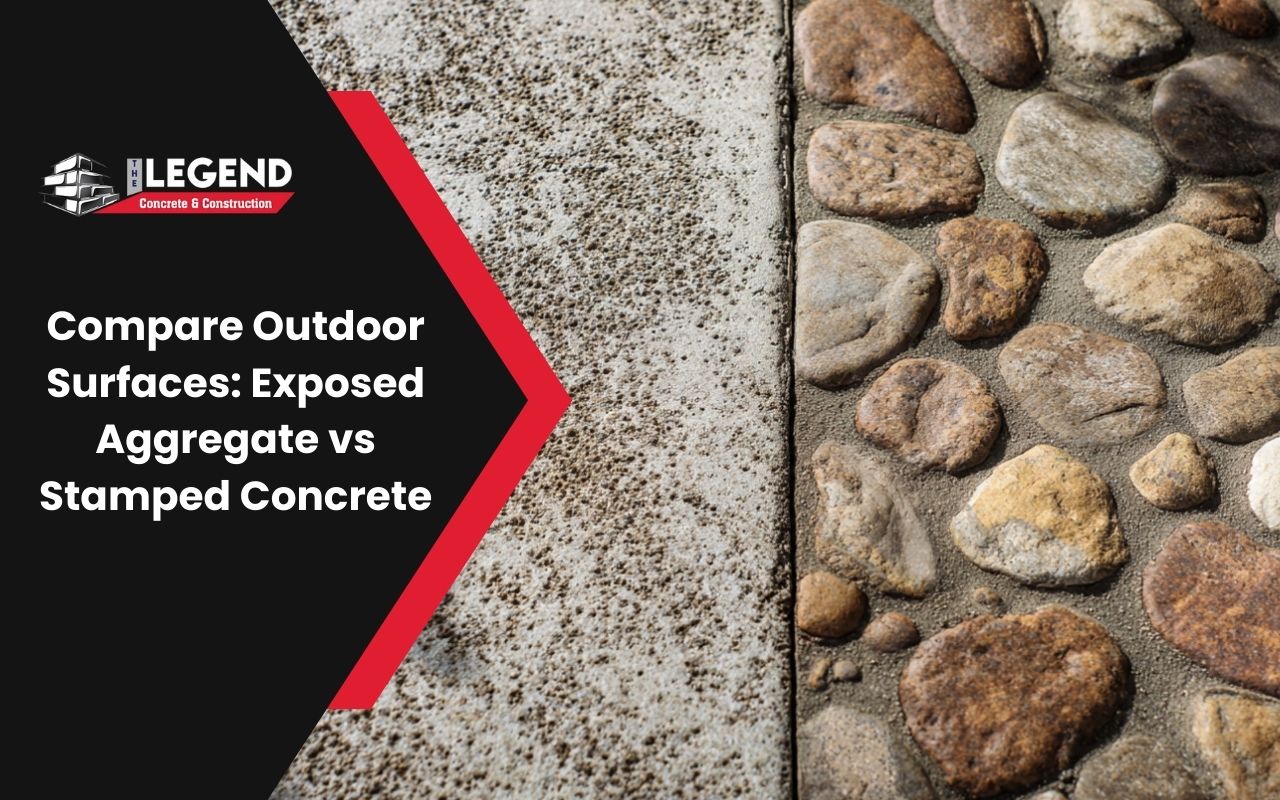
Exposed Aggregate vs Stamped Concrete is a smart comparison when you want beauty and strength outdoors. Decorative concrete can upgrade patios, driveways, and paths while keeping daily use in mind. However, the best choice depends on your style, traction needs, and reseal cycles.
For example, you may want a garden path with better grip in wet weather. Or, you may prefer a driveway that looks like cobblestone with less effort. By comparing Exposed Aggregate vs Stamped Concrete, you can match design, durability, and safety to your space.
Visual Style and Design Options
First, think about the look you want in your yard. Exposed aggregate shows stones and pebbles inside the concrete, so it feels natural and textured. As a result, it often pairs well with garden beds and rock borders. Decorative concrete like this can look rustic, relaxed, and organic.
Stamped concrete, on the other hand, copies brick, slate, or wood patterns. Workers press designs into fresh concrete, so the surface can look like pavers or tile. Also, color and sealer can add a soft shine that keeps the finish looking fresh longer. When weighing Exposed Aggregate vs Stamped Concrete, one feels rugged while the other looks more exact and patterned.
- Exposed aggregate: natural texture with visible stones
- Stamped concrete: repeated patterns that mimic classic materials
- Both: strong decorative concrete options for outdoor upgrades
Installation Steps and Project Complexity
Next, consider how each surface is installed. Both need a solid base, often compacted sand or crushed stone. For exposed aggregate, the crew pours concrete, smooths it, and then washes away the top layer. This reveals the stones, yet timing must be right to avoid loose rocks.
Stamped concrete needs more steps and tighter timing. After the pour, workers add color and a release layer, then press stamping mats into the wet concrete. Therefore, this method takes extra skill to keep pattern lines even. In Exposed Aggregate vs Stamped Concrete, stamped work usually demands more labor and tools.
- Prepare a stable, compacted base
- Pour and level concrete evenly
- Reveal stones (exposed) or press patterns (stamped)
Traction and Safety in Wet Areas
Traction matters most on walkways, slopes, and pool areas. Exposed aggregate has a rough surface, so it offers steady grip when wet. Also, water can move around the stones more easily, which helps reduce slip risk. Because of this, many homeowners like it for driveways and paths.
Stamped concrete can feel smoother, especially after sealing. Still, contractors can improve traction by adding fine sand or anti-slip additives to the sealer. Even so, Exposed Aggregate vs Stamped Concrete often favors exposed aggregate for natural grip when safety is the top goal.
- Exposed aggregate: strong natural traction
- Stamped concrete: traction can improve with additives
- Best practice: plan slip resistance before sealing
Customization and Decorative Concrete Possibilities
Both surfaces offer design flexibility, yet they do it in different ways. With exposed aggregate, you can choose stone size, color, and blend. For instance, you may pick quartz or granite chips for a brighter look, or smaller pebbles for a softer finish. This makes each slab feel one of a kind.
Stamped concrete offers more pattern variety. You can copy cobblestone, wood planks, slate, or tile effects. Plus, you can layer colors with stains and hardeners for richer depth. While Exposed Aggregate vs Stamped Concrete gives stamped concrete more pattern choices, exposed aggregate stands out for its handcrafted style.
Durability and Long-Term Performance
Both options are strong when the base and pour are done well. Exposed aggregate hides small chips better because its surface already has varied color and texture. Also, the embedded stones can help the wear look more even over time, which keeps the surface looking consistent.
Stamped concrete relies more on its surface finish to keep color and detail sharp. As the sealer wears, the look can fade in spots. However, the concrete below still stays solid. In Exposed Aggregate vs Stamped Concrete, both handle normal traffic well, yet stamped concrete may need more finish care.
Maintenance, Reseal Cycles, and Upkeep Planning
Cleaning is similar for both surfaces. Usually, mild soap and water removes dirt and mildew. Still, reseal cycles matter when you want the surface to stay protected and attractive. Exposed aggregate often needs reseal cycles every two to three years to keep stones vibrant and limit moisture issues.
Stamped concrete often needs resealing around every two years to maintain its color and shine. Over time, those reseal cycles become a key part of ownership planning. If you want help choosing a finish that matches your goals, explore your options for outdoor concrete finishes.
Eco-Friendly Factors and Drainage Benefits
Exposed aggregate can reduce the amount of cement needed for visual impact because the stone does part of the design work. Also, the textured surface and joints can help manage water flow across outdoor areas. As a result, it may support better drainage design than very smooth finishes.
Stamped concrete can include recycled aggregate, and some sealers are available in low-VOC options. Therefore, both can support greener choices if you pick materials carefully. For more ideas on sustainable design and decorative options, review decorative concrete.
Cost Factors Without the Numbers
Costs depend on labor, finish steps, and long-term upkeep. Exposed aggregate can be simpler to install, so it may reduce labor time. Stamped concrete needs pattern mats, color layers, and careful alignment, so crews often spend more time on the finish. Because of that, stamped work can be more demanding.
However, the best value also includes future upkeep. Since reseal cycles are part of both systems, planning for maintenance helps protect your investment. If you are comparing surfaces for a patio or driveway, explore what fits your project goals in stamped concrete.
Climate Fit and Year-Round Use
Local weather affects how your surface looks and performs. Exposed aggregate can handle many conditions because water can move away from the surface more easily. In sunny areas, stone can also feel cooler underfoot than darker sealed finishes. Therefore, it can be a practical choice for daily comfort.
Stamped concrete works well too, yet harsh climates may require better sealing habits. In cold regions, sealing and winter care help limit water entry and surface damage. In hot regions, lighter colors can reduce heat buildup. With Exposed Aggregate vs Stamped Concrete, matching the finish to your climate improves long-term results.
Frequently Asked Questions
Which option has better grip for wet walkways?
Exposed aggregate usually offers better traction because the stones create a rough surface. Therefore, it is often preferred near pools and on slopes.
Do both surfaces need resealing?
Yes. Both benefit from reseal cycles to protect the surface and keep the finish looking clean. Still, stamped concrete may need resealing a bit more often.
Which looks more like brick or stone?
Stamped concrete is designed to mimic brick, slate, cobblestone, and other patterns. As a result, it is often chosen for a classic, uniform look.
Is exposed aggregate considered decorative concrete?
Yes. Exposed aggregate is a decorative concrete finish because it changes the look and texture of plain concrete by revealing stones.
Which is better for resale cycles and curb appeal?
Both can boost curb appeal, which may support resale cycles. Choose the style that fits your neighborhood look and your upkeep preferences.
Choosing the Right Surface for Your Outdoor Space
Exposed Aggregate vs Stamped Concrete comes down to the balance between style, traction, and upkeep. Exposed aggregate offers natural texture, dependable grip, and a simpler finish. Stamped concrete delivers more pattern choice and a polished look that can mimic premium materials.
To pick the best match, weigh decorative concrete style, reseal cycles, and how your space is used year-round. If you want expert guidance for your project, reach out through the contact page and discuss the best surface for your patio, driveway, or walkway.