
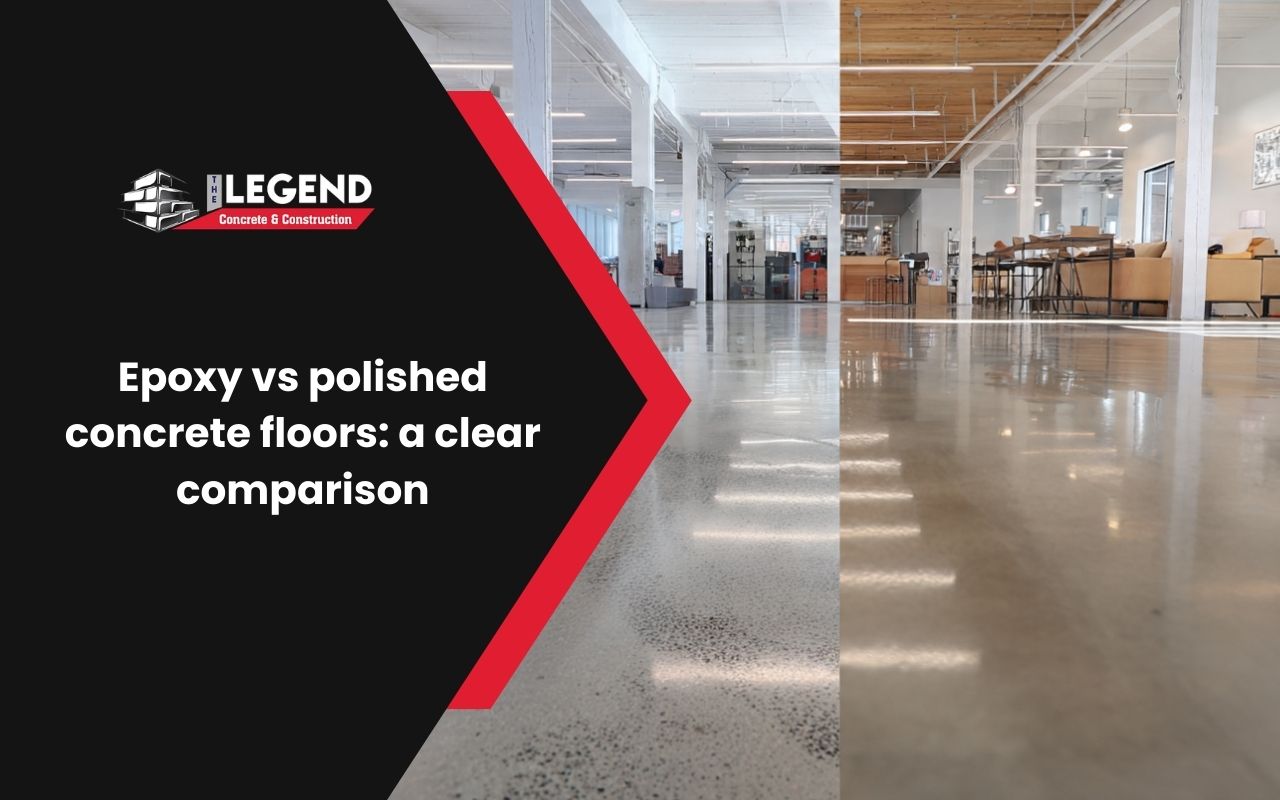
Choosing the right flooring can feel like a big decision. However, once you compare epoxy vs polished concrete floors, the differences become clearer.
You will notice changes in slip resistance, maintenance, and reflectance. Therefore, this guide breaks down the basics in simple terms. Epoxy often suits tough work areas, while polished concrete can fit modern spaces with easy care.
Key differences at a glance
Before you decide, it helps to compare epoxy vs polished concrete floors by what matters daily. In other words, focus on safety, cleaning time, and how bright the room feels.
- Slip resistance: traction needs and moisture risks
- Maintenance: cleaning habits and long-term touch-ups
- Reflectance: light bounce and overall style
- Durability: impacts, wear, and surface condition
Slip resistance and safety
Safety is often the first concern. So, evaluating slip resistance in epoxy vs polished concrete floors is essential for busy spaces.
Epoxy can include grit blends that add more grip. As a result, you can choose a smoother feel or a more textured finish. This flexibility helps in garages, shops, and loading areas.
Polished concrete gets its shine from sanding and hardening the surface. However, it can feel slick when water sits on top. Still, a surface treatment can improve traction while keeping a clean look.
- Choose added texture when spills are common.
- Use entry mats to reduce moisture spread.
- Clean oils quickly to keep traction steady.
Slip resistance should match the space. Therefore, pick the finish that fits your daily traffic and spill risk.
Maintenance and cleaning needs
Time matters, especially for large areas. So, comparing maintenance in epoxy vs polished concrete floors helps you choose a simpler routine.
Epoxy usually needs sweeping and a damp mop with mild soap. In addition, spills often wipe up fast, and many chemicals leave less marking. Still, small chips should be fixed early to avoid larger wear.
Polished concrete also stays simple with dust mops and gentle cleaners. However, deeper scratches may need another polishing pass to bring back shine. Even so, both options can stay neat with consistent habits.
- Sweep often to reduce grit and scuffs.
- Use gentle cleaners instead of harsh acids.
- Place pads under heavy furniture legs.
Reflectance and overall look
Light can change how a room feels. Therefore, reflectance is a major factor when weighing epoxy vs polished concrete floors.
Epoxy can look glossy and bright. As a result, it can help bounce light and make a space feel larger. You can also add color and decorative chips for a custom style.
Polished concrete shows a natural, modern look. Meanwhile, its shine can range from soft to high gloss. Even if it reflects light less than epoxy, it often fits clean and minimal designs.
- Pick higher shine for brighter work areas.
- Use softer shine for a calmer living space.
- Match the look to your walls and lighting plan.
Durability and long-term performance
Both surfaces can handle heavy use. Still, epoxy vs polished concrete floors perform differently over time.
Epoxy forms a tough top layer that can resist impacts and many chemicals. However, a sharp hit can crack the coating, and some spaces may need a refresh layer later.
Polished concrete relies on the slab itself. Therefore, when the concrete base is solid, the surface can last for many years without peeling. Even so, cracks in the slab may need filling before finishing.
Environmental considerations
Some people also weigh indoor air and material use. While epoxy can be made with lower-odor options, it still comes from resin mixes. In contrast, polished concrete uses the existing slab, which can reduce added materials. Also, simple care can limit cleaning chemical use over time.
Where each option fits best
Choosing is easier when you match the floor to the space. So, think about traffic, spills, and style before you commit to epoxy vs polished concrete floors.
- Garages and workshops: epoxy can offer fast wipe-downs and bold finishes.
- Retail and offices: polished concrete can look clean and modern.
- Warehouses: either can work, depending on traction and chemical exposure.
- Homes: polished concrete can suit minimal styles, while epoxy can add color.
Learn more about polished concrete options
If you want a deeper look at polished finishes, explore the benefits of polished concrete floors. Also, you can review commercial polished concrete for high-traffic spaces.
For homes, consider residential polished concrete to see how the look fits everyday living.
Frequently Asked Questions
Which floor is safer when it gets wet?
It depends on the finish. Epoxy can add grit for more grip, while polished concrete may need a traction treatment.
Which option is easier to keep clean?
Both are simple. However, epoxy often wipes clean faster, while polished concrete benefits from gentle cleaners.
Does reflectance really make a difference?
Yes. Higher reflectance can make rooms feel brighter, especially in garages, shops, and large work areas.
Will either option hide cracks in my slab?
Not fully. Therefore, surface prep matters, and cracks often need repair before finishing either system.
How do I choose for my exact space?
Start with traffic, spill risk, and the look you want. Then, talk with a pro about prep and finish options.
Talk with The Legend Concrete & Construction
In the end, epoxy vs polished concrete floors both deliver strong results. However, the best choice depends on your safety needs, cleaning routine, and preferred look. If you want guidance for your space, reach out to The Legend Concrete & Construction to discuss the right finish for your goals.