
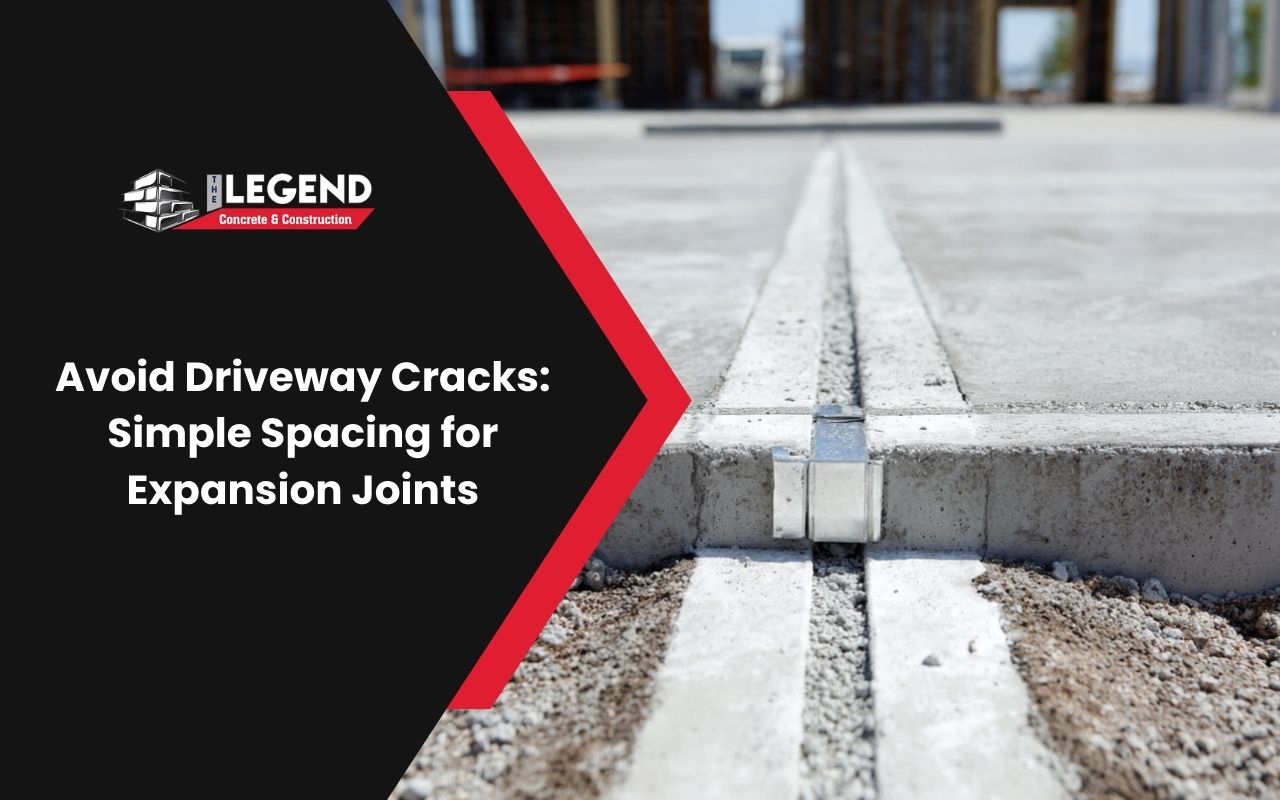
Notice how a small oversight can lead to costly repairs? If you have seen cracks spread across a driveway, you know the problem. These flaws hurt curb appeal and can trigger expensive fixes. However, with the right approach to driveway expansion joint spacing, you can reduce cracking and protect your surface.
Imagine a clean driveway that stays smooth year after year. The secret is not fancy tools or pricey mixes. Instead, it is smart joint planning and steady care. In this post, you will learn how spacing helps concrete move without breaking, so your driveway stays strong for years.
Why expansion joints matter
Concrete is always moving. When temperatures change, it expands and shrinks. Without joints, stress builds and cracks appear in random places. Therefore, a clear joint layout gives concrete space to move. As a result, you get better crack control and a cleaner finish.
Also, water can damage a driveway over time. Joints help water drain and lower freeze-and-thaw stress in colder areas. So, driveway expansion joint spacing helps each slab move on its own. In turn, you reduce repairs and extend driveway life.
- Reduces stress that causes random cracking
- Helps slabs move without breaking
- Supports drainage and limits water damage
What affects spacing decisions
Several factors change how far apart joints should be. First, slab thickness matters. Thicker slabs can handle wider spacing. Meanwhile, thinner slabs often need joints closer together. Also, big temperature swings can increase movement, so spacing may need to tighten.
Soil and moisture also matter. For example, clay can swell when wet and push against the slab. Because of that, careful driveway expansion joint spacing and a strong joint layout help you manage shifting ground. In short, planning for local conditions supports long-term crack control.
- Slab thickness and reinforcement
- Local temperature swings
- Soil type, moisture, and drainage
How to figure out the right distance
A common guide is 24 to 36 times the slab thickness, measured in inches. For a four-inch slab, that often means joints every 8 to 12 feet. However, climate, soil movement, and added steel can change the final plan. So, adjust for your site to improve crack control.
Next, mark your joint layout before you pour or cut. Use a chalk line to keep lines straight. Then measure again, because small errors create uneven slabs. With that, driveway expansion joint spacing stays consistent from start to finish.
- Use slab thickness to set a starting range
- Mark straight lines with chalk or string
- Recheck measurements before any cuts
Tools and methods that work well
Before you start, gather the right tools. A concrete saw helps you make clean saw cuts after the slab firms up. If you form joints during the pour, you can place foam or rubber strips into wet concrete. Either way, steady technique improves crack control.
Also, use safety gear. Wear eye protection, gloves, and a dust mask when cutting. Then move slowly so edges stay clean. With good timing and careful saw cuts, driveway expansion joint spacing performs as intended.
Best ways to keep joints working
Regular checks help a lot. Dirt and weeds can clog joints, which reduces movement. So, clear debris with a small brush or water. After that, your joint layout can keep absorbing stress as designed.
Also, seal joints each year with a flexible sealant. This helps block water and limits freeze-and-thaw harm. If you spot gaps, reseal them quickly. As a result, driveway expansion joint spacing stays effective and your driveway lasts longer.
Common mistakes to avoid
Uneven spacing is a frequent issue. When slabs become too large, cracks often appear. Therefore, measure twice and mark clearly before cutting or placing strips. Even small mistakes can weaken crack control.
Another mistake is cutting at the wrong time. If you cut too early, edges can crumble. If you cut too late, cracks may form first. So, wait until the slab is firm enough to resist damage. Then make clean saw cuts that match your joint layout.
How to repair and reseal old joints
Fix damaged joints as soon as you see them. First, remove old sealant and debris with a knife and wire brush. Then replace missing filler with a foam insert cut to fit. After that, apply a flexible sealant made for concrete and smooth it evenly.
This repair restores joint movement and improves crack control. Also, it helps stop water from getting under the slab. With proper repairs, driveway expansion joint spacing keeps doing its job across the whole surface.
Long-term value of good joint care
When joints work well, driveways stay smoother for longer. That keeps curb appeal high and reduces big repairs. Also, good joint layout helps preserve property value over time.
Just as important, maintenance is cheaper than major fixes. Cleaning and sealing are small tasks compared to replacing sections. Therefore, driveway expansion joint spacing and routine care offer real savings and more peace of mind.
Practical DIY tips from the pros
Start with a simple plan. Mark your joint layout before mixing concrete or starting saw cuts. Then follow the lines closely to keep everything even. Also, choose foam or rubber strips sized for driveway use, plus a sealant rated for outdoor weather.
When cutting, let the saw work without forcing it. That helps avoid chips and rough edges. In the end, driveway expansion joint spacing stays neat, and crack control improves across the slab.
For more guidance on preventing cracks with joints, explore concrete crack prevention joints. Also, you can compare methods in preventing cracks in driveways. Finally, keep upkeep simple with the driveway maintenance checklist.
Frequently Asked Questions
How often should I plan joints in a standard driveway?
In many cases, joints land every 8 to 12 feet for a four-inch slab. However, local conditions can change that.
What is the best time to make saw cuts?
Usually, cut when the slab is firm and supports a clean groove. If you wait too long, cracks can start first.
Can joint layout reduce random cracking?
Yes. A clear joint layout guides where movement happens. As a result, cracks are less likely to show in random spots.
Do joints help with water damage?
They can. Joints support drainage and reduce trapped water. Therefore, freeze-and-thaw stress may be lower in cold climates.
Should I seal joints every year?
Often, yes. A flexible sealant helps block water and debris. So, yearly checks and touch-ups support long-term crack control.
Keep your driveway smooth for years
Proper spacing helps stop cracks and reduces costly repairs. By planning a clear joint layout, using the right tools, and keeping joints clean, you protect your driveway from temperature shifts and ground movement. With steady care like cleaning and sealing, driveway expansion joint spacing stays reliable and your surface looks great for years.