
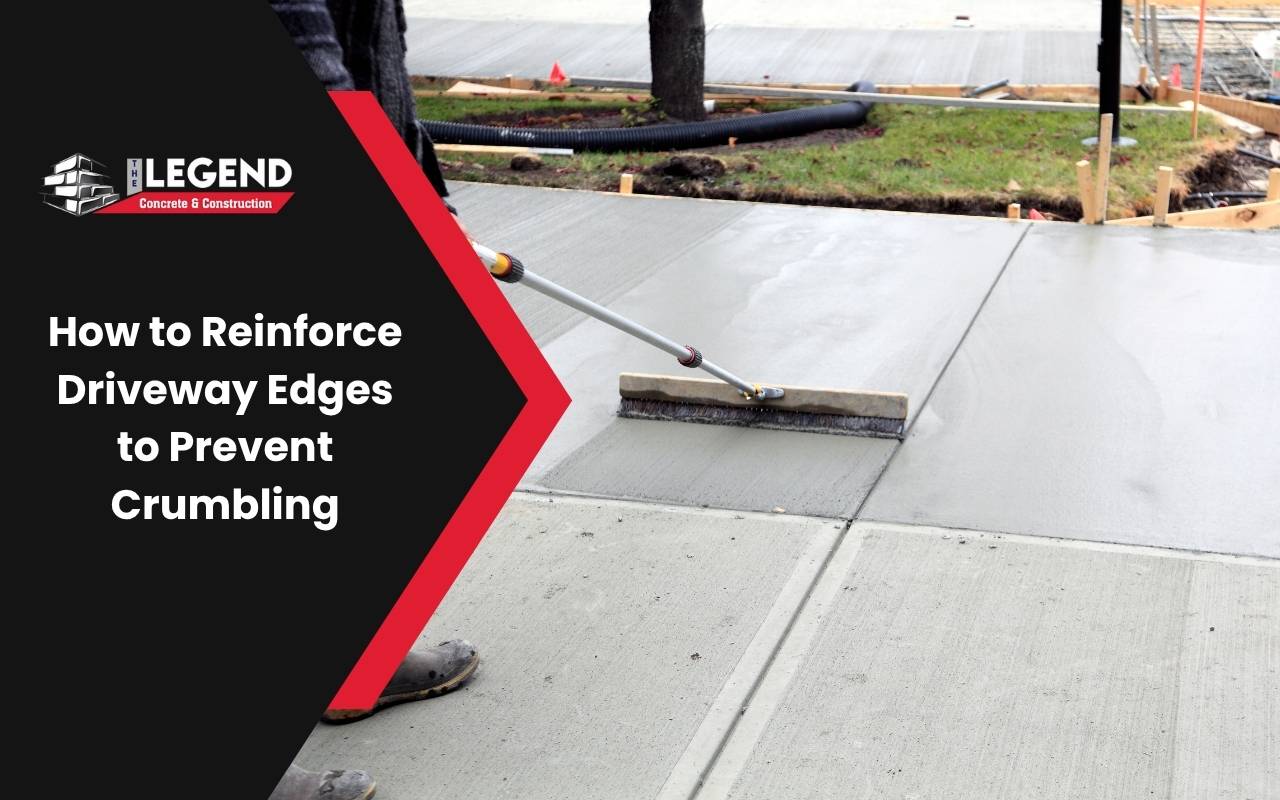
Strengthen your driveway’s durability and curb appeal by addressing a common concern: crumbling edges. Over time, weather, heavy vehicles, and soil settling can weaken these areas. Fortunately, driveway edge reinforcement can protect your surface from damage and extend its life. With techniques like fiber mesh, edge restraint, and compaction, you can easily maintain stability and appearance. This guide will help you preserve your driveway through practical, long-lasting solutions. For additional professional services, visit our services page.
Understanding the Causes of Driveway Edge Crumbling
Driveway edges deteriorate mainly due to moisture and stress. Water enters cracks, freezes, and expands, causing concrete or pavers to break apart. Repeated freeze-thaw cycles accelerate the issue. Additionally, heavy vehicles often put pressure near the borders, worsening the damage. Another cause is poor soil support. If the ground wasn’t compacted correctly, it may settle unevenly, leading to weak spots. Nearby tree roots can also shift materials, causing cracks. Without driveway edge reinforcement, this problem gradually worsens.
Importance of Reinforcing Driveway Edges
Reinforcing driveway edges helps maintain both appearance and safety. Strong edges prevent chunks from breaking off, reducing tripping hazards. Moreover, it keeps the surface level for easier maintenance. Early driveway edge reinforcement avoids costly repairs later. Using materials like fiber mesh or an edge restraint strengthens the structure and improves load resistance. By reinforcing edges, you preserve stability against weather and weight changes. To discuss options tailored to your property, reach out via our contact page.
Choosing the Right Materials for Reinforcement
- Concrete mix: Select a durable, flexible blend to resist cracking.
- Fiber mesh: This additive strengthens the surface and distributes stress evenly.
- Edge restraint: Use metal, plastic, or treated wood to keep materials from shifting.
- Compaction: Proper base compaction ensures lasting stability.
For pavers or stone, polymer-based jointing sand also helps maintain structure. Each element contributes to the success of driveway edge reinforcement, creating a surface that resists damage and maintains its integrity.
Preparing the Driveway Edges for Reinforcement
Start by cleaning debris and removing vegetation. Mark the driveway boundaries clearly to define the working area. Then, excavate a shallow trench along the edge—typically 2–3 inches deep and 4–6 inches wide. This makes room for the edge restraint and backfill. Once prepared, compact the trench base thoroughly. Solid compaction supports the upcoming driveway edge reinforcement and prevents future settling.
Using Fiber Mesh for Strength and Stability
Fiber mesh consists of fine synthetic fibers mixed into wet concrete. It provides internal strength, helping the concrete resist cracking from within. Mixing fiber mesh correctly distributes stress evenly throughout the slab. This approach enhances your driveway edge reinforcement by ensuring durability under traffic. After pouring, level and finish the surface as usual for a smooth, long-lasting edge.
Installing Edge Restraints to Prevent Movement
Edge restraint acts as a firm boundary, preventing shifting. Choose between plastic, metal, or treated wood depending on your climate and design preferences. Place it flush with the driveway surface, leaving a small gap for expansion. Secure it with galvanized spikes or screws about every 12 inches. Finally, backfill behind the restraint with gravel or concrete, compacting the material to stabilize it. This ensures your driveway edge reinforcement stays intact even under pressure.
Proper Compaction Techniques for Longevity
- Spread crushed stone or gravel along the edge trench.
- Use a plate compactor or hand tamper for even density.
- Overlap passes until the base no longer shifts.
After installing the edge restraint, compact again to lock everything in place. Good compaction minimizes frost heave and prevents uneven settling, improving your driveway edge reinforcement results.
Maintenance Tips to Preserve Reinforced Edges
Inspect driveway edges each season to catch small cracks early. Apply a polyurethane sealant to block moisture and prolong durability. Keep the edges clean by sweeping away debris regularly. Avoid harsh de-icing salts, as they can erode concrete. Instead, use sand or non-corrosive ice melt. If you notice any movement, recompact the area or add jointing sand. With consistent care, your driveway edge reinforcement remains strong year after year.
Common Mistakes to Avoid in Driveway Edge Reinforcement
- Skipping site preparation, leading to poor bonding.
- Neglecting compaction, causing uneven settling.
- Using weak or incompatible edge restraints.
- Parking heavy vehicles too early during curing.
Avoiding these errors guarantees long-term success. Careful preparation and high-quality materials are essential for effective driveway edge reinforcement that endures.
FAQs
Why do driveway edges crumble over time?
Moisture, freezing cycles, and vehicle pressure often cause driveway edges to weaken and break apart gradually.
How does fiber mesh improve concrete strength?
Fiber mesh distributes stress evenly, preventing cracks from spreading and supporting overall durability.
What is the role of edge restraint in reinforcement?
Edge restraint prevents materials from shifting laterally, maintaining structure and preventing surface movement.
When should I perform maintenance on reinforced edges?
Check and clean edges every season to detect cracks or shifts early and apply sealants as needed.
Can I reinforce my driveway edges myself?
Yes, with proper tools and preparation, DIY driveway edge reinforcement is possible and highly effective.
Ensuring a Durable and Appealing Driveway
Reinforcing your driveway edges is essential for both longevity and visual appeal. By applying methods like fiber mesh, edge restraint, and compaction, you protect the structure from weather and wear. Consistent maintenance ensures your driveway edge reinforcement continues to perform effectively. Ready to enhance your driveway? Visit our contact page to connect with our team today.