
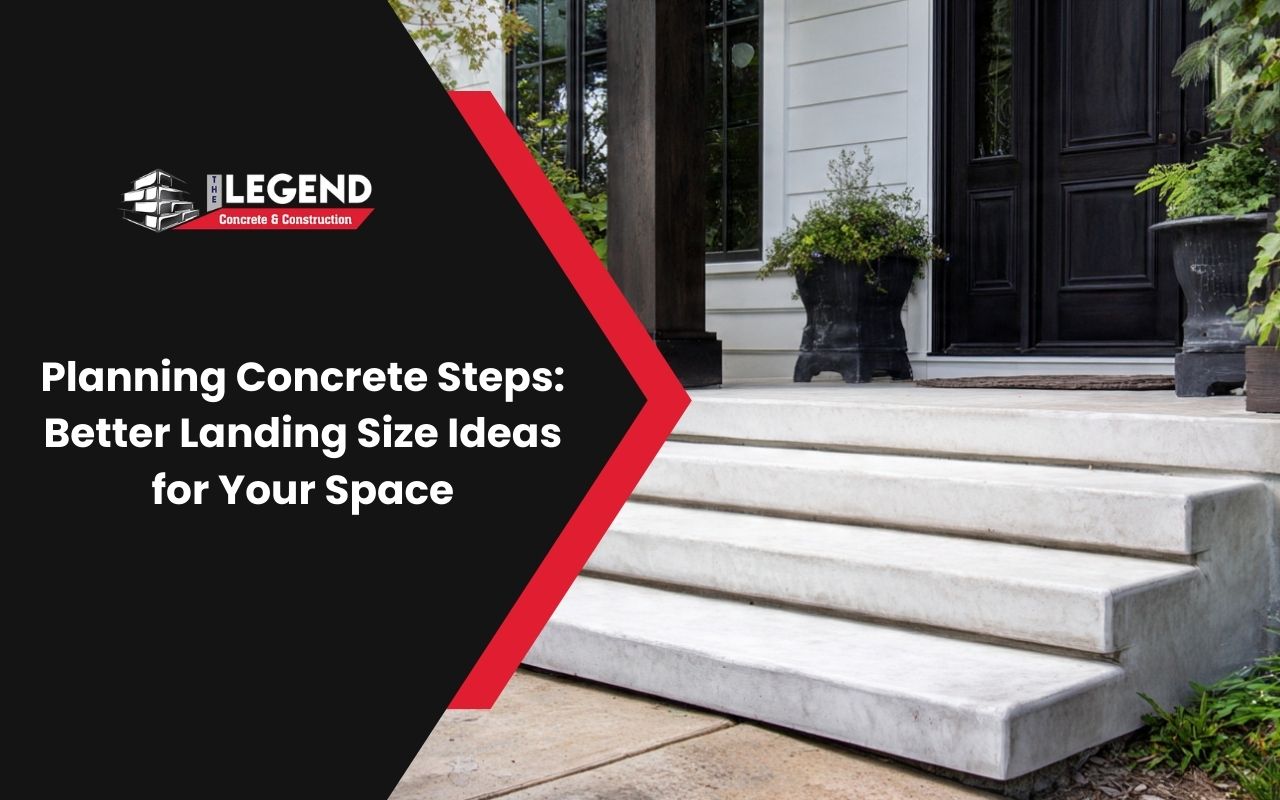
Planning concrete steps for your home or garden can feel like a giant puzzle. However, each piece must fit well. Unlike puzzles, these steps are not only about looks. They are also about safety and comfort.
If stairs feel steep or narrow, you notice it right away. Therefore, concrete steps landing size matters. It helps each step feel right for people of many ages and needs.
Finding the Right Landing Size for Concrete Steps
Choosing the right platform size is key for safety and ease. In fact, concrete steps landing size affects how people pause, turn, or move between spaces. A good landing gives users a steady place to stop for a moment.
In many homes, the landing should be at least as deep as the step width. As a result, people can stand without feeling tight on space. This simple rule often improves balance and reduces missteps.
- Match landing depth to the step width for steadier footing.
- Give enough room to pause, turn, or open a door safely.
- Keep the landing level, and add a slight slope for water to run off.
How step measurements affect comfort
Landing comfort connects to step details. For example, tread rise affects how hard each step feels. Also, the nosing changes how your foot lands on the edge. When these parts work together, the landing feels smoother to use.
Because small shifts can cause trips, avoid sudden level changes. Instead, keep transitions gradual. That way, the landing feels natural when carrying items or walking at night.
What shapes landing size decisions
Several factors guide concrete steps landing size choices. First, think about how many people will use the steps. A busy entry often needs more room. Meanwhile, quiet garden steps can be smaller and still feel pleasant.
Next, the look of your home matters. Modern styles often use wider, cleaner platforms. Traditional spaces may lean toward cozier layouts. Still, the best choice balances style with safe movement.
- Foot traffic: more users usually means a larger landing.
- Site slope: uneven ground may require a bigger, level base.
- Water flow: a slight pitch helps reduce puddles and slips.
To explore safer layouts for entrances, you can review concrete steps safety tips for secure outdoor stairs for practical ideas.
Safety rules and smart guidelines
Code rules matter, so plan early. In many areas, a common minimum landing depth is 36 inches for home stairs. However, local rules can differ. Therefore, check your city or county guidance before you build.
Handrails should feel steady and easy to hold. Typically, handrails sit about 34 to 38 inches above the nosing. Also, handrail blocks help anchor posts to concrete so rails stay firm over time.
- Confirm landing depth rules with local requirements.
- Place rails at a comfortable height for most users.
- Use a slip-resistant surface for wet or cold weather.
For better grip, consider surface options from textured concrete finishes for safer walking surfaces, especially on outdoor landings.
Designing for access and everyday comfort
Comfort matters for everyone, including kids and older adults. So, plan for steady movement and easy turning. If you expect mobility aids, a wider platform supports safer use and smoother turns.
Also, step sizing helps reduce strain. Keep tread rise gentle when possible. Then, pair it with a consistent nosing so feet land the same way each time. These small choices often lower the risk of slips.
Frequently Asked Questions
How deep should a landing be for home steps?
Often, it should be at least as deep as the step width. Also, many rules use 36 inches as a common minimum.
Why does tread rise matter when planning steps?
Because it affects how steep the stairs feel. A consistent rise helps people climb and descend with more confidence.
What is nosing, and why is it important?
Nosing is the small edge that extends past the vertical face. It can improve footing, and it can also improve visibility.
Do I need handrails for outdoor concrete steps?
Often, yes, especially for taller runs. Handrails add support, and they can help meet local safety rules.
What surface finish helps prevent slips?
A textured finish usually improves grip. Also, good drainage and lighting make the area safer.
Adding style without losing function
Style can still support safe movement. For example, a clean rectangle landing often feels balanced. Meanwhile, a gentle curve can feel welcoming. Either way, keep edges clear and easy to see.
Decorative patterns can turn a landing into a focal point. However, avoid glossy finishes outdoors. Instead, choose finishes that look good and keep traction.
- Stamped patterns can mimic stone while keeping a unified look.
- Color contrast near edges can make steps easier to see.
- Rail details can match nearby lights or door hardware.
Using space wisely in step layouts
When space is tight, smart layouts help. For instance, you can use split platforms to reduce the footprint. Also, a wider first or last step can act like a small pause point.
Still, keep the layout easy to understand. Because confusing patterns can cause trips, choose shapes that guide people naturally. If you want help planning the full project, explore concrete and construction services for steps, landings, and outdoor projects.
Bringing your step plan together
A safe, good-looking entry starts with smart sizing. When you plan concrete steps landing size with comfort in mind, the whole space feels better to use. Also, when details match, the design feels finished.
Balance tread rise, nosing, and handrail blocks for steady use. Then, pair that with finishes, lighting, and landscaping that fit your home. As a result, your steps become a welcoming feature, not only a pathway.