
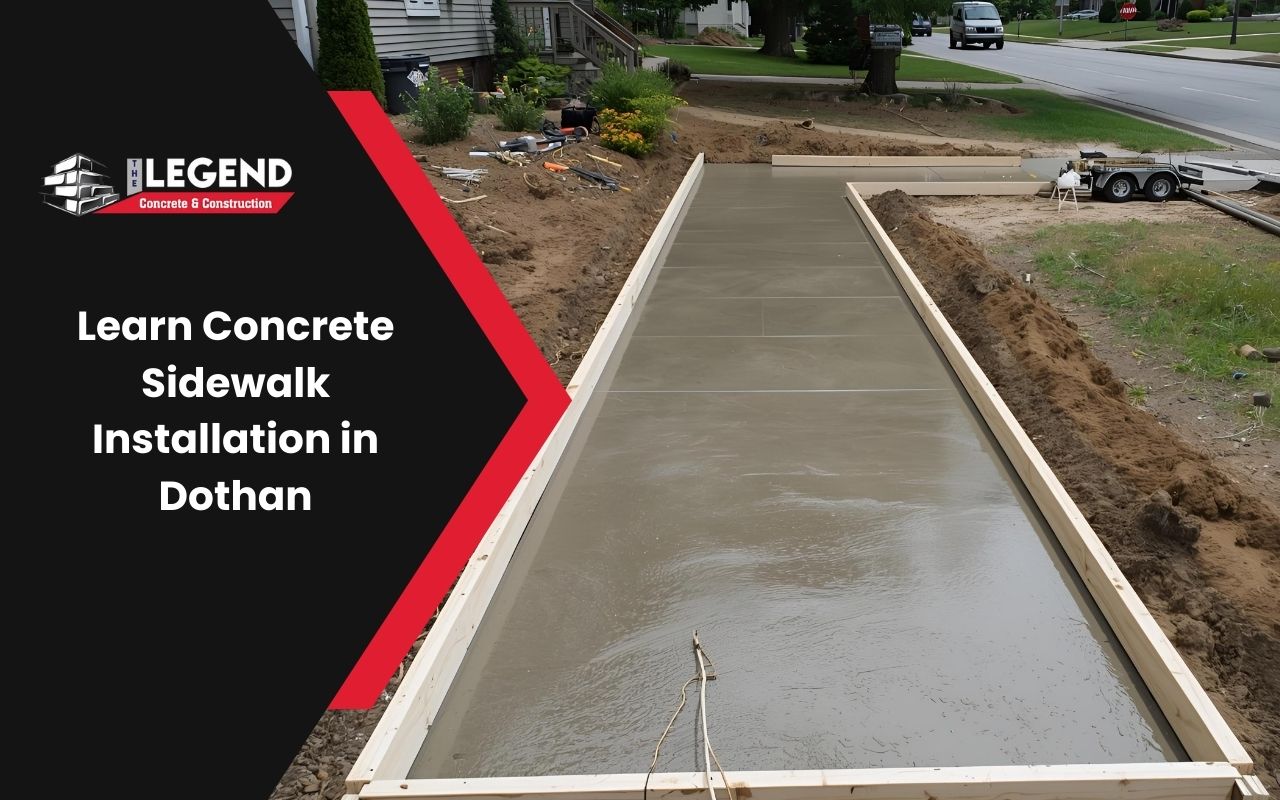
Recognize the importance of a well-constructed sidewalk as you stroll through your neighborhood. Appreciate how it guides your path. In Dothan, concrete sidewalk installation in Dothan goes beyond placing slabs. Instead, it means each section stays sturdy, ADA-ready, and built to last.
Although it can feel daunting, the right guidance makes it manageable. ADA width, thickness, expansion joints, and ramps are not just jargon. They are the building blocks of access and durability. Therefore, explore the steps that turn an idea into a reliable, pleasing part of Dothan’s landscape.
Concrete Sidewalk Installation in Dothan: Why Well-Built Walkways Matter
Consider how a sturdy sidewalk improves safety and flow. People need even surfaces that reduce trips and falls. In Dothan, temperature shifts and seasonal wear can cause cracks and uneven slabs. Therefore, focusing on durability helps paths handle weather changes and daily foot traffic.
Moreover, smooth and continuous sidewalks encourage walking. This can reduce traffic and support health. Well-built walkways also add curb appeal and can raise property values. For local examples, explore concrete sidewalk installation services in Dothan.
ADA Standards for Accessible Sidewalks
Evaluate accessibility rules so everyone can move freely. ADA standards guide ADA width, surface texture, slope, and clearance. These details help wheelchair and walker users avoid obstacles. In addition, meeting ADA requirements helps prevent costly corrections that can slow your project.
From ramp width to smooth transitions at crosswalks, every detail matters. As a result, parents with strollers, seniors with canes, and students with backpacks can travel comfortably. Planning for compliance early also reduces common mistakes and keeps public access seamless.
Essential Tools and Materials You’ll Need
For concrete sidewalk installation in Dothan, selecting the right tools and supplies keeps work steady. Basic equipment supports safe mixing, placing, and finishing. Additionally, quality materials reduce weak spots and help the slab perform over time.
- Tools: shovels, wheelbarrows, screeds, trowels, and a concrete mixer
- Safety gear: gloves and safety glasses
- Materials: Portland cement, clean aggregate, water, plus forms and stakes
- Reinforcement: corrosion-resistant rebar or wire mesh
Prepare the Site with Clearing and Grading
Remove grass, roots, and debris before setting forms. This supports a stronger bond with the ground. Next, remove topsoil and compact the base. Proper grading prevents water pooling, which can damage sidewalks later. Therefore, measure and mark boundary lines before you begin.
- Clear vegetation and loose soil
- Compact the base layer for stability
- Set a slight slope away from buildings for drainage
- Install sturdy form boards for straight edges
Set a Strong Foundation for Durability
Build a stable base with gravel or crushed stone at least four inches deep. This supports the slab and helps reduce cracking from soil movement. Then, compact in layers for uniform support. Consistency also helps maintain the planned ADA width and keeps thickness even across the run.
Proper foundations save time and money later. They also minimize repairs and help extend the sidewalk’s lifespan. In addition, strong prep work makes the pour and finish steps easier to control and more accurate.
Pour and Finish the Concrete with Control
For concrete sidewalk installation in Dothan, mix concrete to a workable consistency. Then, place it into forms and spread it to avoid air pockets. Next, screed the surface with a steady sawing motion. After that, float the slab to smooth imperfections and refine edges with hand tools.
Finally, choose your finish. A broom finish adds traction. A steel trowel finish looks more polished. Either way, accurate finishing improves the walkway’s appearance and supports long-term performance. For related exterior paths, see concrete walkway builder services in Enterprise.
Use Expansion Joints to Limit Cracking
Plan expansion joints to manage movement from temperature changes. Expansion joints help prevent random cracking and keep sections neat. As a result, the surface stays cleaner and easier to maintain through hot and cool seasons.
- Place joints every 4 to 6 feet on straight runs
- Add joints at turns and transitions
- Seal joints with a flexible material to block water
Build ADA-Compliant Ramps for Safer Access
Follow slope and landing requirements so ramps stay safe and usable. A maximum 1:12 slope supports easier travel. Landings should be level and at least 60 inches long for turning space. Moreover, tactile warning strips can alert visually impaired pedestrians near curb ramps.
Details That Improve Ramp Safety
When needed, include handrails between 34 and 38 inches high. Ensure they extend beyond the slope. Therefore, ramps support independent travel and meet accessibility expectations. For safety-focused upgrades, review concrete steps safety guidance in Dothan.
Curing and Sealing to Protect the Surface
For concrete sidewalk installation in Dothan, keep moisture in the slab for at least seven days. Cover concrete with wet burlap or plastic sheeting to slow water loss. Then, mist as needed to reduce surface cracking. After curing, apply a quality sealer to repel water, stains, and deicing salts.
Moreover, reseal every few years to extend service life. Sealing also helps preserve appearance and supports surface durability. Consistent care keeps the walkway looking clean while reducing long-term maintenance work.
Frequently Asked Questions
What ADA width should a sidewalk follow?
ADA width rules focus on comfortable passage. Follow local requirements for clear width, slope, and obstructions. Therefore, users with wheelchairs or walkers can travel without barriers.
How do I choose the right thickness for a sidewalk?
Thickness depends on expected use and soil conditions. In addition, a strong base supports consistent thickness and reduces stress that leads to cracking.
Where should expansion joints go?
Expansion joints typically go every 4 to 6 feet and at turns. As a result, the slab can expand and contract without random surface cracks.
What slope is best for ramps?
A 1:12 slope is a common maximum for accessibility. Also, include level landings at the top and bottom for safer turning and stopping.
How soon can people walk on new concrete?
Light foot traffic may be possible after initial set, but curing continues for days. Therefore, protect the surface and maintain moisture for stronger results.
Plan Your Next Sidewalk Project in Dothan
With careful planning and quality materials, concrete sidewalk installation in Dothan becomes a practical project. Focus on ADA width, thickness, expansion joints, and ramps from the start. Additionally, strong site prep and curing protect your investment. To explore related work, visit construction services in Dothan, Alabama.
If you want expert help for concrete sidewalk installation in Dothan, reach out for guidance tailored to your property. Contact the team through Legend Concrete Construction contact page to discuss scope, access needs, and the best path forward.