
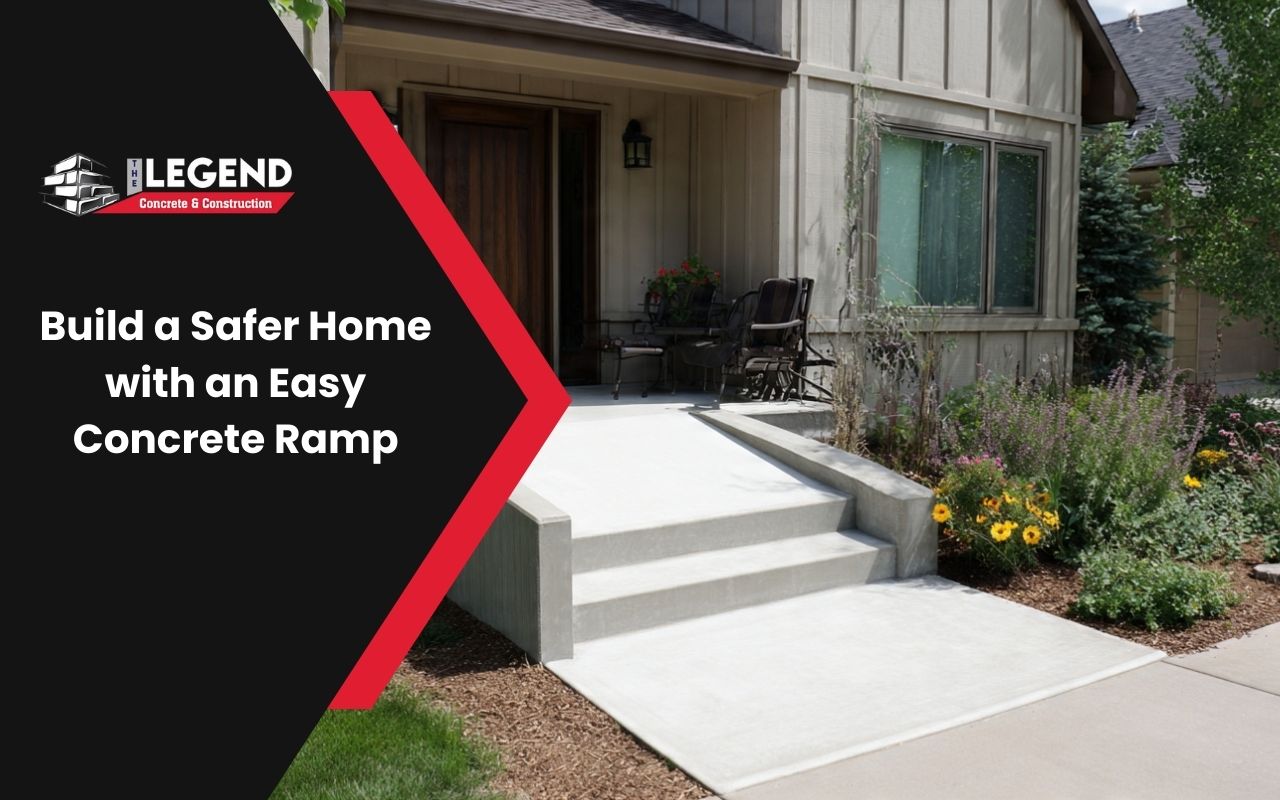
A Concrete Ramp in Residential spaces can make daily entry safer for everyone. As a result, family and guests move with more confidence, at any age.
Moreover, with an ADA slope at home, a broom finish surface, and solid handrail prep, the ramp stays practical and attractive. Therefore, it supports strollers, mobility aids, and visitors while also boosting comfort and curb appeal.
Understanding ADA Compliance in Ramp Design
To keep access simple, a Concrete Ramp in Residential projects should follow ADA guidance. In general, the maximum slope is 1:12, so each inch of rise needs 12 inches of run. In addition, level landings help users rest and turn without stress.
- Max slope: 1:12 for steady movement
- Landings: about 60 inches square at top and bottom
- Handrails: 34 to 38 inches high with smooth edges
Still, style can stay strong. For example, clean lines, color-matched finishes, and tidy rail details can look great while meeting code.
Choosing the Right Location for Your Concrete Ramp
When planning a Concrete Ramp in Residential areas, follow the natural path to your door. Ideally, connect it to a driveway or sidewalk to avoid sharp turns. Also, choose a spot that drains well, since standing water can create slick areas.
Meanwhile, consider sun, shade, and nearby plants. A brighter area often dries faster, while garden space needs room for trimming. Therefore, smart placement reduces upkeep and keeps the route clear year-round.
Factors to Consider in Ramp Construction
Before building, check local codes and permits. Then, review soil and drainage, since good prep helps prevent shifting. Likewise, plan gentle transitions at the start and end to avoid sudden edges.
- Width: at least 36 inches clear between rails
- Landings: 60 inches square for safer turning
- Edge control: curbs or side strips to guide wheels
In addition, think about weather. For instance, small channels or side gutters can guide runoff and protect the slab over time.
Selecting Suitable Materials for Durability
A strong mix and good reinforcement help the ramp last. For traction, a broom finish adds grip without feeling harsh under wheels. Also, breathable sealers can reduce stains while letting moisture escape, which helps limit surface damage.
For rails, use rust-resistant materials that match your exterior. As a result, smart handrail prep and durable finishes support daily use and keep the ramp looking clean for years.
Importance of Proper Slope and Dimensions
Keep the slope consistent, since sudden changes feel unsafe. Although 1:12 is the common ADA rule, a gentler grade can feel easier when space allows. Also, accurate widths and landings improve comfort for wheelchairs, walkers, and strollers.
If you also want safer transitions at doors and porch areas, review guidance on safer concrete steps and landings so the whole entry route works together.
Incorporating Aesthetics into Your Ramp Design
A ramp can look like it belongs. For example, match color to nearby walkways or add patterns that fit the home. You can also add lighting along the path, which improves visibility and curb appeal at night.
To explore surface ideas that complement traction needs, compare textured concrete finishes that pair well with practical accessibility.
Ensuring Safety Through Handrail Installation
Good handrail prep starts with height and grip. Handrails should be easy to hold, with rounded profiles that feel steady. Also, secure posts properly so rails stay firm under frequent use.
Furthermore, spacing matters. Proper gaps reduce snag risks, while end returns lower catching hazards. As a result, users get reliable support on every trip in and out.
Maintenance Tips for Longevity
To protect a Concrete Ramp in Residential settings, keep it clean and dry when possible. Sweep debris often, since wet leaves can create slippery spots. Then, wash with mild soap and water to remove grime and help the texture stay effective.
- Sweep and rinse to limit mold or algae
- Reseal every few years with a breathable sealer
- Inspect rails and anchors yearly for looseness or rust
In colder areas, use a concrete-safe ice melt instead of rock salt. Therefore, you reduce pitting and keep the surface safer.
Frequently Asked Questions
What slope is best for a home ramp?
The ADA slope at home guideline is usually 1:12. However, if space allows, a gentler slope can feel easier and reduce effort.
Why choose a broom finish for a ramp?
A broom finish improves grip in wet conditions. As a result, it helps prevent slips while still rolling smoothly for wheels.
Do I always need handrails?
Often, yes, especially with longer runs or higher rises. In addition, handrail prep supports safer daily use for many visitors.
How wide should a residential ramp be?
A common minimum is 36 inches clear between rails. Moreover, extra width can improve comfort for caregivers and strollers.
How can I keep the ramp looking good over time?
Regular cleaning and periodic sealing help. Also, choosing durable rail materials reduces rust, so the entry stays neat and inviting.
Enhancing Accessibility and Safety in Residential Spaces
A Concrete Ramp in Residential spaces supports independence and comfort, day after day. By following ADA guidance, using durable materials, and planning smart rail details, the entry stays safe and welcoming. In addition, thoughtful design can blend with your home instead of standing out.
To align the ramp with other exterior upgrades, explore concrete services for home access. When you are ready for a tailored plan, reach our team for a site review so the layout fits your space and goals.