
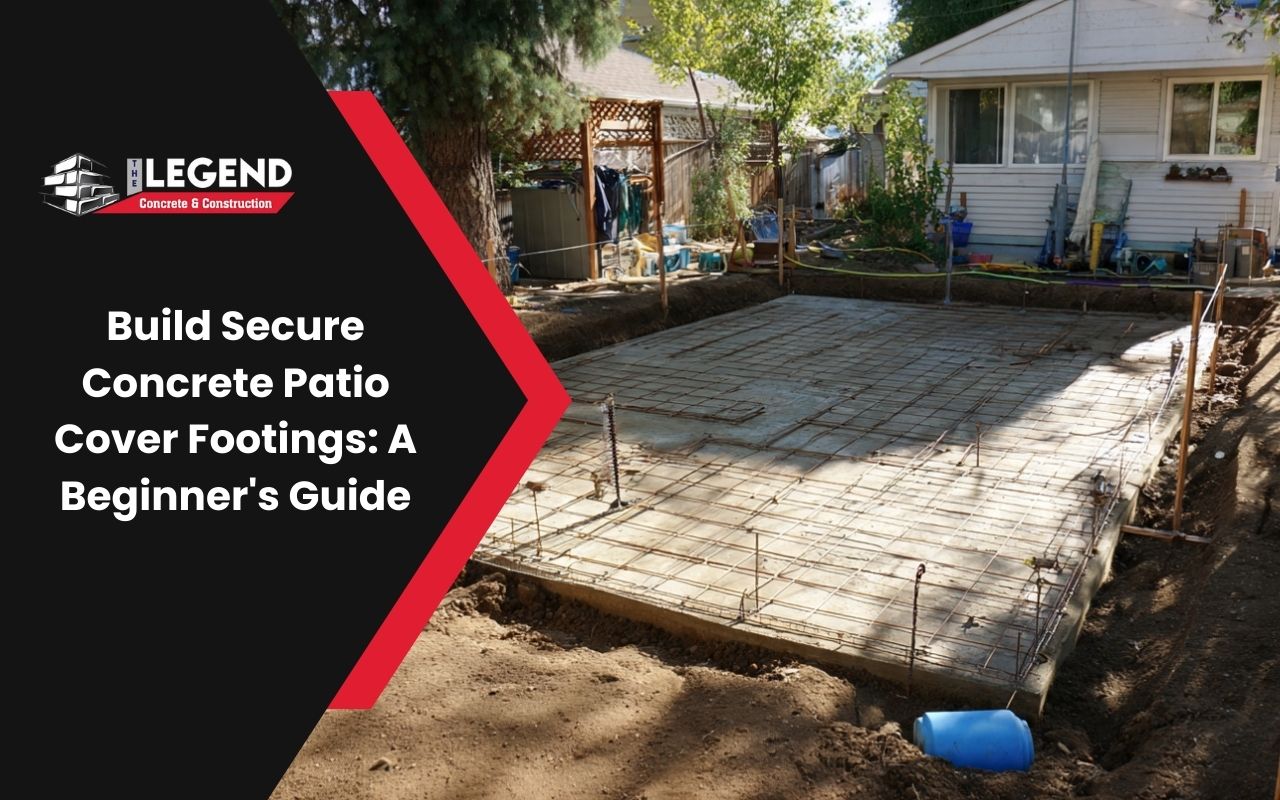
Concrete Patio Cover Footings are the foundation that keeps your patio cover steady. Therefore, this DIY upgrade can feel exciting and a bit stressful. However, a secure footing helps your cover handle storms, rain, and time.
Also, learn how Post bases connect wood to concrete. Next, understand Load paths so forces move safely. Finally, plan for Wind uplift, which can lift and loosen posts. With these basics, you can build with more confidence and avoid costly repairs.
Understanding Patio Cover Footings
Concrete Patio Cover Footings are concrete blocks set below ground to support your cover. In other words, they move weight from posts into firm soil. As a result, the structure is less likely to sink or shift. Also, digging below the frost line helps prevent ground freeze from pushing footings upward.
Planning and Site Preparation
Before you dig, check local codes for depth, width, and spacing. Concrete Patio Cover Footings may need larger sizes in high-wind areas. Then, mark the layout with stakes and string. After that, clear grass and topsoil for a flat work zone.
- Confirm setbacks and permit rules with your municipality.
- Square the layout so posts line up with beams.
- Compact the hole bottom to reduce settling.
If you want inspiration for the slab and layout, explore concrete patio planning ideas for a cleaner footprint and better drainage.
Picking the Right Post Hardware
Choose steel connectors that resist rust, especially in humid regions. Adjustable brackets help you fine-tune plumb after the pour. Fixed anchors are simple, yet they need accurate placement. Also, use the fasteners listed by the manufacturer for a tighter connection.
- Use galvanized or stainless steel for weather resistance.
- Match the bracket size to the post size.
- Confirm bolt type and hole pattern before drilling.
Mapping How Forces Move
A clear force route keeps your cover stable over time. First, account for roof weight and rain. Then, consider side pressure during storms. Next, sketch arrows that show where forces travel through posts, beams, and connectors. As a result, you can place posts where support is strongest and reduce twisting.
Choosing a Strong Concrete Mix
For many light covers, a 3000 psi mix is often enough. However, heavier beams may need 4000 psi for extra strength. Also, avoid adding too much water, because it weakens the mix. Instead, mix until it looks even and holds shape without feeling dry.
Building Simple Forms
Forms shape the concrete while it sets, so keep them straight and level. Use smooth boards and secure them with stakes. Also, seal gaps so paste does not leak out. Before you pour, add a light release layer, which helps you remove the form without chipping edges.
Pouring and Curing the Footings
Concrete Patio Cover Footings need a careful pour to avoid soft spots. First, place concrete in stages and poke it to release trapped air. Then, level the top and slope it slightly for runoff. After that, keep moisture in for at least 72 hours, so strength builds steadily.
- Rod the mix to reduce air pockets.
- Cover with plastic or wet burlap to slow drying.
- Wait before loading posts; full strength takes time.
Anchoring Posts for Storm Resistance
Once the concrete is firm, set the connector in the right spot and check alignment. Then, drill holes and install approved anchors. Tighten evenly, because uneven pressure can twist posts. In windy zones, add diagonal bracing, so side forces travel into the ground more cleanly.
Inspecting and Reinforcing Over Time
Check footings and hardware each year for cracks, chips, or movement. Small cracks can be sealed early, which helps limit water entry. If posts feel loose, reinforce with steel brackets or add a concrete jacket around the footing. Also, address drainage issues, because standing water speeds wear.
Frequently Asked Questions
How deep should patio cover footings be?
Depth depends on local code and frost depth. Therefore, always verify requirements before digging.
Do I need rebar in footings?
Often, yes, especially for larger pads or weak soils. Also, many codes require reinforcement.
What is the most common footing mistake?
Skipping soil compaction is a big one. As a result, the footing can settle and tilt over time.
How long should concrete cure before setting posts?
Many builders wait at least a week for light loads. However, concrete continues to gain strength longer.
When should I call a professional?
If soil is poor, wind exposure is high, or the design is complex, expert help can prevent rework.
Ensuring Long-Term Strength
With clear planning, good hardware, and careful curing, Concrete Patio Cover Footings can support a safer outdoor space. Also, for projects that need local know-how, review construction services in Dothan, AL. If you want a build review, request a footing assessment at schedule a footing assessment.