
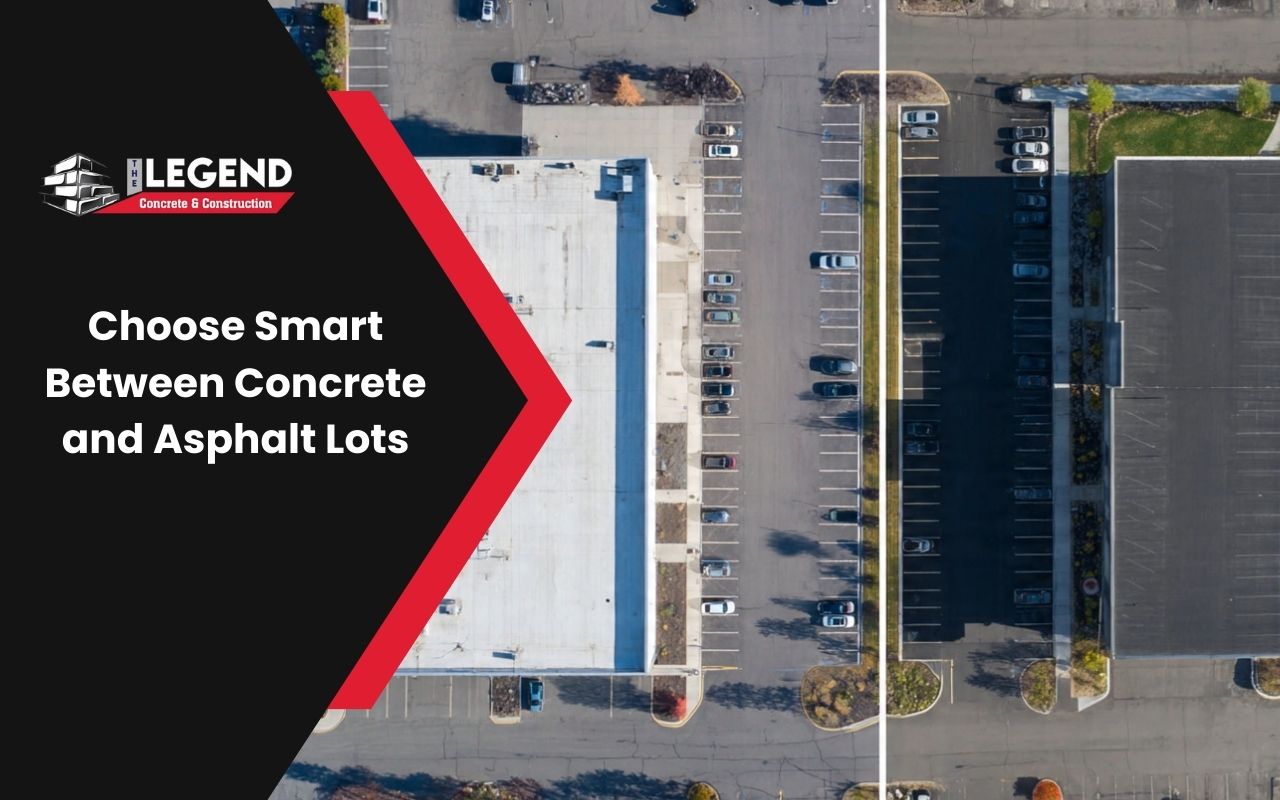
Concrete Parking Lot vs Asphalt is more than a surface choice. It shapes comfort, safety, and long-term planning. Therefore, it helps to compare life-cycle cost, heat, and maintenance before you build.
Asphalt can feel hotter in direct sun. Meanwhile, concrete often needs fewer major repairs over time. By looking at real-world tradeoffs, you can match the material to your goals and local climate.
Cost Analysis: Upfront Work and Long-Term Planning
Initial investment and job timing
Concrete can cost more to install. It also needs more time to cure. As a result, schedules may run longer. Asphalt, however, is faster to place and open for traffic.
- Concrete often needs forms and reinforcement for strength.
- Asphalt crews can usually finish and leave sooner.
- Timeline needs can affect planning and site access.
Life-cycle cost over 20 to 30 years
In a Concrete Parking Lot vs Asphalt comparison, long-term spending matters. Asphalt may need more resurfacing and sealcoating. Concrete often lasts longer with fewer large repairs. However, concrete crack repairs can be more involved. Therefore, downtime and access should factor into the plan.
Concrete Durability and Maintenance Needs
Concrete handles heavy loads well. It spreads weight across a wider area. Therefore, it helps limit rutting in high-traffic zones. Cracks can still form from ground movement. However, they often appear less often than on asphalt.
- Seal every few years to reduce stains and water entry.
- Sweep and wash to remove dirt and oil residue.
- Fill small cracks early to slow further damage.
Asphalt Durability and Maintenance Needs
Asphalt is flexible, so it can absorb small ground shifts. Therefore, it may delay early cracking in freeze-thaw areas. However, oils, turning tires, and heavy loads can wear it faster. In addition, sun exposure can speed surface aging.
- Sealcoat on a routine cycle to slow oxidation.
- Patch cracks and potholes early to prevent spreading.
- Watch braking and turning areas for surface stress.
Environmental Impact and Sustainability
When you weigh Concrete Parking Lot vs Asphalt, consider material impact. Concrete uses cement, which can raise emissions. However, its long service life can reduce replacements. Asphalt often includes recycled content and can be reclaimed. Therefore, local recycling options can shift the better choice.
Climate Considerations: Heat and Comfort
Heat can change how people use a lot. Asphalt absorbs more sunlight and can run hotter. Concrete, however, reflects more light and may stay cooler. As a result, comfort can improve in hot seasons.
- Hot lots can feel uncomfortable for pedestrians.
- Higher surface heat can warm nearby air.
- Lighter surfaces can reduce heat build-up.
Aesthetics and Customization
Concrete design flexibility
Concrete can use color, patterns, and textures. Therefore, it can better match buildings and branding. For a clean, refined finish, explore commercial polished concrete options.
Asphalt visual options
Asphalt is usually dark and uniform. However, coatings and fresh sealers can boost appearance. Striping also stands out clearly on a darker surface. In addition, some reflective coatings may help reduce heat in warmer areas.
Heavy Traffic and Weight Distribution
Concrete spreads loads well, so it supports trucks and delivery zones. Asphalt can flex under repeated weight. However, it may rut over time in heavy-use lanes. Therefore, traffic type should guide the surface choice. If you need help planning, review construction services in Dothan, AL.
Choosing the Right Material for Your Priorities
Concrete Parking Lot vs Asphalt decisions work best when priorities are clear. If you want quick installation and easier spot repairs, asphalt can fit. If you want long service life and less frequent major work, concrete may suit better. Finally, align the surface with climate, traffic, and upkeep capacity.
Frequently Asked Questions
Which surface tends to last longer with fewer major repairs?
Concrete often lasts longer under steady use. However, good base work and drainage matter for both materials.
What maintenance tasks should I plan for each year?
Plan sweeping, cleaning, and crack checks. Asphalt also benefits from routine sealcoating on a schedule.
How does heat affect comfort and nearby buildings?
Hot surfaces can raise walking discomfort and surrounding air temperature. Lighter surfaces may help reduce heat build-up.
Is one option better for frequent delivery trucks?
Concrete can handle heavy loads well and resists rutting. Asphalt may need more touch-ups in stress zones.
Can I improve appearance without changing the whole lot?
Yes. Striping, coatings, and targeted repairs can help. However, long-term looks still depend on the base condition.
Talk With a Parking Lot Contractor
Concrete Parking Lot vs Asphalt comes down to your site and goals. Therefore, a quick evaluation can clarify cost, heat, and maintenance needs. Share your traffic patterns and climate concerns, then get a plan that fits. Reach out through the contact page to discuss next steps.