
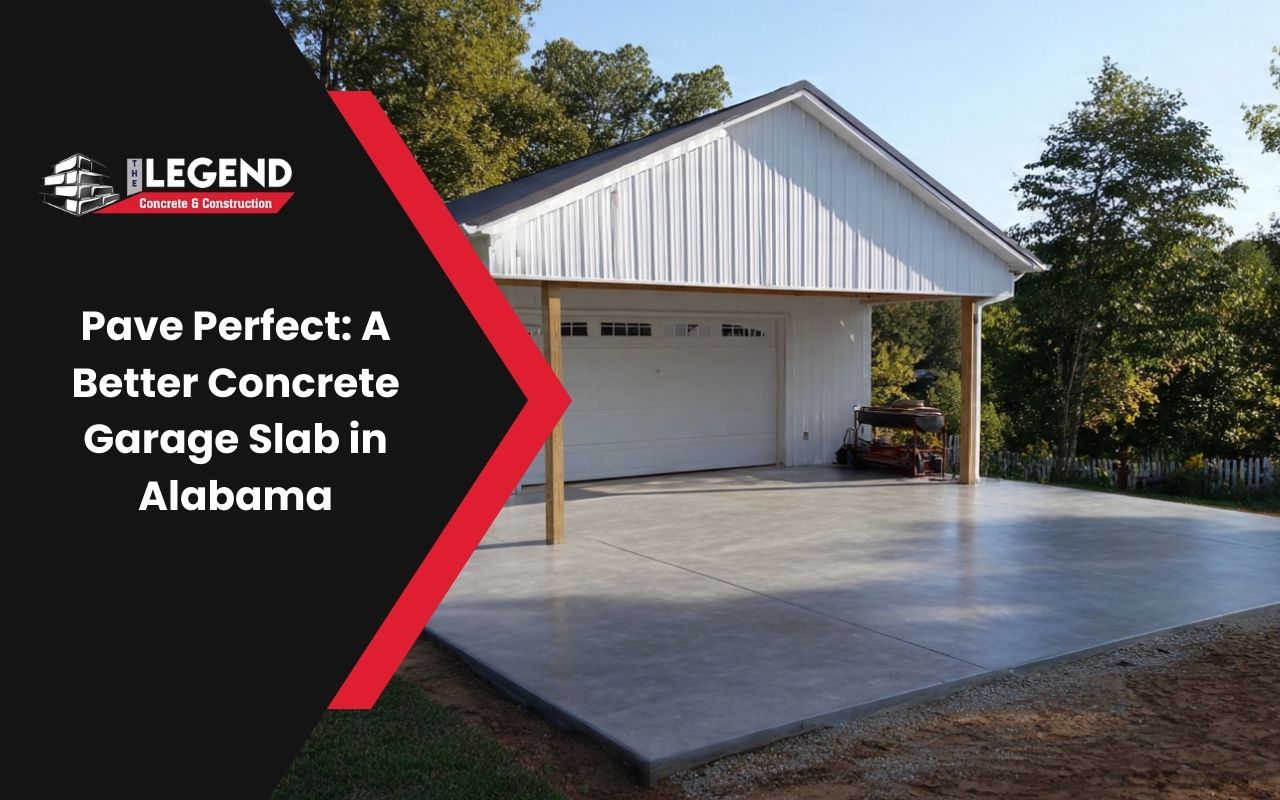
Visualize your dream garage: a space where the floor is not just functional but a testament to durability and craftsmanship. In Alabama, ensuring that your concrete garage slab meets the highest standards is essential, battling the state’s unique climate and soil conditions.
Concrete work involves more than pouring. It needs the right thickness, a 6-mil vapor barrier for moisture, and wire mesh for strength. This process helps your Concrete Garage Slab in Alabama last longer and stay reliable for parking, storage, and daily use.
Understanding the Importance of a Well-Finished Concrete Garage Slab
Creating a smooth, even surface starts with a well-finished Concrete Garage Slab in Alabama. A well-finished slab looks better, and it also helps resist cracking, chipping, and daily wear. As a result, water is less likely to pool, dust is reduced, and cleaning becomes easier.
In Alabama’s humid climate, an uneven slab can hold moisture and break down faster. Therefore, finishing steps like edging, troweling, and broom finishing help block moisture and improve traction. This effort up front can protect your investment and keep the garage comfortable for years.
- Helps prevent water pooling and surface wear
- Reduces dust and makes cleaning simpler
- Improves traction with the right finish
Climate Considerations for Concrete Garage Slabs in Alabama
Alabama brings hot, humid summers and mild winters, so curing can be tricky. High heat can dry concrete too fast, while humidity can slow the cure. Because of that, spring and fall are often easier seasons for a pour.
If you must pour in summer, pour early and keep the surface damp to slow moisture loss. Meanwhile, in cooler months, sudden night drops can harm fresh concrete. Covering the slab can help keep temperatures steady and support a stronger finish.
- Pour in spring or fall for steadier curing
- In summer, pour early and control moisture
- In cooler weather, cover the slab for warmth
Soil Conditions Impacting Garage Slab Construction
Before you pour, soil conditions matter. Many Alabama soils include clay that swells when wet and shrinks when dry. Consequently, that movement can lead to cracking or uneven settling over time.
To build a better base, remove soft topsoil and use compacted gravel or crushed stone. This layer supports drainage, which lowers pressure under the slab. If you want a deeper foundation overview, review foundation and footer basics for residential concrete for practical prep details.
Essential Components of a Durable Concrete Garage Slab
A long-lasting Concrete Garage Slab in Alabama depends on a strong system, not a single step. First, you need a compacted gravel base. Next, you install a 6-mil vapor barrier to block moisture. Then you add reinforcement like wire mesh, and finally you pour, level, and finish.
Since each part supports the next, skipping one can weaken the whole slab. If you’re planning a bigger project tied to the home, the process is similar to a home addition concrete slab in Houston County, where base prep and moisture control are just as important.
- Compacted gravel base for support and drainage
- 6-mil vapor barrier to reduce moisture issues
- Wire mesh to help control cracking
- Clean forms, level pour, and a solid finish
Achieving the Proper Thickness for Your Garage Slab
Most residential garages use a 4-inch slab because it handles cars and light equipment well. However, if you plan to store heavier vehicles or add machinery, you may need more thickness. Even so, a consistent thickness is what matters most.
Use level stakes and string lines during the pour to keep the slab even. That way, you avoid weak spots that can wear faster. A consistent 4-inch slab supports daily use and helps your garage floor stay smooth.
Installing a Vapor Barrier: Why It’s Crucial for Moisture Protection
Moisture rising from the ground can cause mold, surface damage, and long-term breakdown. A 6-mil vapor barrier helps stop that moisture before it reaches the concrete. As a result, the slab stays drier and cleaner in Alabama’s humidity.
Roll the barrier over the compacted base and overlap seams by at least six inches. Then tape the seams so the barrier works as one layer. Extend it to the form edges so it stays in place during the pour.
Reinforcement Techniques: Wire Mesh Placement for Added Strength
Wire mesh helps spread stress and can limit how cracks grow. For best results, place the mesh so it sits near the middle of the slab. Therefore, the concrete can handle weight changes and temperature swings more evenly.
Use small supports to lift the mesh off the base. Cut it to fit inside your forms and leave space from edges. During the pour, keep the mesh centered so it does its job instead of sinking to the bottom.
Finishing Touches: Enhancing the Durability and Aesthetics of Your Garage Slab
Once the slab is poured and leveled, finishing protects the surface and improves daily use. Start by edging to reduce chips. Next, smooth with a bull float. After the concrete firms up, use a trowel or float for the final surface you want.
For grip, add a broom finish by pulling a stiff broom across the slab. This adds light grooves that help traction and shed water. If you want broader support for planning and execution, explore construction services in Dothan, Alabama to see how pros handle slab details.
Frequently Asked Questions
Is a 4-inch slab enough for a garage in Alabama?
Yes, a 4-inch slab is standard for most residential garages. However, heavier vehicles or equipment may need more thickness.
Do I really need a 6-mil vapor barrier under a garage slab?
Yes. A 6-mil vapor barrier helps block ground moisture, which can reduce mold risk and surface damage over time.
Where should wire mesh be placed in the slab?
Wire mesh works best near the middle of the concrete. Therefore, it should be lifted on supports so it does not sit on the base.
When is the best time to pour a concrete garage slab in Alabama?
Spring and fall are often best because temperatures are steadier. Even so, summer pours can work if you manage moisture and timing.
What finish is best for traction in a garage?
A broom finish adds light texture for traction. As a result, it can reduce slipping and help water move off the surface.
Longevity and Maintenance Tips for Your Completed Concrete Garage Slab
To keep your Concrete Garage Slab in Alabama in good shape, clean it with mild soap and water. Avoid harsh cleaners that can weaken the surface. Also, sweep often and rinse as needed to keep grit from grinding into the concrete.
Check each season for small cracks and seal them early. Reapply a protective sealer every two to three years to help block moisture and stains. If you want guidance tailored to your project, reach out through the Legend Concrete Construction contact page for next-step support.
Conclusion
Building a strong Concrete Garage Slab in Alabama takes careful planning. Soil prep, a consistent 4-inch slab, a 6-mil vapor barrier, and well-placed wire mesh all work together. With smart finishing and simple upkeep, your garage floor can stay strong, clean, and dependable for years.