
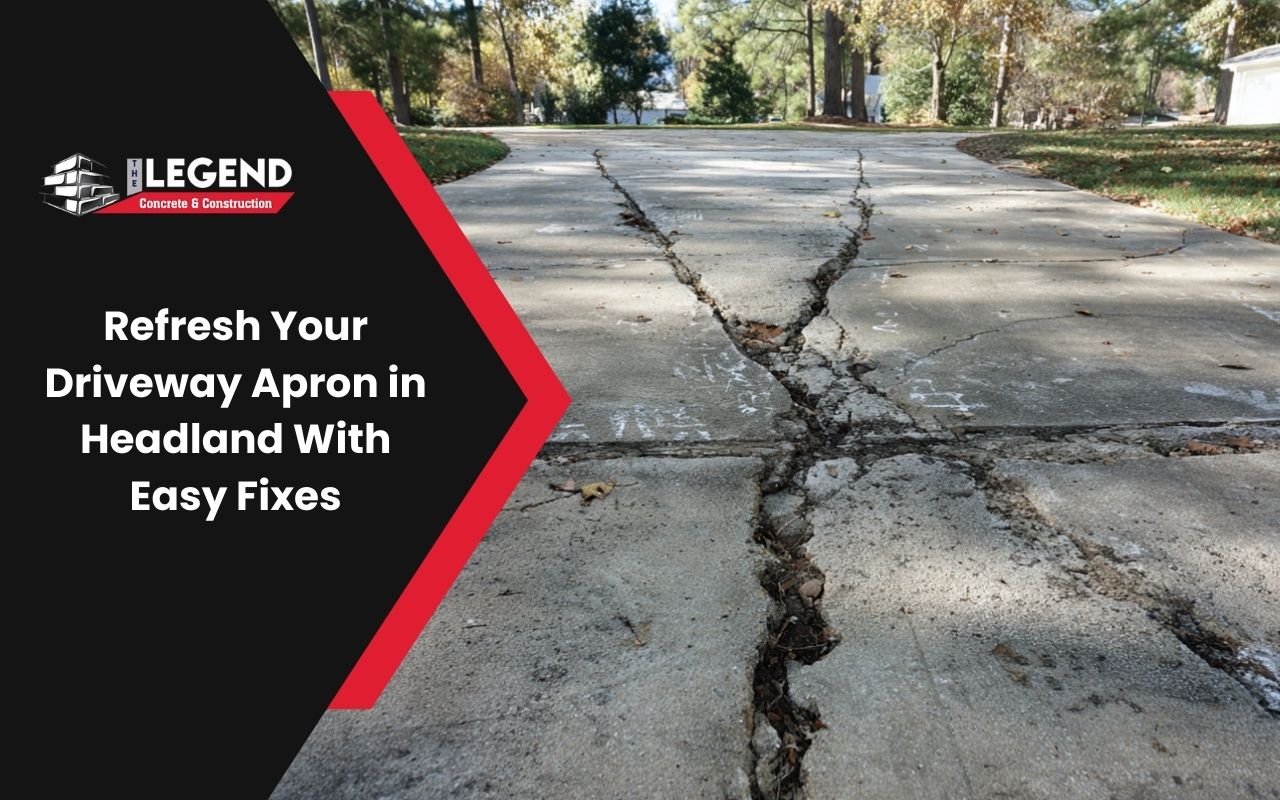
Concrete Driveway Apron Repair in Headland can feel simple when you start small. After all, your driveway is a first impression. So, a cracked or uneven apron can hurt curb appeal. However, small repairs can also boost safety and strength.
In addition, smart steps like compaction, rebar dowels, and clean tie-ins can help a lot. Many homeowners can handle basic upkeep with simple tools. Therefore, this guide shares practical ways to renew your apron and keep it looking sharp.
Checking the Damage: Finding Cracks and Uneven Spots
First, inspect the apron for cracks, gaps, and raised areas. Weather, shifting ground, and traffic can cause damage over time. Also, check the edge where the apron meets the road. Mark problem areas with chalk so you can fix them in order.
For Concrete Driveway Apron Repair in Headland, note each flaw’s depth and size. Then look for spalling, chipping, dips, or bumps. Finally, identify where a new patch must connect to the old slab for a smooth tie-in.
- Outline cracks and gaps with chalk or paint.
- Measure crack length, width, and depth.
- Spot trip hazards and poor drainage areas.
- Mark edges where new concrete must tie in.
Getting Ready: Tools and Materials You Will Need
Next, gather tools that make the work cleaner and faster. Use a stiff broom or wire brush for debris. A chisel and hammer help open cracks for better bonding. Also, wear gloves, safety glasses, and a mask to reduce dust exposure.
For Concrete Driveway Apron Repair in Headland, plan for reinforcement and neat edges. A trowel helps you pack material into cracks. A straightedge keeps patches flush. If you add rebar dowels, bring a hammer drill and the right bits.
- Cleaning tools: broom, vacuum, brush, mild detergent.
- Prep tools: chisel, hammer, tape, plastic sheets.
- Repair tools: bucket, mixer, trowel, straightedge.
- Reinforcement: hammer drill, bits, rebar dowels, epoxy.
Cleaning and Getting the Surface Ready
Then clean the surface so repair materials can grip well. Sweep dirt and sand, and scrub oil stains with warm water and detergent. For large areas, a gentle pressure wash helps. Still, avoid blasting too hard, since that can weaken the concrete.
For Concrete Driveway Apron Repair in Headland, open cracks slightly for better hold. Undercut wide cracks with a chisel, and remove loose pieces. Rinse with clean water, and let the surface dry fully. If you need a stronger tie-in, roughen the old concrete first.
Filling Cracks and Holes: Picking the Right Mix
Now choose a repair mix that fits the crack size. Epoxy fillers work well for thin hairline cracks. Meanwhile, wider cracks often need a polymer-modified cement mix for better bonding. Ready-to-use patch kits can also save time for small repairs.
Mix materials in a clean bucket and follow directions closely. Press the compound firmly into cracks with a trowel. For deeper holes, add thin layers and let each layer set. Finally, smooth the top to match the existing finish.
Making It Even: Fixing Low Spots and High Spots
After that, level uneven areas to stop water from pooling. Self-leveling compound works well for shallow dips. Pour it into low spots and guide it with a straightedge. Let it set fully before use, since early traffic can ruin the finish.
For bumps, grind them down slowly with a diamond wheel. Wear safety gear to manage dust. Once the surface is even, compact any new material you added. This step helps prevent future settling and keeps the apron stable under daily loads.
Adding Strength: How Rebar Dowels Help
Rebar dowels can connect a new patch to the existing slab. This helps reduce movement and future cracking. Mark spacing along the repair line, often around 12 inches apart. Then drill holes that match your dowel size and depth needs.
Clean each hole with a vacuum or compressed air. Add epoxy adhesive, then insert the dowels and align them well. Let the epoxy set before patching. As a result, old and new concrete work together as one stronger section.
Compaction and Curing: Steps That Make Repairs Last
Compaction removes trapped air and helps the repair bond well. Use a hand tamper or wooden block for small areas. For larger sections, a small plate compactor can help. Therefore, take your time, since rushed work can lead to settling later.
For Concrete Driveway Apron Repair in Headland, curing matters just as much. Cover new material with plastic or damp burlap to hold moisture. Mist it lightly if it dries too fast. Most mixes need several days before they handle regular traffic.
- Compact repairs to reduce air pockets.
- Keep moisture in with plastic or damp burlap.
- Mist daily if the surface dries quickly.
- Wait several days before heavy use.
Smooth Transitions: Clean Tie-Ins That Look Natural
Next, feather the patch edges to blend old and new concrete. Use a sponge or small brush before the mix sets. A finishing trowel can refine the edge line. Also, match the surface texture, like a broom finish, to keep the look consistent.
Remove tape and coverings carefully to avoid chipping. If you see tiny gaps, fill them with a thin touch-up layer. After curing, sand rough spots lightly for comfort and style. Good tie-ins also help block water at the joint.
Better Curb Appeal: Staining or Sealing Choices
If color looks uneven, staining can help blend old and new areas. Water-based and acid-based stains create different looks. Apply stain in small sections for even coverage. Then let it dry and decide if a second coat is needed for a stronger tone.
After staining, or on bare concrete, add a clear sealer for protection. Sealers help resist oil, water, and UV wear. Apply a thin coat with a roller or sprayer. Reapply every few years to keep the surface protected and easy to clean.
- Stain to unify color across old and new concrete.
- Seal to protect from spills, water, and sun.
- Apply thin coats for a smooth finish.
- Reseal every few years for lasting results.
Frequently Asked Questions
What causes driveway apron cracks in the first place?
Common causes include freeze-thaw cycles, shifting soil, heavy vehicle loads, and poor drainage. Over time, these stresses can open small cracks that grow if water gets inside.
Do I always need rebar dowels for a repair?
No. Small hairline cracks may not need them. However, dowels help a lot on wider repairs or spots that carry heavier loads, since they reduce movement.
How do I know if a crack is too big for a simple patch?
If the crack is deep, spreading fast, or paired with major sinking, a patch may not hold. In that case, a professional assessment is often the safer choice.
How long should I wait before driving on the repaired area?
It depends on the product. Many repairs need several days of curing before regular traffic. Always follow the mix instructions and avoid early heavy loads.
Where can I learn about preventing new cracks later?
You can reduce future cracking by planning smart control joints and drainage. For more detail, review concrete crack prevention joints and how they support long-term durability.
Enjoy the Results: A Renewed Driveway Apron
Concrete Driveway Apron Repair in Headland can restore safety, drainage, and curb appeal. By checking damage, using strong tie-ins, and curing well, you improve long-term performance. Rebar dowels also add support where stress is highest. As a next step, explore driveway replacement in Enterprise, AL if your slab needs a bigger upgrade.
For Concrete Driveway Apron Repair in Headland that involves major settling or wide breaks, a pro may help. If you want guidance for your specific driveway, you can contact Legend Concrete Construction for a repair plan that fits your site.