
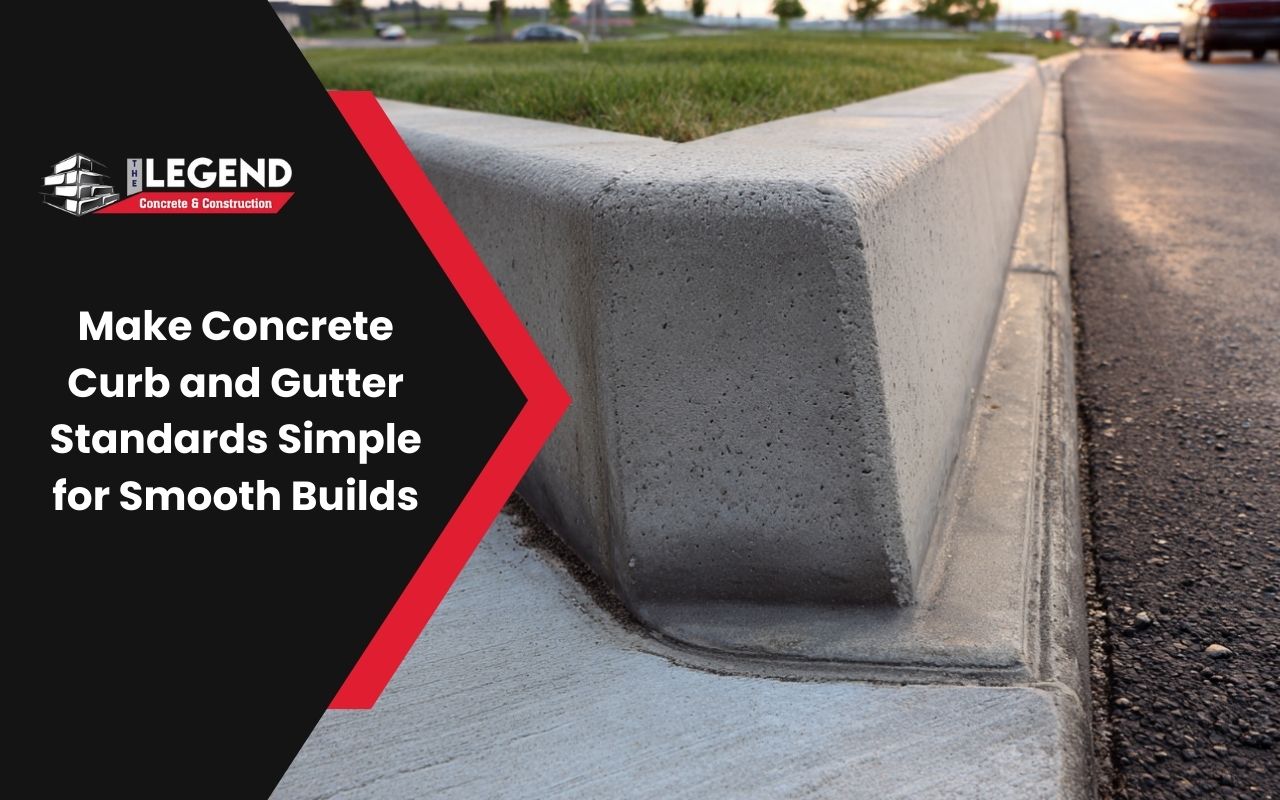
Concrete Curb and Gutter Standards help cities build safer roads. However, curb and gutter details must balance design and real use. If a curb is uneven, people trip. If a gutter is off, water pools fast.
Therefore, simpler rules support smoother work. They also help crews guide runoff into storm inlets. As a result, streets stay cleaner and safer with fewer repairs.
Why Concrete Curb and Gutter Standards Matter
Concrete Curb and Gutter Standards set clear rules for size, shape, and slope. Because of that, crews build more consistent edges and channels. Without steady rules, sidewalks can flood and curbs can become hazards.
- Reduce trips with predictable curb height.
- Lower flooding risk by controlling water flow.
- Cut rework by keeping crews aligned.
- Limit long-term damage from standing water.
Core Pieces of a Good Curb Design
Good Concrete Curb and Gutter Standards start with clear dimensions and safe shapes. For example, a curb should guide cars and water, yet stay walkable. Also, the concrete mix must handle traffic and harsh weather.
Set the shape and height
Rounded edges can reduce injury risk. Meanwhile, straight faces give a clean boundary line.
Place the curb with care
Accurate layout helps prevent misalignment. Otherwise, water can sit and weaken edges.
- Pick a height that protects sidewalks.
- Keep the curb line straight with stakes and string.
- Use a finish that improves traction.
Drainage Rules for Gutters
With Concrete Curb and Gutter Standards, water moves off the pavement faster. First, gutters need enough width for heavy rain. Next, they must guide runoff into Catch basins at planned intervals.
- Keep flow paths clear so water does not spill onto walks.
- Space inlets so runoff does not build up.
- Limit debris traps with clean curb-to-gutter lines.
As a result, maintenance crews can remove leaves and sediment more easily. That way, the system stays reliable for years.
Compliance Steps for Curb and Gutter Work
To meet Concrete Curb and Gutter Standards, crews must follow local codes. Start by checking rules for curb height, gutter width, and curing methods. Then, document each stage to speed up inspections.
For local planning support, you can review construction services in Houston County and see how scope and schedules are handled.
Best Practices for Street Pitch
Cross slope guides water toward the gutter without making the road feel tilted. In many cases, a mild pitch works well. Therefore, crews should check grades early, using reliable levels before concrete sets.
Also, sidewalk transitions must stay smooth for accessibility. As a result, ramps feel safer for wheels and walkers alike.
How Joints Help Curbs Last Longer
Expansion joints give concrete space to move during temperature swings. Without them, sections can crack or lift. Typically, joints are placed at steady intervals, then sealed to block water and dirt.
Over time, simple cleaning helps joints keep working. Consequently, the curb line lasts longer with fewer repairs.
Safety, Maintenance, and Better Street Looks
Clear edges and consistent lines help drivers spot road boundaries. Meanwhile, smooth driveway transitions reduce trip risks for walkers and strollers. In addition, thoughtful inlet shapes make debris removal faster.
Even so, function can still look good. Subtle grooves or patterns can improve appearance without hurting drainage or durability.
Frequently Asked Questions
What makes a curb safer for pedestrians?
A predictable height and smooth transitions reduce trips. Also, a slip-resistant finish helps in wet weather.
Why does gutter width matter?
Wider channels can carry more runoff during storms. As a result, water is less likely to spill onto sidewalks.
How can crews avoid standing water?
They should verify grades before the pour. Then, they should keep the curb line straight to protect flow paths.
What records help with inspections?
Photos of forms, test notes, and curing logs help a lot. Therefore, inspectors can verify steps faster.
How often should curb features be checked?
Regular visual checks after storms are useful. Also, clearing debris early prevents blocked drainage points.
Design and Function in Harmony
When Concrete Curb and Gutter Standards are clear, projects stay smooth from layout to finish. Therefore, communities get safer streets and fewer repairs. If you want to align your next build with durable details, review your curb and gutter scope with our team and plan the right approach.