
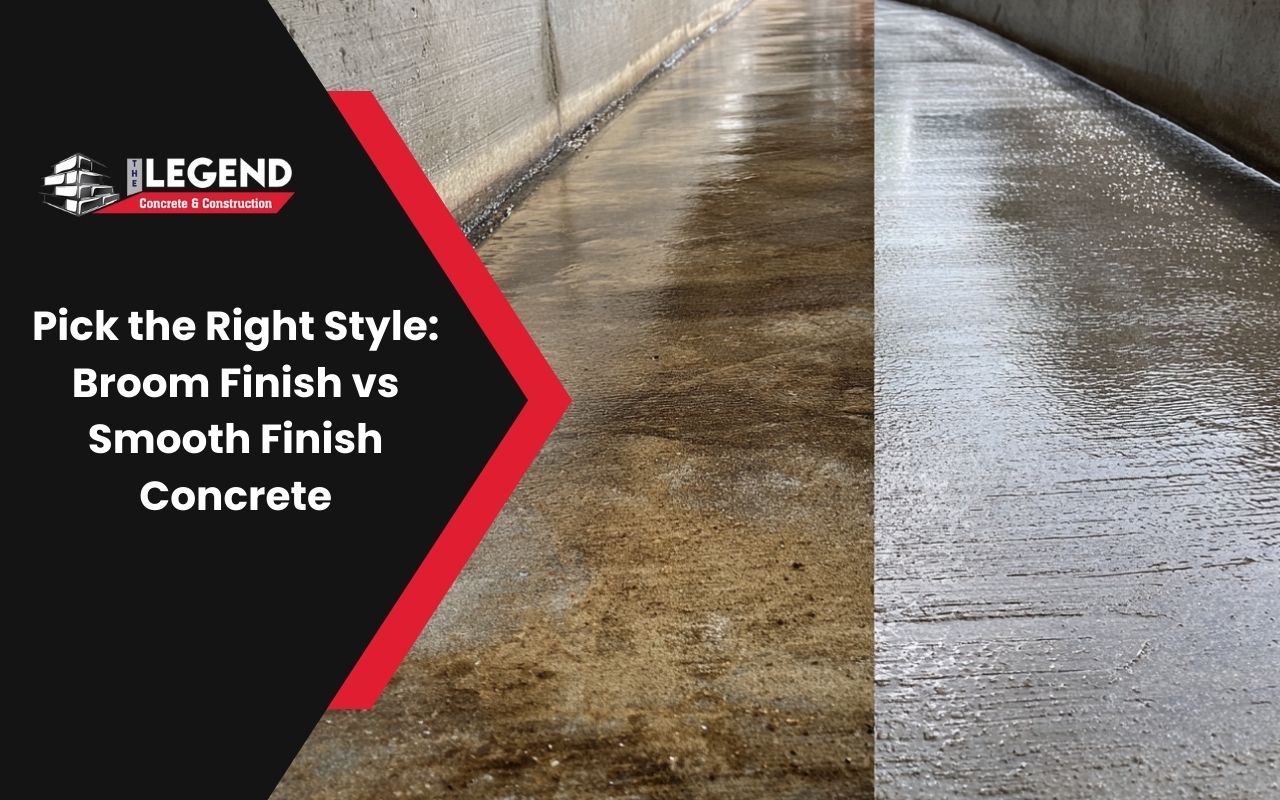
Broom Finish vs Smooth Finish Concrete can feel like a tough choice at first. However, each finish has clear strengths, especially for traction and rain performance. On a rainy day, a walkway can turn slick fast. Because of that, a broom finish can help reduce slips.
Still, if you want a clean, polished look, a smooth finish may fit better. As you plan a driveway or patio, curing tips also matter. With the right approach, you can balance beauty and function and get a surface that lasts.
Pros and Cons of Broom Finish Concrete
The biggest benefit of a broom finish is traction. The light lines create steady grooves, so shoes and tires grip better, even when wet. As a result, it works well for driveways, sidewalks, and pool decks. It is also quick to apply and often needs less labor.
In addition, the texture can hide small flaws and dust, so surfaces can look cleaner with less effort. Still, the rough feel can be tough on bare feet. Also, dirt can sit in the grooves, so deep cleaning may take more time. Over time, heavy traffic can wear the grooves unevenly, which may reduce grip in spots.
- Best for: wet areas, slopes, and busy outdoor paths
- Watch for: dirt buildup and uneven wear over time
- Comfort note: can feel rough underfoot
Benefits of Smooth Finish Concrete
Smooth finish concrete offers a clean, modern look. Light reflects evenly, so areas can feel brighter. Because the surface is flat, it can suit spaces where you want décor, furniture, or design details to stand out. In addition, joints can look less noticeable, which helps the space feel more seamless.
Cleaning is often easier too. With a good sealer, the surface can resist stains and wear. Also, dust has fewer places to hide, so quick sweeping helps a lot. Since it is even, it can work well with wheelchairs, carts, and other rolling items.
- Best for: indoor floors, garages, and modern patios
- Easy care: simple sweeping and mopping
- Works well with: carts and rolling equipment
Traction Performance: Broom vs Smooth Finish
For traction, Broom Finish vs Smooth Finish Concrete often has a clear winner. A broom finish naturally adds slip resistance through its grooves. Therefore, it is a strong pick for sloped driveways, walkways, and outdoor living areas that stay active all year.
On the other hand, smooth finish concrete has less natural grip. Because of that, it may need a sealer with anti-slip additives in wet zones. Indoors, this is usually less of a concern. Still, it matters in entryways, near doors, and in high-traffic spots.
- Broom finish: built-in grip without extra coatings
- Smooth finish: may need anti-slip add-ons
- Best practice: match finish to how often it gets wet
Rain Performance: Broom vs Smooth Finish
In rain, broom finish concrete can shed water more easily. The small channels help reduce puddles, so traction stays more reliable during a storm. As a result, patios, sidewalks, and driveways often dry faster and stay safer.
In contrast, a smooth finish can hold a thin film of water. That film can turn the surface slippery until it dries or gets wiped. While sealers and texture treatments can help, they add extra steps. For covered areas, smooth finish can still work well.
Curing Tips for Broom Finish Concrete
Good curing supports strength and long-term performance. One helpful step is to keep the surface damp after pouring. For example, you can mist it several times a day for about a week. This reduces fast drying and helps limit surface cracks that can affect the grooves.
Timing is also key when you broom the surface. If it is too wet, the grooves can be shallow. If it is too dry, the broom can pull fine material and leave uneven texture. After brooming, a light tarp or curing blanket can protect it from wind and strong sun.
Curing Tips for Smooth Finish Concrete
Smooth finish concrete also needs steady moisture early on. Covering it with plastic sheeting or wet burlap can help prevent cracks and uneven color. In many cases, sealing within a day or two can lock in moisture once the surface can handle light foot traffic.
During finishing, a steel trowel smooths and tightens the surface. Yet timing still matters. If the concrete is too soft, the trowel can leave marks. If it is too hard, it can’t flatten small bumps. With steady curing, the surface stays strong and keeps its clean look.
Applications of Broom Finish Concrete
Broom finish is often used outdoors where safety matters most. Driveways can benefit from better grip when vehicles start or stop. Sidewalks and paths can feel safer, especially on slopes. Around pools, the texture can help prevent slips after people get out of the water.
If you want ideas for texture options that match your space, explore textured concrete to see how grip and style can work together.
Applications of Smooth Finish Concrete
Smooth finish concrete works well in living rooms, basements, and showrooms. It creates a clean base that helps furniture and décor stand out. Garages also use smooth concrete often, since it can pair well with protective coatings and stay easy to sweep.
For outdoor spaces where the look matters most, it can also fit formal patios or rooftop areas. To compare other styles, review outdoor concrete finishes and see which one matches your goals.
Combining Aesthetics and Functionality
Sometimes, the best plan is to mix both finishes. For example, you can use smooth finish in a seating area, then shift to broom finish along walkways or near pool edges. This way, you get a polished look where people relax, plus better traction where slips are more likely.
Color sealers or stains can also help the transition feel natural. If you are planning an outdoor hangout area, explore concrete patios to see how zones can be designed for both comfort and safety.
Frequently Asked Questions
Which finish is safer for wet areas?
A broom finish is usually safer outdoors because its grooves improve traction when the surface is wet.
Does smooth finish concrete always need a sealer?
Not always, but a sealer helps protect against stains and wear. In wet zones, it can also improve slip resistance.
How does rain affect each finish?
Broom finish tends to shed water faster due to light channels. Smooth finish can hold a thin water layer that feels slick.
When should the broom texture be added?
Add it after the surface sets but before it gets too firm. Good timing keeps the grooves even and consistent.
Can I use both finishes in one project?
Yes. Many projects use smooth finish for seating zones and broom finish for walkways and edges to improve safety.
Making the Right Choice
Broom Finish vs Smooth Finish Concrete comes down to what matters most in your space. If you need better traction and strong rain performance, broom finish is often the safer pick for outdoor areas. If you want a sleek look with easy cleaning, smooth finish can be ideal indoors or in covered spaces.
Still, the best result comes from matching the finish to how you will use the area. Think about foot traffic, how often it gets wet, and how much upkeep you want. If you want help choosing the right finish for your project, reach out through the contact page and share your goals and site conditions.