
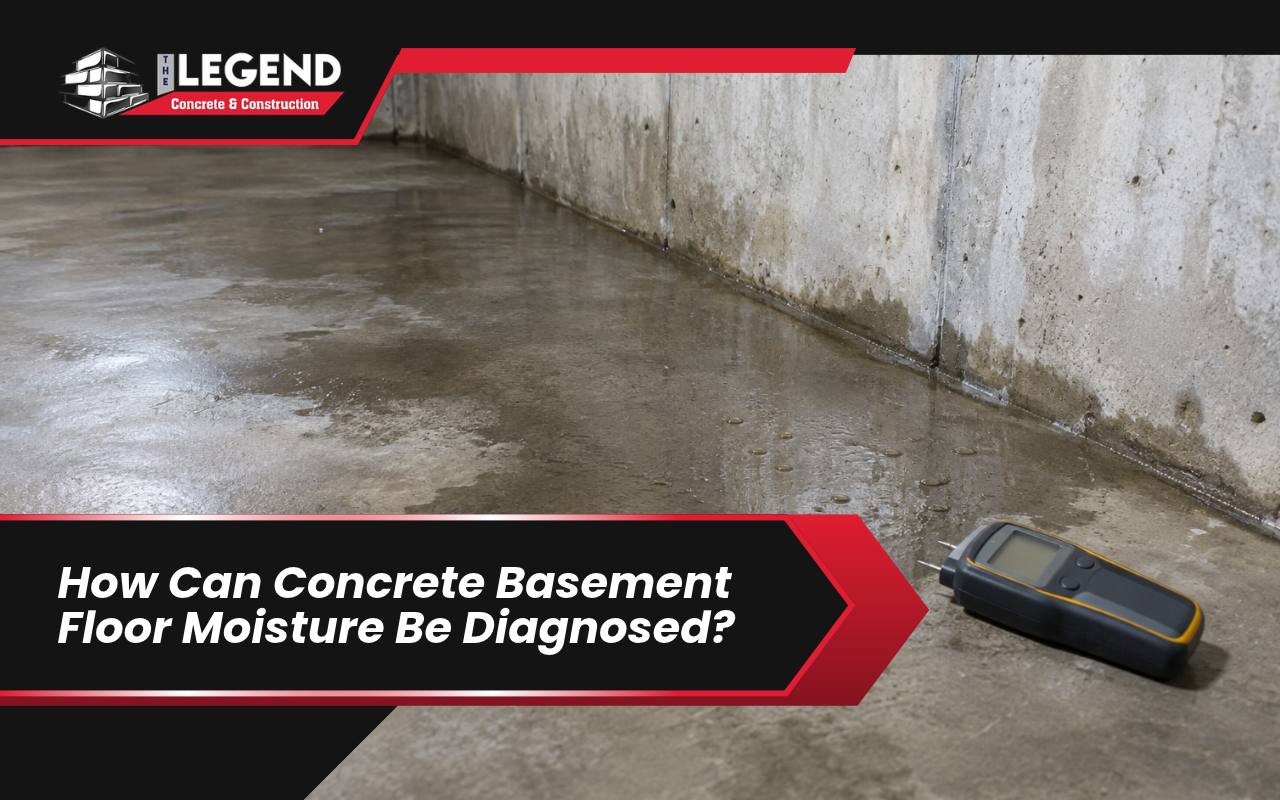
Concrete basement floor moisture can appear as dark spots, dampness, white residue, peeling coatings, musty odors, or recurring surface condensation. request your floor evaluation when moisture keeps returning and the source is unclear.
First Separate Condensation From Slab Moisture
Moisture on a basement floor can come from humid indoor air, groundwater movement, plumbing leaks, or vapor moving through the slab. The pattern matters.
Widespread dampness after humid weather may point in a different direction than a localized wet area near one wall.
Read Basement Slab Moisture Signs Carefully
- Dark patches that return
- White powdery residue
- Peeling floor coatings
- Musty odors near the slab
- Damp boxes or stored items
These signs do not identify the source by themselves, but they help narrow what should be investigated next.
Test The Conditions Before Choosing A Finish
schedule your floor evaluation before applying a new coating or finish over recurring moisture. Free estimates are available within 24 hours, helping property owners plan the next step with more information.
Our 13+ years of experience helps us recognize common basement slab conditions that can affect finish performance.
Understand What A Vapor Barrier Can Do
A vapor barrier beneath a slab is intended to limit moisture vapor migration from the ground. It works best when included as part of proper slab construction.
Our concrete vapor barrier guide explains why this layer matters in slab planning.
Compare Finish Options Only After Moisture Review
| Finish Option | Visual Result | Moisture Consideration |
|---|---|---|
| Polished concrete | Clean finished slab | Requires suitable slab condition |
| Coating system | Uniform surface | Moisture can affect adhesion |
| Natural concrete | Simple appearance | Still needs moisture review |
Know Why Polished Concrete Needs A Stable Slab
Polishing improves the existing concrete surface, but it does not correct active water entry. Moisture concerns should be investigated before a decorative finish is selected.
Our residential polished concrete guide provides more information about finished concrete floors.
Review Drainage Outside The Basement Too
At The Legend Concrete & Construction, we provide licensed and insured service for residential and commercial concrete projects.
Exterior grading, downspouts, foundation drainage, and surrounding soil conditions can influence basement moisture. Indoor symptoms may begin with water management outside.
Use Concrete Benefits Without Ignoring Moisture
Concrete floors are durable and versatile, but the slab condition should still guide finish selection and maintenance expectations.
Our concrete floor benefits guide explains where concrete performs well in interior spaces.
Track Moisture Before And After Heavy Rainfall
A simple moisture log can help show whether the basement floor changes after storms, humid weather, plumbing use, or seasonal groundwater shifts. Patterns often provide valuable clues.
Cash and checks are accepted payment methods for customer convenience.
Plan Repairs Around The Actual Moisture Source
Replacing a coating or adding a finish without understanding the source can allow the problem to return. Diagnosis should come before cosmetic correction.
At The Legend Concrete & Construction, we encourage property owners to document recurring conditions before choosing a finish or repair strategy.
Move Stored Items Away From Damp Areas
Cardboard boxes, rugs, and furniture can hide moisture patterns and trap dampness against the slab. Clearing the area makes inspection easier and can help show whether the moisture is widespread or concentrated beneath stored items.
Compare Wall And Floor Moisture Patterns
If dampness appears both on the slab and near the lower wall, the source may involve exterior drainage or foundation conditions rather than the floor alone. Mapping where moisture appears can provide useful context before surface work begins.
Allow The Slab To Dry Before Judging A Finish
After a moisture event, give the area enough time to dry and observe what returns. Applying coatings too quickly can trap uncertainty beneath the new finish. A stable, understood surface is a better starting point for any decorative or protective treatment.
Check Whether Mechanical Equipment Adds Humidity
Basement laundry equipment, utility areas, and limited ventilation can raise indoor humidity. That extra moisture may condense on a cooler slab and look similar to moisture rising through the floor.
Keep A Simple Record Of Recurring Conditions
Write down when dampness appears, how long it lasts, and what the weather was doing. A short record can reveal patterns that a single inspection cannot show.
Compare Seasonal Humidity With Persistent Dampness
Some basement floors feel damp mainly during humid weather, while others stay wet after storms or throughout the year. Comparing those patterns can help separate indoor condensation from moisture entering through the slab or surrounding foundation conditions.
Carefully pay attention to whether the dampness appears first near exterior walls, floor joints, or isolated plumbing areas. That location can make the next inspection more focused and prevent unnecessary finish work across the entire basement.
Frequently Asked Questions
Why does my basement concrete feel damp?
Possible causes include condensation, groundwater, vapor migration, plumbing leaks, or drainage problems around the foundation.
What is white powder on concrete?
It may be efflorescence, which can appear when moisture carries soluble salts to the surface.
Can I paint over a damp basement floor?
Not until the moisture source and slab condition are understood. Dampness can affect coating performance.
Does a vapor barrier stop all moisture?
No. It can reduce ground vapor migration, but other moisture sources may still affect the basement.
Can polished concrete work in a basement?
Yes, when the slab is suitable and moisture conditions support the finish system.
Diagnose Concrete Basement Floor Moisture Before Finishing
basement slab moisture should be evaluated by pattern, slab condition, drainage, humidity, and likely water source before finishes are selected. Our team at The Legend Concrete & Construction can help property owners understand the concrete side of the problem. book your floor evaluation when you want clearer next steps.