
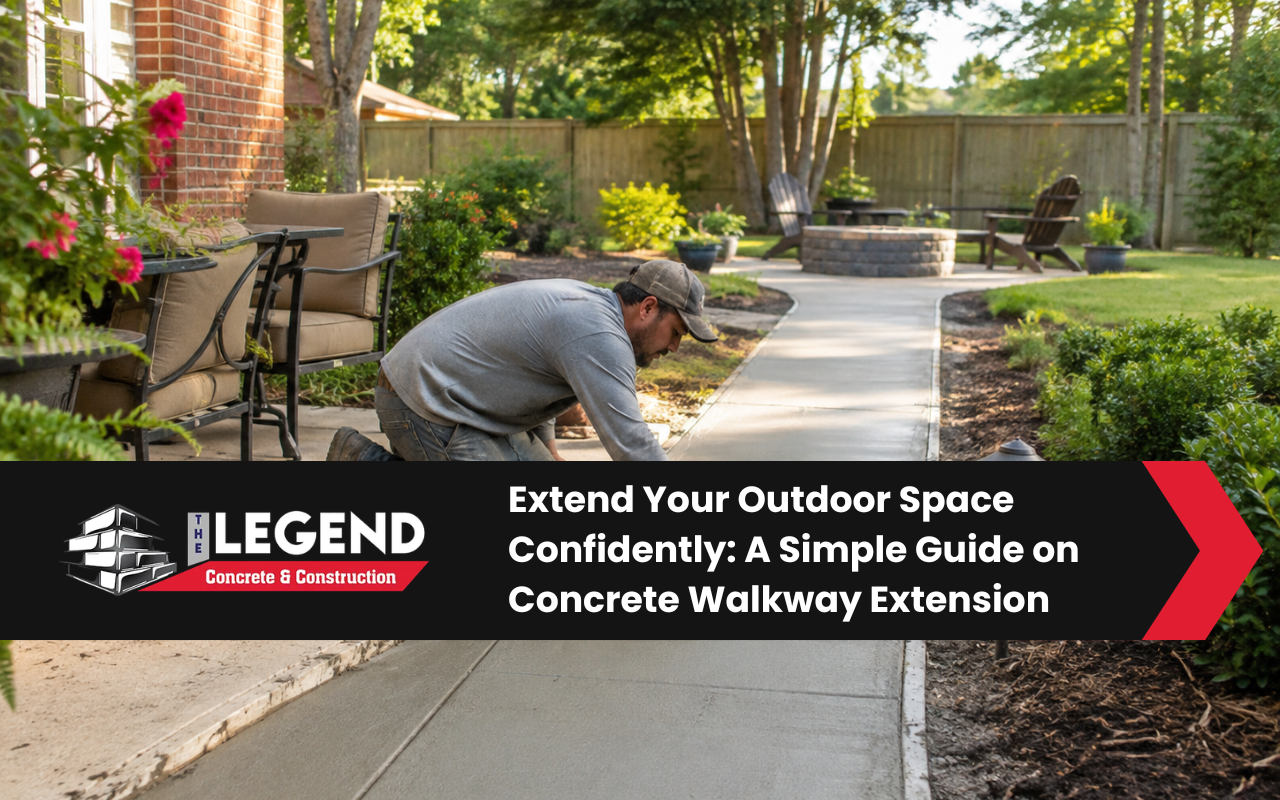
A concrete walkway extension can create a smoother route between your home, driveway, patio, garden, or outdoor living area. Careful planning also helps the new section feel connected to the existing path instead of looking like a separate project.
At The Legend Concrete & Construction, we consider how each walkway will look, drain, and support daily use. Our approach begins with practical details that can guide a durable concrete walkway project from layout planning through the final finish.
Plan a Walkway That Fits Your Property
Good walkway layout planning starts with the way people move through the property. A direct path may work well between frequently used areas, while a gentle curve can blend naturally with garden beds and landscaping. The layout should make movement easy without creating unnecessary turns or narrow spaces.
Before starting a concrete walkway extension, identify the features that may affect its shape and placement. Early planning can reveal obstacles and help create a path that feels balanced with the surrounding outdoor space.
- Mark the starting and ending points of the extension.
- Consider steps, gates, patios, garden beds, and seating areas.
- Look for tree roots, drainage areas, and visible utility features.
- Choose a width that supports the walkway’s expected use.
- Plan a suitable slope so water can move away from the surface.
How Can New Concrete Match Existing Walkways?
Matching old and new concrete requires attention to color, texture, shape, and finishing methods. Existing concrete changes over time because of sunlight, moisture, dirt, and regular use. For that reason, a new section may not look exactly the same on the day it is poured.
Our team at The Legend Concrete & Construction can review the existing surface and discuss realistic ways to create a more consistent appearance. A similar broom finish, aggregate style, joint pattern, or decorative detail may help the sections work together. Property owners can also explore custom walkway options that create an intentional transition.
Sometimes a clear border or planned joint offers a better result than trying to hide the connection completely. The right choice depends on the age and condition of the original walkway.
Build Strong Edges for Lasting Performance
Walkway edge reinforcement supports the parts of the slab that are often exposed to soil movement, lawn equipment, and repeated foot traffic. Strong forms help hold the concrete in place during installation, while suitable reinforcement can support the slab as it settles and carries normal loads.
Edge preparation should be considered as part of the entire concrete walkway extension rather than treated as a final detail. The surrounding soil, base material, path width, and intended use can all affect the reinforcement plan.
- Prepare stable soil along the full walkway route.
- Use secure forms to create clean, controlled edges.
- Place reinforcement according to the walkway design.
- Keep nearby soil and landscaping from pressing against fresh edges.
- Create planned joints to help manage normal concrete movement.
Prepare the Base for Better Drainage
A walkway depends on the ground beneath it. Soft soil, poor drainage, or an uneven base can increase the risk of settlement and surface movement. Site preparation may include removing loose material, compacting the soil, and placing a stable base before the concrete is installed.
The walkway should also guide water away from areas where pooling may become a problem. A slight, planned slope can help water leave the surface without making the path uncomfortable. Drainage needs should be reviewed in relation to nearby foundations, lawns, planting areas, and existing paved surfaces.
When you choose The Legend Concrete & Construction, we evaluate the route and surrounding conditions before recommending a practical installation approach. This step helps connect the visible design with the support the walkway needs below the surface.
Choose Materials That Support Daily Use
The best material choices depend on how the walkway will be used and how it should look beside the home. Surface texture can affect both appearance and traction. Decorative finishes may create visual interest, while a simple broom finish can provide a clean and familiar look.
Base materials, concrete mixtures, reinforcement, joints, and curing methods also influence the finished path. Our guide to durable walkway materials explains several factors that property owners can consider before making a final decision.
- Select a surface texture suitable for regular foot traffic.
- Consider how the finish will relate to existing concrete.
- Choose a base material that supports stable installation.
- Plan joint locations as part of the walkway layout.
- Discuss curing and care before the project begins.
Work With a Local Dothan Contractor
A walkway extension contractor in Dothan, AL should take time to understand the property, the existing path, and the reason for the addition. Clear communication can help the contractor prepare a layout that supports movement, drainage, and a natural connection between outdoor areas.
At The Legend Concrete & Construction, we discuss the project scope before work begins. Property owners should understand what the plan includes, how the site will be prepared, and which finishing details will be used. Local requirements may vary, so permits or property restrictions should be confirmed with the proper local authority when needed.
A detailed concrete walkway quote should reflect the known site conditions and requested features. Sharing clear information about the walkway’s length, location, use, and preferred finish can support a more useful project discussion.
Frequently Asked Questions
Can a walkway extension connect to old concrete?
Yes, a new section can connect to an existing walkway when the joint, elevation, base, and drainage are planned carefully. Matching old and new concrete may require similar textures or an intentional transition. Review our walkway design options for ideas that may suit the property.
What should walkway layout planning include?
Walkway layout planning should include the route, width, slope, nearby obstacles, entry points, and expected foot traffic. It should also consider how water moves across the property and how the path connects with patios, driveways, gates, or garden areas.
Why is walkway edge reinforcement important?
Reinforced and well-supported edges can reduce damage caused by weak soil, nearby equipment, and pressure along the border. The right method depends on the site and walkway design. Our walkway material guide provides more information about planning for durability.
How can I prepare for a walkway estimate?
Identify where the walkway should begin and end, estimate the desired width, and note any slopes, roots, gates, or existing concrete. Photos and basic measurements can also support the conversation. You can request a concrete walkway quote with details about your project.
Will new concrete have the same color as old concrete?
New concrete may initially look different because existing concrete has aged and weathered. Similar materials and finishing methods can help create a closer visual connection, but an exact match may not always be possible. A planned joint or border can make the transition look more intentional.
Start Your Walkway Extension With a Clear Plan
A successful concrete walkway extension begins with a layout that supports daily movement and fits the surrounding property. Base preparation, drainage, edge support, material selection, and finishing details should work together to create a practical and attractive path.
With The Legend Concrete & Construction, you can discuss your goals with a team that considers both the new section and the existing outdoor space. Share your walkway location, preferred design, and property needs through our contact page to begin planning your walkway extension in Dothan, AL.