
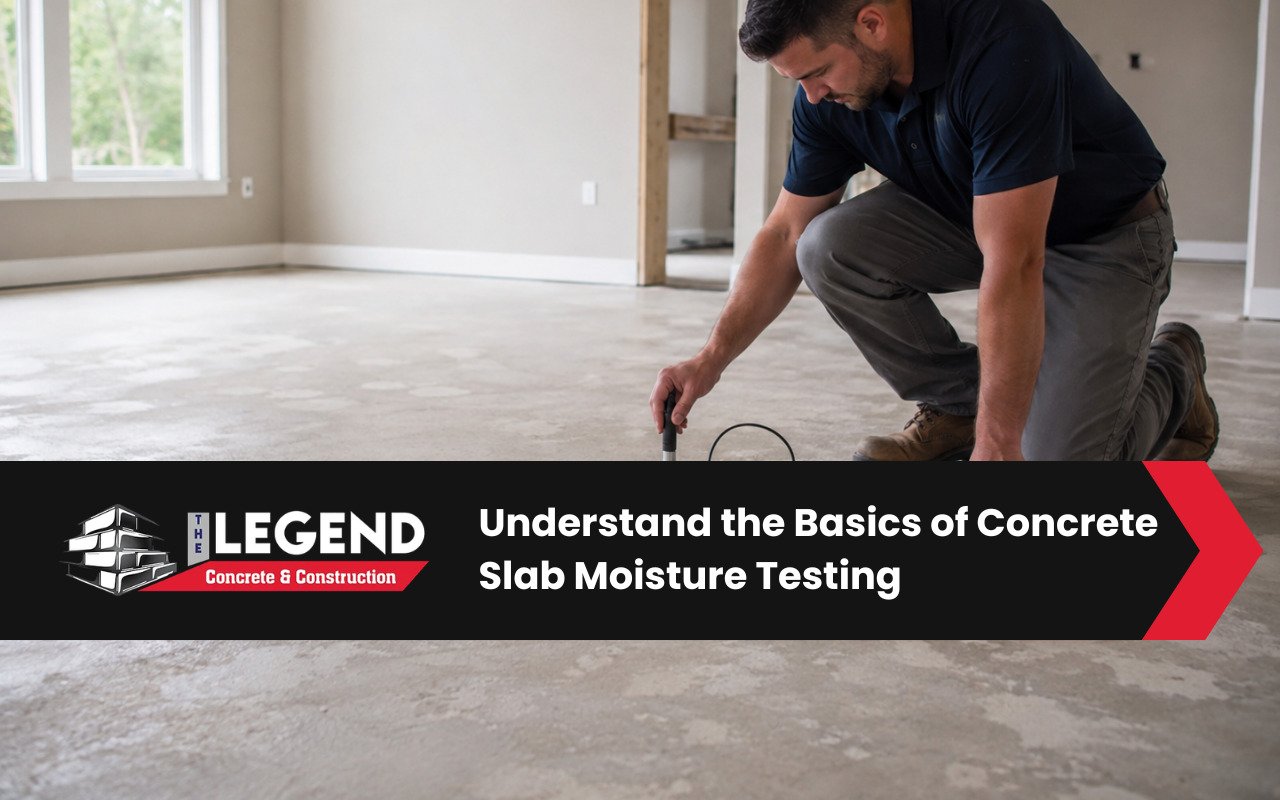
Moisture can affect how flooring, coatings, and adhesives perform over a concrete surface. Concrete slab moisture testing helps identify hidden conditions before materials are installed. At The Legend Concrete & Construction, we also explain how a suitable vapor barrier for concrete slabs can reduce moisture movement from the ground.
Testing is especially useful in humid areas such as Dothan, Alabama. The right timing and method can reveal whether a slab is ready for the next stage. It can also help homeowners and builders avoid trapped moisture, damaged finishes, and unnecessary project delays.
Why Test Concrete Before Installing New Flooring?
Concrete may look dry while moisture remains inside the slab. After flooring is installed, that moisture can move toward the surface. It may affect adhesives, coatings, wood products, laminate, or other moisture-sensitive materials.
A moisture test gives you useful information before installation begins. It supports better planning and allows your flooring supplier or installer to compare the results with product requirements. Concrete slab moisture testing can also help determine whether more drying time or moisture control is needed.
Common Sources of Moisture Beneath Concrete Slabs
Moisture may come from the concrete mixture, the soil below the slab, poor drainage, or changing indoor humidity. New concrete contains water that must leave gradually as the slab cures and dries. Installing finishes too early may trap part of that moisture.
Ground moisture can also move upward when a vapor barrier is missing, damaged, or poorly placed. Drainage problems near the building may increase exposure around slab edges. Our team at The Legend Concrete & Construction considers these conditions together with the slab design and surrounding site.
Moisture concerns may also relate to other parts of the structure. Understanding residential foundation and footer basics can help property owners see how site preparation, drainage, and concrete work connect.
Signs of Moisture Under Concrete Surfaces
Some moisture problems become visible only after flooring or coatings begin to fail. Regular checks can help you notice changes before the damage spreads. Common signs of moisture under concrete include:
- Dark or damp areas that return after cleaning
- White mineral deposits on the concrete surface
- Loose flooring, bubbling coatings, or weak adhesive
- Musty odors near floors or lower walls
- Warped, stained, or discolored flooring materials
These signs do not always confirm the source of moisture. A proper test can help separate slab moisture from plumbing leaks, surface spills, condensation, or water entering through nearby walls.
Reliable Slab Moisture Test Methods Explained
Different slab moisture test methods provide different types of information. The right option depends on the flooring system, slab condition, and instructions from the material manufacturer. Common methods include:
- In-slab relative humidity testing for internal moisture conditions
- Surface moisture meters for quick comparison between areas
- Moisture vapor emission testing at the slab surface
- Visual inspection for staining, deposits, or coating failure
Surface readings can help locate areas that need more attention, but they may not show moisture deeper inside the concrete. In-slab testing can provide a clearer view of internal conditions. Test results should always be reviewed with the requirements for the planned flooring or coating.
When to Test Concrete Slabs During Projects
Knowing when to test concrete slabs is as important as selecting the method. Testing should take place after the slab has had time to cure and while the building is close to its expected indoor conditions. Temporary heat, open walls, or unusual ventilation may affect the results.
Testing is often useful before flooring delivery, after major weather changes, or when visible moisture signs appear. With The Legend Concrete & Construction, you can discuss testing needs as part of a broader review of your construction services in Dothan, Alabama.
For new projects, testing should be planned early enough to allow time for additional drying or corrective work. For existing slabs, it can be scheduled before repairs, new coatings, remodeling, or replacement flooring begins.
Planning a Slab Moisture Inspection in Dothan
A slab moisture inspection in Dothan, AL should account for local humidity, recent rainfall, indoor climate, and the slab’s age. Seasonal conditions can influence how moisture moves through concrete and how quickly a slab dries.
- Review the planned flooring or coating requirements.
- Inspect the slab for visible damage or damp areas.
- Select test methods suited to the project.
- Record indoor conditions and test locations.
- Compare results with product manufacturer guidance.
A concrete slab contractor in Dothan, AL can also review drainage, site conditions, and related concrete concerns. When you choose The Legend Concrete & Construction, we focus on practical information that supports a clear project plan.
Frequently Asked Questions
Can a concrete slab look dry but still contain moisture?
Yes. The surface may appear dry while moisture remains deeper inside the slab. Concrete slab moisture testing helps identify internal conditions before flooring or coatings are installed. A properly selected under-slab vapor barrier may also help control moisture entering from the ground.
What causes white powder on a concrete floor?
White powder may be mineral deposits left behind as moisture moves through concrete and evaporates. This condition is often called efflorescence. It can indicate moisture movement, but testing and a wider inspection are needed to identify the source. Reviewing foundation and footer construction basics may provide helpful context.
Should moisture testing happen before every flooring project?
Testing is a sensible step when flooring, adhesives, or coatings can be affected by moisture. The product manufacturer may also require a specific test method. Before installation, review the slab condition and the material instructions. Our Dothan construction services page outlines related project support.
Can indoor humidity affect slab moisture test results?
Yes. Indoor temperature, ventilation, heating, cooling, and humidity can influence slab conditions and surface readings. Testing should occur when the building is close to normal use conditions whenever possible. This provides results that better reflect the environment after flooring is installed.
What happens when a moisture test shows high readings?
High readings may mean the slab needs more drying time, improved climate control, or a moisture management system. The correct next step depends on the test method, flooring requirements, and moisture source. Avoid covering the slab until the results have been reviewed carefully.
Protect Your Dothan Concrete Project From Moisture
Moisture testing supports better decisions before flooring, coatings, or other finishes are installed. It can reveal hidden conditions, guide product selection, and reduce the chance of avoidable damage. A careful inspection should consider the slab, indoor climate, drainage, and planned materials.
At The Legend Concrete & Construction, we can discuss your slab concerns and the next practical step for your Dothan project. Use our contact page to request project guidance from a concrete slab contractor in Dothan, AL.