
When a retaining wall is built to last, water control matters as much as the wall itself. At The Legend Concrete & Construction, we know that retaining wall drainage in Dothan, AL helps protect yards, slopes, and outdoor spaces from hidden pressure.
Heavy rain, shifting soil, and poor runoff can weaken a wall over time. However, the right gravel, weep holes, and drain pipes can move water away before damage starts.
Why Drainage Protects Strong Retaining Walls
Water trapped behind a wall creates pressure that pushes against the structure. Over time, this can lead to cracks, leaning, or soil movement. That is why retaining wall drainage in Dothan, AL should never be treated as an extra step.
A good drainage plan gives water a safe path out. It also helps the wall hold its shape, protect the soil, and reduce future repair needs. For more planning insight, review our guide on preventing erosion with retaining walls.
Local Soil And Rainfall Create Extra Pressure
Dothan yards often deal with a mix of clay and sandy soil. Clay can hold water, while sandy areas may wash away when runoff moves too fast. Because of this, drainage must match the site, not just the wall design.
The Legend Concrete & Construction looks at slope, soil behavior, water flow, and wall height before recommending a drainage setup. This helps reduce weak spots and keeps the wall better prepared for heavy rain.
Gravel Backfill Depth Basics For Better Flow
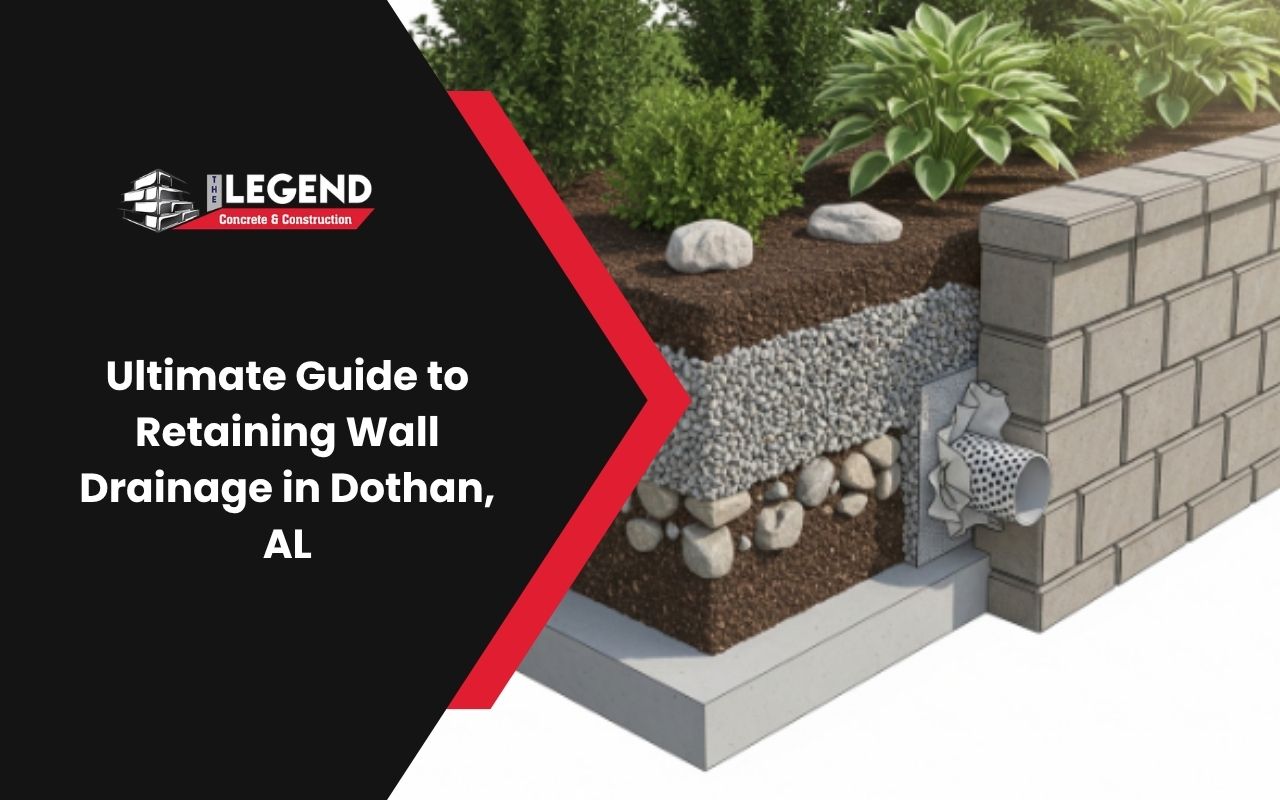
Gravel backfill depth basics help explain how water moves behind the wall. A clean gravel layer lets water pass down toward the drain pipe instead of sitting behind the structure.
- Use clean crushed stone that allows steady water movement.
- Place gravel directly behind the wall to reduce trapped moisture.
- Keep soil and gravel separated with filter fabric when needed.
- Match gravel depth to wall height, soil type, and yard conditions.
In many wall projects, a deeper gravel zone gives better support and drainage. However, the right depth depends on the site, so a careful inspection is always important.
How Do Weep Holes Help Protect Walls?
A retaining wall weep holes guide is useful because weep holes give trapped water a simple way to escape. These small openings are usually placed near the lower part of the wall.
- Weep holes help reduce water pressure behind the wall.
- They should connect with the gravel drainage area.
- They need open paths so water can leave freely.
- They should be checked after strong rain or yard debris buildup.
When weep holes are blocked or missing, water can collect behind the wall. As a result, the wall may begin to bulge, crack, or shift forward.
Early Warning Signs Of Drainage Failure
Signs of drainage failure in walls can show up slowly. Small cracks or wet spots may not seem serious at first, but they often point to water pressure behind the wall.
- Cracks running across blocks, stone, or concrete.
- Leaning, bowing, or bulging wall sections.
- Water stains, moss growth, or damp areas.
- Soil washout, sinkholes, or puddles near the base.
- Loose caps, shifting blocks, or uneven wall lines.
After heavy rain, walk around the wall and look for these changes. Early repairs can prevent larger problems and help protect the full structure.
Materials And Installation Choices That Last
Good retaining wall drainage in Dothan, AL depends on the right mix of stone, pipe, fabric, and careful grading. The Legend Concrete & Construction uses practical material choices that support steady water flow and long-term wall strength.
Drain pipes should slope enough to move water away from the wall. Filter fabric helps keep fine soil from clogging the gravel. For more build guidance, visit our page on retaining wall installation tips.
Frequently Asked Questions
Why is drainage so important behind a retaining wall?
Drainage keeps water pressure from building behind the wall. Without it, the wall can crack, lean, or fail sooner than expected.
How often should weep holes be checked?
We recommend checking weep holes after strong rain and during regular yard care. Clear openings help water leave the wall area without delay.
What gravel works best behind a retaining wall?
Clean crushed stone is often a smart choice because it lets water move through easily. It should be paired with fabric when soil clogging is a concern.
When should I call a retaining wall contractor in Dothan, AL?
Call when you notice cracks, leaning, soil washout, or standing water near the wall. The Legend Concrete & Construction can review the site and explain practical next steps.
Can I request a retaining wall installation quote in Dothan, AL?
Yes. Share your wall goals, site concerns, and drainage needs through our contact page so we can discuss the project clearly.
Start Your Wall Project With Confidence
Retaining wall drainage in Dothan, AL is one of the best ways to protect your outdoor investment. With the right design, your wall can manage rain, support soil, and stay stronger over time.
The Legend Concrete & Construction is ready to help you plan a wall that fits your yard and drainage needs. You can also explore durable retaining wall materials before your next project with The Legend Concrete & Construction.