
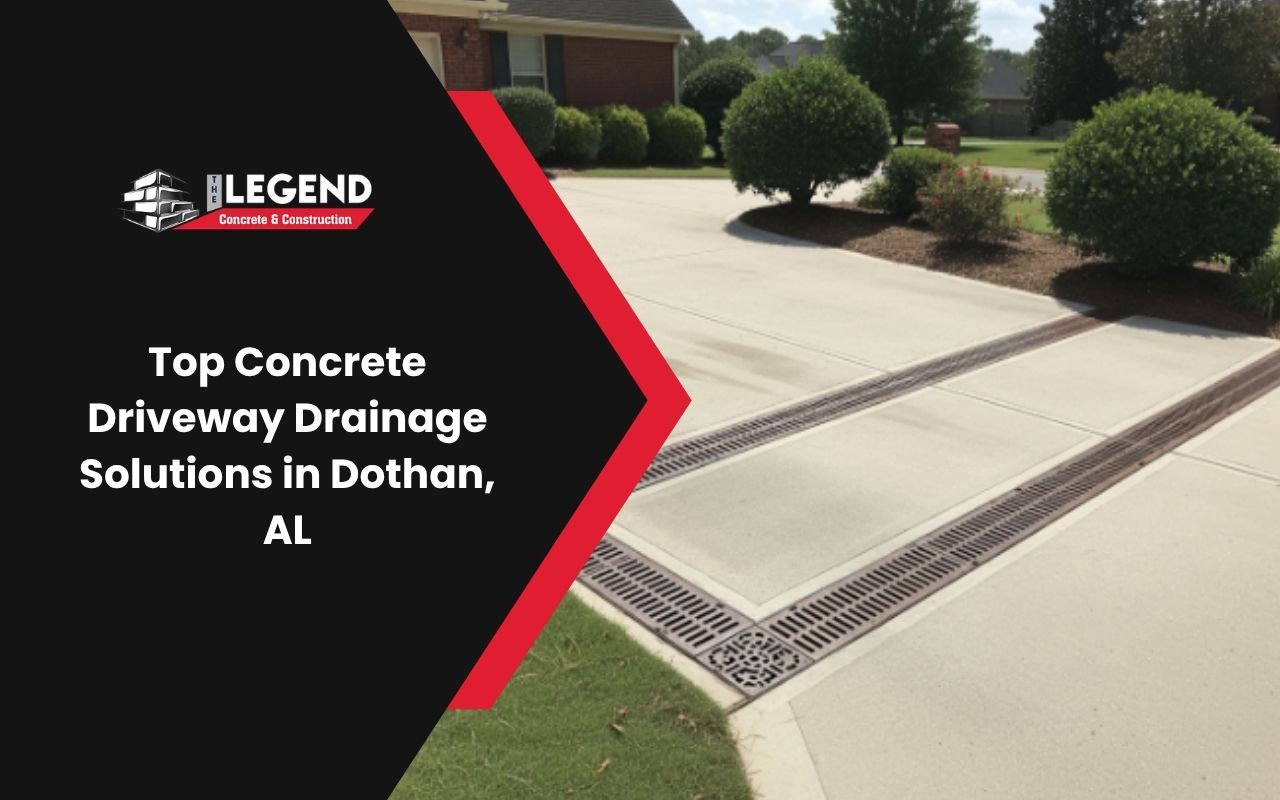
Water can slowly damage a concrete driveway when it has nowhere to go. Cracks, stains, erosion, and pooling can appear faster after heavy rain, especially around homes in Dothan.
At The Legend Concrete & Construction, we help homeowners understand concrete driveway drainage solutions in Dothan, AL that protect the surface, control runoff, and support long-term driveway strength.
Why Proper Driveway Drainage Matters
Good drainage keeps water from sitting on top of the concrete or soaking into weak spots. When water stays in place, it can widen small cracks, soften the soil below, and make the driveway surface wear down sooner.
Drainage also protects nearby areas. For example, runoff control near garages can help keep water away from doors, walls, and foundations. As a result, your driveway stays safer, cleaner, and easier to maintain after storms.
Common Signs of Poor Water Flow
Many drainage problems start small, so it helps to check your driveway after heavy rain. Small puddles or soil movement can point to bigger issues under the surface.
- Water pools in the same low areas after each storm.
- Runoff moves toward the garage or home entrance.
- Soil washes away along the driveway edges.
- Cracks appear near places where water collects.
- Dark stains, algae, or slick spots form on the concrete.
When these signs appear, The Legend Concrete & Construction recommends addressing the cause instead of only patching the surface. A simple repair may not last if water keeps moving the wrong way.
Drainage Options That Fit Dothan Homes
Every property is different, so the right system depends on the driveway shape, soil, slope, and where the water needs to go. In many cases, concrete driveway drainage solutions in Dothan, AL include more than one method.
- Channel drains collect surface water before it reaches problem areas.
- French drains move water below the ground and away from the base.
- Catch basins help handle larger amounts of runoff during strong rain.
- Swales guide water through a shallow, planned path in the yard.
- Proper grading helps water move away from the concrete surface.
These options can work well when they are placed correctly. For more support around the sides of the driveway, our guide on driveway edge reinforcement explains how strong edges help reduce washouts.
How Can Slope Problems Be Fixed?
Driveway slope troubleshooting starts with seeing where water naturally flows. A driveway should guide water away from the home, not toward the garage, low spots, or soft soil beside the concrete.
Sometimes, small grading changes can improve drainage. In other cases, a drain or shallow channel may be needed to collect water before it spreads. The goal is to create a clear path that moves water away without harming nearby areas.
Because slope changes can affect the whole property, it is smart to plan them carefully. The Legend Concrete & Construction looks at the driveway, yard, and nearby structures before recommending a drainage plan.
Edging Methods That Help Prevent Washouts
Edging to prevent washouts helps keep soil, gravel, and landscape material in place. Without strong edges, rainwater can cut into the sides of the driveway and weaken the support under the concrete.
- Concrete curbs create a strong border along the driveway.
- Stone edging helps slow water and hold nearby soil.
- Metal edging can support clean lines in some landscape areas.
- Compacted soil beside the driveway reduces edge movement.
- Landscape fabric can help limit soil loss under stone areas.
Strong edging works best when water is also directed away from the driveway. For ongoing care, our driveway care tips for Dothan homeowners can help you spot early problems.
When Professional Drainage Help Makes Sense
Some drainage problems are easy to see, but the real cause may be below the surface. A driveway drainage contractor in Dothan, AL can check the grade, soil movement, water direction, and concrete condition before work begins.
Professional help is especially useful when water runs toward a garage, soil keeps washing away, or cracks return after repairs. The Legend Concrete & Construction can review the site and explain which concrete driveway drainage solutions in Dothan, AL fit the property best.
Homeowners can also request a driveway drainage quote in Dothan, AL before moving forward. Clear planning helps avoid guesswork and gives you a better path toward lasting results.
Frequently Asked Questions
Why does water pool on my concrete driveway?
Water usually pools because the driveway has low spots, poor slope, blocked drains, or settled soil. A careful inspection can show where the water flow is breaking down.
Can poor drainage crack my driveway?
Yes, poor drainage can lead to cracks over time. Water can enter small openings, weaken the base, and place extra stress on the concrete surface.
What helps stop runoff near my garage?
Runoff control near garages may include channel drains, grading changes, or catch basins. The right choice depends on how much water reaches the garage area.
How often should I check driveway drainage?
It is best to check drainage after heavy rain and during seasonal maintenance. The Legend Concrete & Construction also suggests clearing leaves and dirt from drains often.
Do I need a contractor for drainage repairs?
A contractor is helpful when water keeps returning, the slope is unclear, or the driveway has erosion. Larger repairs need proper planning to protect the concrete and nearby areas.
Protect Your Driveway From Water Damage
Concrete driveway drainage solutions in Dothan, AL can help protect your driveway from cracks, erosion, stains, and soil washouts. With the right plan, water moves away from the surface instead of damaging it.
Regular upkeep also matters. Our guide on how to maintain your concrete driveway shares simple steps that support long-term strength and curb appeal.
When you are ready to solve drainage problems, The Legend Concrete & Construction is here to help. Contact our team to discuss concrete driveway drainage solutions in Dothan, AL for your home.