
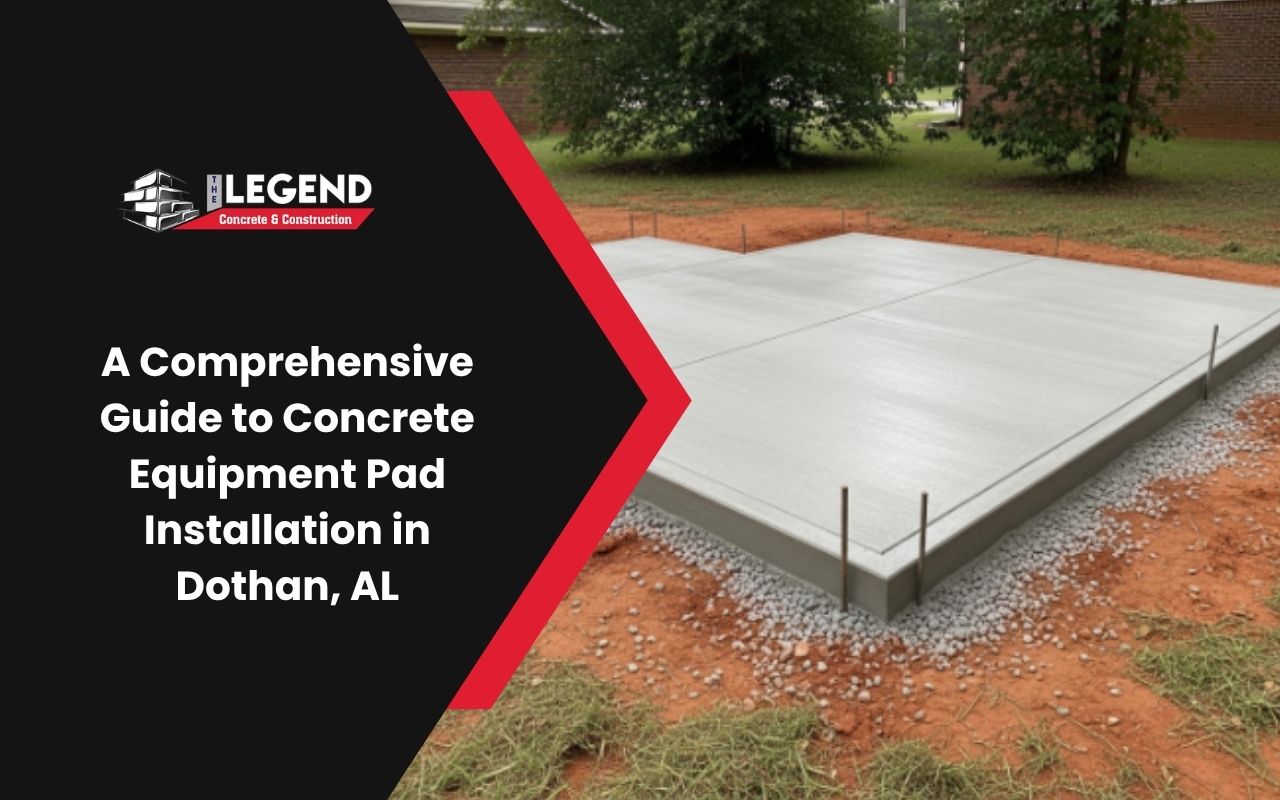
When heavy machinery, HVAC units, generators, or service equipment need a stable base, concrete equipment pad installation in Dothan, AL helps protect performance, safety, and long-term use. A well-built pad supports the load, limits movement, and helps prevent costly damage from shifting ground.
At The Legend Concrete & Construction, we understand how Dothan’s warm, humid weather, soil conditions, and service needs can affect each project. This guide explains what to plan before installation, from pad thickness by equipment type to anchoring and vibration control.
Planning a Strong Base Before Installation
Every reliable equipment pad starts with clear planning. The size, weight, and purpose of the equipment all affect the pad design. For example, a small outdoor unit does not place the same stress on concrete as a large compressor, pump, or commercial system.
Soil conditions also matter. Soft, loose, or clay-heavy soil may need extra preparation before concrete is poured. When the ground is not stable, the pad can settle, crack, or shift over time. Because of this, proper site review is an important first step.
Concrete equipment pad installation in Dothan, AL should also account for service access, drainage, and future maintenance. When equipment is placed in a smart location, repairs are easier, airflow is better, and the pad can perform well for many years.
Choosing Pad Thickness for Each Equipment Type
Pad thickness by equipment type is one of the most important choices in the project. The pad must be thick enough to support the load and handle movement during normal use. Too little thickness can lead to cracks, uneven settling, and early repairs.
- Small HVAC units often need a lighter pad when the ground is firm and well prepared.
- Medium equipment may need added thickness, better base material, or light reinforcement.
- Heavy commercial equipment often needs a thicker slab with stronger reinforcement and careful load planning.
Manufacturer details can help guide the final pad size and support needs. However, site conditions must also be reviewed. The Legend Concrete & Construction looks at the equipment, soil, access, and drainage needs before helping plan the right pad.
Where Should Your Equipment Pad Be Placed?
The best location is level, firm, and easy to reach. It should also keep water away from the pad and nearby structures. Low spots, soft ground, and areas near heavy roof runoff can create problems after rain.
Good placement can also improve equipment performance. HVAC units need open airflow, while service equipment may need clear access for technicians. If the equipment must connect to utilities, the pad should be close enough to support safe and simple routing.
As an equipment pad contractor in Dothan, AL, we also consider how the area may change over time. Tree roots, future additions, and traffic around the site can all affect how well the pad holds up.
Ground Prep, Drainage, and Reinforcement Basics
Good ground preparation helps the pad stay firm. Before concrete is placed, the area should be cleared of roots, loose soil, and debris. Then the subgrade should be compacted so the pad has even support underneath.
- Excavation sets the correct depth for base material and concrete.
- Compacted stone can improve drainage and spread weight more evenly.
- Forms help create clean edges, correct shape, and a level finish.
Drainage is just as important. Water should move away from the pad instead of sitting near the edges. In some cases, a slight slope or added drainage path can help reduce erosion, soil movement, and surface wear.
Reinforcement may include rebar, wire mesh, or fiber mix, depending on the project. These options help control cracking and support long-term pad strength, especially when equipment creates steady weight or movement.
Vibration Control and Secure Equipment Anchoring
Some machines create vibration during operation. Without the right planning, that movement can travel through the pad, nearby structures, or utility connections. Simple vibration isolation tips can make a major difference in comfort, safety, and equipment life.
Isolation pads, neoprene mounts, and spring supports may be used under equipment feet when needed. These parts should match the weight and movement of the unit. They should also be placed correctly so the load stays balanced.
Anchoring equipment to concrete pads is another key step. Anchor bolts, inserts, or approved fasteners help keep equipment in place during use. The Legend Concrete & Construction can help plan anchor placement before the pour, which often creates a cleaner and stronger result.
Working With a Local Pad Contractor
Concrete equipment pad installation in Dothan, AL works best when the contractor understands local soil, weather, and construction needs. A local team can review the site, explain the process, and help avoid common problems before they become expensive.
- Ask for a clear scope that explains site prep, concrete thickness, reinforcement, and finish.
- Review whether the quote includes cleanup, access needs, and any needed preparation.
- Choose a team that explains the work in simple terms and answers project questions clearly.
When requesting an equipment pad quote in Dothan, AL, share the equipment type, size, weight, location, and any manufacturer requirements. This helps the estimate match the real work instead of relying on rough guesses.
You can also review our construction services in Dothan, AL to see how our concrete work supports residential and commercial needs.
Frequently Asked Questions
How thick should a concrete equipment pad be?
The right thickness depends on the equipment weight, base condition, and use. Light units may need less thickness, while heavy equipment may need a thicker pad with reinforcement.
Do equipment pads need reinforcement?
Many pads benefit from reinforcement because it helps control cracking and adds support. The best option depends on the load, soil, pad size, and equipment movement.
Why is drainage important around an equipment pad?
Drainage helps move water away from the slab. This protects the soil under the pad and reduces the risk of settling, erosion, and surface damage.
Can equipment be anchored after the pad is poured?
Yes, some equipment can be anchored after curing with approved fasteners. However, planning anchor points before the pour can create a cleaner and more secure setup.
Who can I contact for help with an equipment pad?
The Legend Concrete & Construction can review your site, discuss your equipment needs, and help plan a dependable pad. You can reach us through our contact page.
Start Your Equipment Pad Project With Confidence
Concrete equipment pad installation in Dothan, AL should be planned with care from the start. The right location, base, drainage, thickness, reinforcement, and anchoring all work together to protect your equipment and your property.
For related support, explore our concrete and construction services or learn more about stable base work through our foundation footer basics. The Legend Concrete & Construction is ready to help you build a pad that fits your site and equipment needs.