
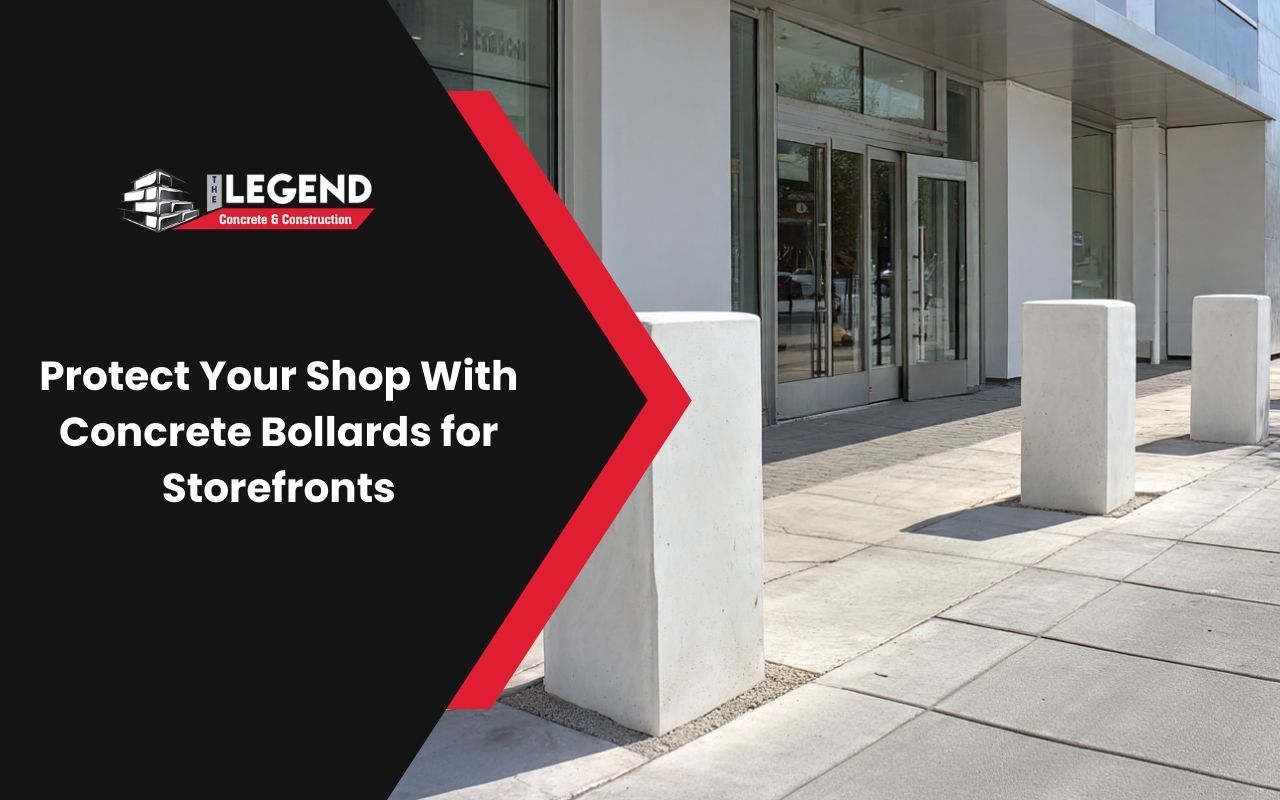
Consider the impact of a runaway car or an accidental crash outside your store. The damage can be severe. You may face broken glass, ruined products, and unsafe conditions for staff and customers.
Because storefronts can also face vandalism or theft, concrete bollards for storefronts offer a practical defense. They add safety and style, and they can fit most streets. With spacing options, footing depth choices, and finishes, you can match your brand while improving protection.
Benefits of Concrete Bollards for Storefront Protection
To start, concrete bollards for storefronts deliver strong, reliable protection. They act as a first barrier against vehicle hits, whether accidental or planned. As a result, they help stop cars from reaching windows or displays.
Also, they can reduce repair costs and downtime after an incident. In addition, they signal that safety matters. That visible layer often discourages risky driving and can even deter break-ins.
- Helps prevent vehicle damage to glass and displays
- Supports safer walkways for customers and staff
- May lower disruption after an incident
- Improves curb appeal with the right look
Types of Concrete Bollards for Different Security Needs
First, fixed bollards stay in place and provide steady protection. Meanwhile, removable bollards allow access when you need it. For example, deliveries may require short-term entry.
Also, surface-mounted options install on existing pavement. However, in-ground models use deeper settings for stronger resistance. Therefore, your choice should match access needs and site limits.
- Fixed: best when vehicle access is never needed
- Removable: helpful for service lanes and deliveries
- Surface-mounted: useful when digging is limited
- In-ground: ideal when higher impact protection is needed
Key Factors When Choosing Bollards
Before you decide, review traffic patterns near your entrance. If the street is busy, you may need wider posts and more support below ground. On quieter streets, a standard setup may work well.
Also, consider access needs and the overall look. Concrete bollards for storefronts can be designed to protect without feeling out of place. That balance often improves both safety and appearance.
- Street traffic level and turning space
- Desired access for deliveries or service vehicles
- Visibility needs near entrances and corners
- Design match with your storefront style
If you also want broader site improvements, explore concrete and construction services that support safer storefront layouts.
Spacing, Footing Depth, and Finishes That Fit Your Store
To get real protection, spacing should block vehicles while allowing easy walking. If posts are too far apart, a car may slip through. However, if they are too close, foot traffic can feel cramped. Spacing should also support accessibility.
Next, footing depth helps the bollard resist impact. Many installs use about 18 to 36 inches, depending on risk and post size. Finally, finishes help the posts match your brand. For instance, paint, wraps, or reflective bands can improve both style and visibility.
Installation Process of Concrete Bollards
First, the installer marks locations to keep spacing consistent. Next, they dig to the planned footing depth and place each post straight. Then, they pour concrete and allow curing for several days.
After curing, the area is cleaned and finished. For example, caps, paint, or reflective tape can improve visibility. Because the setup must be accurate, skilled work is key.
For local expertise, see construction services in Dothan, AL to align safety goals with site conditions.
Maintenance Tips for Long-Lasting Protection
Regular checks help you spot damage early. For example, look for cracks, chips, or fading paint. Also, wash surfaces with mild soap to remove grime that can wear down coatings.
If you use removable posts, keep moving parts clean and smooth. In addition, plan a professional check every one to two years, especially in harsh weather zones. Concrete bollards for storefronts last longer when small issues are handled fast.
- Inspect for cracks, chips, and surface wear
- Clean surfaces to protect coatings
- Touch up paint after scrapes
- Schedule periodic pro inspections
Case Examples: What Successful Installs Look Like
In one busy retail area, a small shop faced repeated near-misses at the entry. After fixed posts were set with deeper support, the owner reported fewer concerns and avoided window repairs. As a result, the store stayed open without major interruptions.
In another case, a café chose removable posts for off-hour deliveries. Because they used decorative finishes and planned spacing, they improved walk flow and kept the look on-brand. Concrete bollards for storefronts can protect while still feeling welcoming.
Frequently Asked Questions
How many bollards does a storefront usually need?
It depends on your entry width and risk level. However, most setups cover the full glass line and key corners.
Can bollards still look good in front of a boutique or café?
Yes. With the right finishes, they can blend in. Also, they can improve night visibility with subtle details.
How long does installation usually take?
Marking and setting can be quick, but curing takes several days. Therefore, planning helps reduce disruption.
Do I need permits to install bollards?
Often, yes, especially near public sidewalks. So, check local rules and work with a licensed contractor.
How do I know if I need deeper footing support?
If traffic is heavy or speeds are higher, deeper footing depth is often safer. A site review can confirm the best approach.
Enhancing Security and Style With Concrete Bollards
When you want stronger protection, concrete bollards for storefronts provide a smart option. With thoughtful spacing, solid footing depth, and clean finishes, you can protect people and property without harming curb appeal.
To take the next step, contact The Legend Concrete & Construction through the project contact page to discuss a layout that fits your storefront and traffic conditions.