
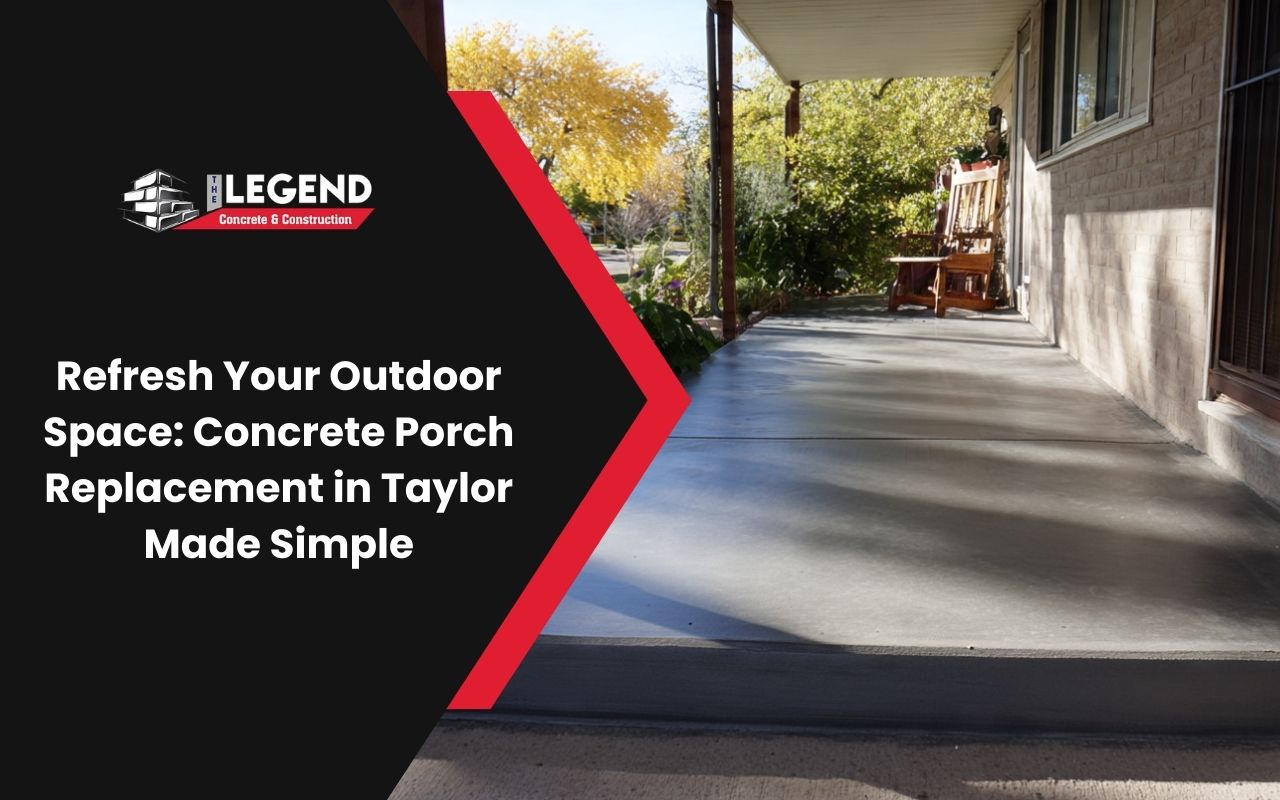
Bringing life back to your outdoor space can feel hard, especially with a worn porch. Many Taylor homeowners deal with cracks and uneven steps that hurt curb appeal and safety.
However, Concrete porch replacement in Taylor can be straightforward with the right plan. This guide covers frost line AL depth, a rebar grid for strength, and smart water shedding to avoid puddles. :contentReference[oaicite:0]{index=0}
Check the Current Porch Before You Start
First, walk across the surface and look closely for changes. Then, note cracks wider than a hairline and any soft spots underfoot. Also, focus on corners and edges where moisture gathers.
- Look for wide cracks and spreading breaks.
- Check corners and edges for moisture damage.
- Notice soft areas that feel weak.
Next, test the slope and level, because poor drainage speeds damage. Place a level in several areas to spot tilts. If you see large dips or sunken spots, a full rebuild is often the safer choice. :contentReference[oaicite:1]{index=1}
Know the Frost Depth for a Stable Base
To protect your new porch, check local frost line AL guidance before digging. When soil freezes, it can push upward and shift concrete. Therefore, digging below the frost depth helps prevent movement and cracks.
- Use local guidance for footing depth.
- Dig below the frost depth to reduce shifting.
- Follow local codes for long-term stability.
In central Alabama, the frost depth is often about 8 to 12 inches, although rules can vary. For that reason, confirm the exact depth with local codes or a soil pro. This step takes time, yet it helps avoid costly fixes later. :contentReference[oaicite:2]{index=2}
Pick Materials That Hold Up Outdoors
Choosing the right mix matters, because outdoor slabs face heat, rain, and cold snaps. Aim for a quality mix suited for exterior use, so it resists cracking and daily wear.
- Select an exterior-rated concrete mix.
- Add reinforcement to improve strength.
- Use cold-weather protection additives when needed.
Also, adding a rebar grid improves strength and helps control cracks. If tiny cracks appear, they often stay tight and less visible. As a result, your porch can stay solid and good-looking for years. :contentReference[oaicite:3]{index=3}
Prepare the Area for a Clean Install
Before demo, clear furniture, planters, and debris. Then, mark the outline with stakes and string, so you know where the new slab will sit. This simple step keeps the job organized.
Next, dig to the needed depth and compact the base well. After that, add a gravel layer for drainage and support. With a firm base in place, the new pour is less likely to settle over time. :contentReference[oaicite:4]{index=4}
Remove the Old Slab Safely
Breaking old concrete is easier with the right tools. Use a jackhammer or saw based on thickness and comfort level. Meanwhile, wear eye protection, gloves, and sturdy boots to stay safe.
If the porch connects to your home, start at the joint and work outward. Then, lift pieces into a dumpster or wheelbarrow. Also, check for buried wires or pipes before removing chunks. :contentReference[oaicite:5]{index=5}
Set the Rebar for Lasting Strength
For a strong slab, set your rebar grid with care. Lay bars in a pattern and space them about 12 to 18 inches apart. Then, raise the grid on small supports, so it sits near the middle of the slab.
- Space bars about 12 to 18 inches.
- Lift the grid on supports for better placement.
- Tie intersections so the grid stays steady.
After that, tie crossings with wire, so the steel does not shift during the pour. Local codes may suggest #3 or #4 bar for porch slabs. When installed well, the grid helps cracks stay small. :contentReference[oaicite:6]{index=6}
Pour, Level, and Finish the New Surface
Mix concrete per the bag directions, aiming for a smooth, workable blend. Then, pour from the far corner and move back toward your exit. This approach helps you avoid stepping into fresh concrete.
Next, level with a long board and smooth with a float. Afterward, use an edging tool to round edges and reduce chipping. With careful finishing, Concrete porch replacement in Taylor can look clean and professional. :contentReference[oaicite:7]{index=7}
Use Simple Water Runoff Tricks
Good drainage protects your work, so plan for water shedding from the start. Slope the porch slightly away from the home, because even a small tilt helps water move off the slab.
- Slope slightly away from the house.
- Use a shallow drain where water collects.
- Extend downspouts to move runoff away.
Also, consider a shallow drain at the edge where water pools. Pair that with downspout extensions, so runoff flows to a safer spot. With better water shedding, you reduce moisture damage near the home. :contentReference[oaicite:8]{index=8}
Add Details That Fit Your Home
After curing, you can customize the look with stain or paint. However, choose an outdoor, slip-resistant finish for safety in wet weather. Small touches can make the space feel more welcoming.
For example, add a simple railing, planters, or warm lighting. If you also want safer entry points, read concrete steps safety tips to support a more secure approach. :contentReference[oaicite:9]{index=9}
When to Call a Pro in Dothan and Nearby Areas
Sometimes, a porch project needs more support, especially with deep settling or structural concerns. In that case, working with a local crew can save time and reduce rework.
If you want help beyond porches, explore construction services in Dothan AL for related options. Then, if you are ready to plan your next step, reach The Legend Concrete & Construction to talk through timing and scope. :contentReference[oaicite:10]{index=10}
Frequently Asked Questions
How do I know if I need a full porch replacement?
If you see deep cracks, spreading breaks, or major sinking, replacement is often better than patching. Also, poor drainage can speed damage.
Why does frost depth matter in Alabama?
Even mild winters can freeze soil at times. Therefore, checking frost line AL guidance helps you dig deep enough to reduce shifting.
What does a rebar grid do in a porch slab?
A rebar grid adds strength and helps control cracking. As a result, small cracks are less likely to widen over time.
How can I improve water shedding on a new porch?
Give the slab a gentle slope away from the house. Also, use drains and downspout extensions to guide runoff safely.
How long before I can use the new porch?
Light foot traffic is often possible after a short cure period, yet full strength takes longer. Follow your installer’s guidance for safe timing.
Enjoy a Stronger, Safer Outdoor Space
Once the work is done, Concrete porch replacement in Taylor can bring back comfort and confidence. You get a smoother surface that supports daily use and handles changing weather.
By checking the base, reinforcing well, and planning drainage, you protect your investment. When you want expert input, contact The Legend Concrete & Construction and keep your outdoor space ready for every season. :contentReference[oaicite:11]{index=11}