
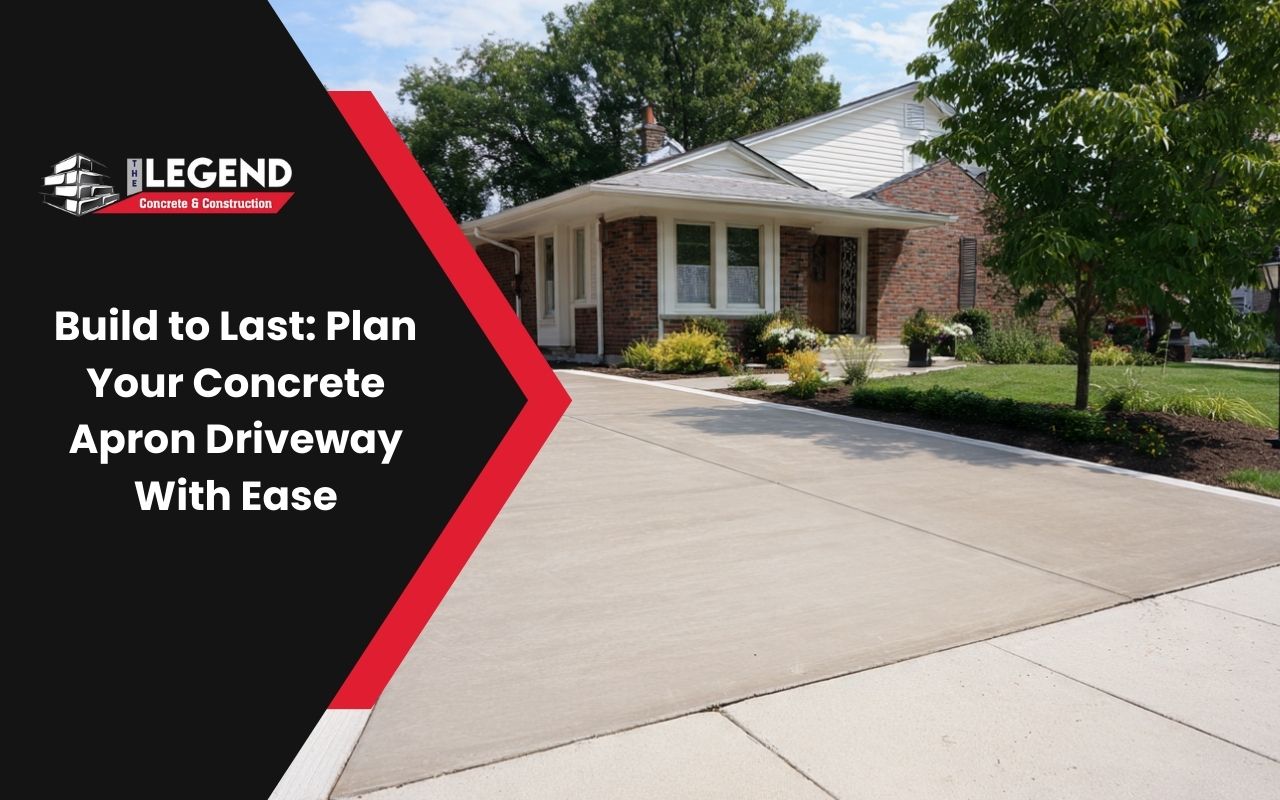
First, a Concrete Apron Driveway can handle daily use while still looking clean and neat. Also, it is more than an entry, because it shows care and smart planning.
Moreover, it can create a smoother Street transition at the curb. Therefore, with simple steps, you can build lasting strength and style.
Selecting the Ideal Location for Your Concrete Apron Driveway
First, pick a spot that supports safe access and a tidy look. Also, check HOA guidelines early, so you avoid rework later.
Next, review the yard grade and curb approach, because a gentle slope helps water move away.
- First, confirm setbacks and curb rules with your neighborhood office.
- Next, mark utilities before digging, because hidden lines can delay work.
- Also, plan for edge support by setting forms against firm soil or stone.
Design Choices That Support Strength and Style
First, balance looks with performance, because both matter every day. Also, choose a thickness that fits your traffic, especially if heavy vehicles use it.
Thickness, joints, and finish
Next, many aprons use a 4–6 inch slab, while heavier loads may need more depth. Therefore, add cut lines at steady spacing, so small cracks form where you expect.
Also, a broom finish can improve grip. Meanwhile, clean edges can reduce chipping over time.
Choosing Materials That Hold Up Over Time
First, choose a mix rated for strong use, because weak concrete breaks sooner. Also, ask for a mix that handles freezing and thawing if your area gets cold.
- Next, use steel bars or a steel grid to help the slab move as one.
- Also, set forms tight and steady, because loose forms can bow.
- Finally, use a curing spray or cover, so the surface dries slowly and evenly.
Preparing the Site for Construction
First, clear roots and soft soil, because they can cause settling. Next, compact the ground in layers, so the base stays firm.
Also, add crushed stone in thin lifts and compact again. Therefore, the Concrete Apron Driveway is less likely to dip or shift later.
Why Drainage Matters in Your Layout
First, guide water away with a mild slope, because puddles can weaken the surface. Also, keep runoff moving toward safe drains or planted areas.
Moreover, in wet zones, a channel drain near the curb can help. Therefore, the slab stays drier and needs fewer repairs.
Installation Steps Made Simple
First, set stakes and lines, so the layout stays straight. Next, dig to the right depth for base and concrete. Therefore, your Concrete Apron Driveway starts with the right support.
- Also, place reinforcement in the middle zone of the slab for better hold.
- Next, pour in steady sections, so you avoid weak seam lines.
- Finally, level the surface and cut control lines, then cure it well.
Also, if your existing drive needs a full upgrade, explore driveway replacement services in Enterprise, AL for a clear next step.
Finishing Touches That Boost Curb Appeal
First, add simple details, because small choices change the final look. Also, consider a border, exposed stone, or a light pattern for contrast.
Moreover, you can use mixed-in color or surface stain for a warmer tone. Therefore, the apron can match your home without looking flashy.
Maintenance Tips to Extend a Concrete Apron Driveway
First, sweep and rinse often, because grit can wear the surface. Also, avoid harsh ice melts, since they can damage the top layer.
- Next, seal small gaps early, so water stays out.
- Also, reseal every few years, because it helps block stains and moisture.
- Finally, trim nearby plants, so roots do not push the slab edges.
Also, for crack control, review preventing driveway cracks before small lines spread.
Moreover, use this driveway maintenance checklist to stay consistent through the year.
Sustainable Options for a Greener Build
First, consider mixes that let water pass through, because they can reduce runoff. Also, recycled stone can lower waste while still supporting a strong base.
Moreover, local materials can cut hauling impacts. Therefore, you can build responsibly without giving up durability.
Frequently Asked Questions
How thick should the apron be for normal home use?
Usually, 4–6 inches works well. However, heavier vehicles may need a thicker slab for better support.
Do I really need reinforcement?
Often, yes, because it helps control cracking. Also, it can keep sections moving together under stress.
How do I reduce cracking over time?
First, compact the base well and cure slowly. Also, use control lines, so cracks form in planned spots.
When can I drive on new concrete?
Generally, wait several days for light use. However, longer curing is better before heavy loads.
Who can I contact for help with planning and installation?
Also, you can contact our concrete team to discuss layout, drainage, and finish options.
Enjoying Your Durable and Stylish Concrete Apron Driveway
First, good planning makes the build feel simple and steady. Also, smart base work, drainage, and curing can protect your investment.
Therefore, with routine care, your Concrete Apron Driveway can stay strong, safe, and attractive for many years.