
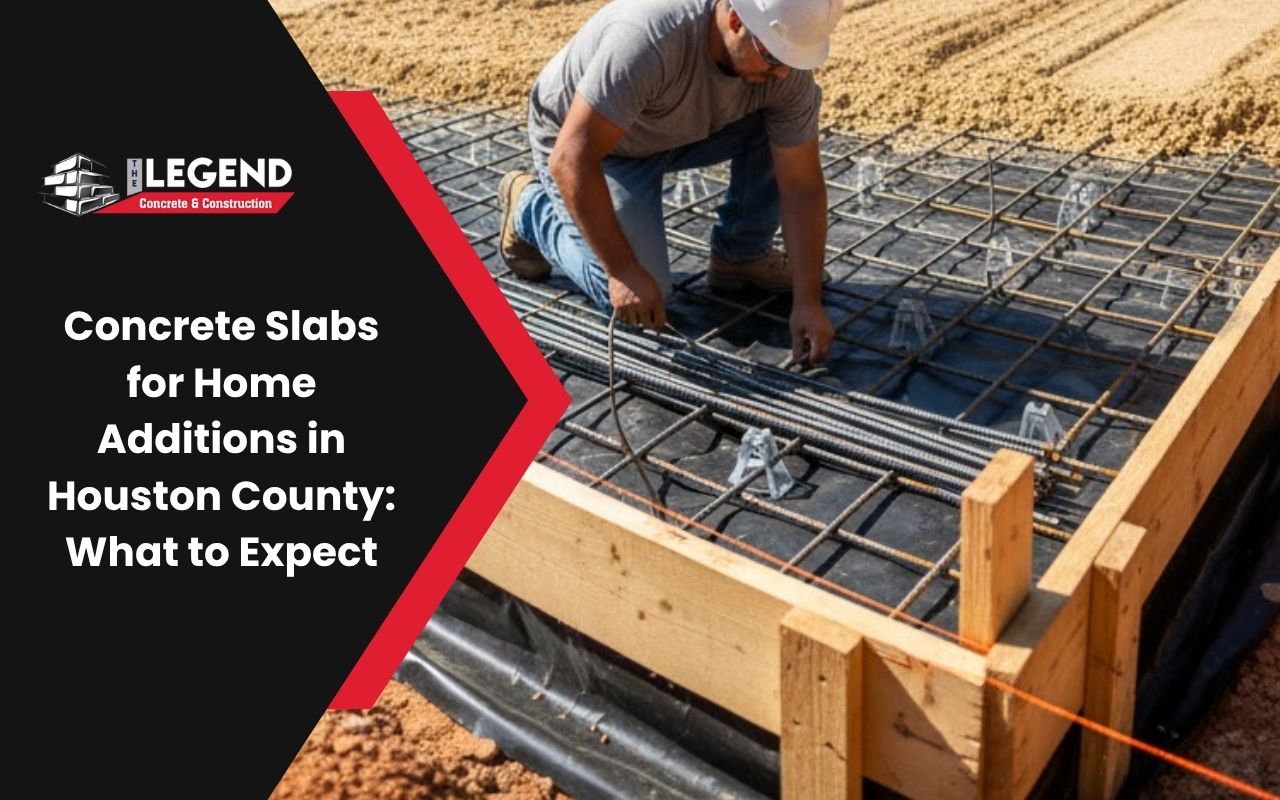
Adding space is exciting. The foundation determines success. Choosing a home addition concrete slab Houston County delivers comfort, durability, and value. This guide explains thickness, moisture control, reinforcement, and anchor bolts. You will learn how soils, humidity, and codes affect decisions. With clear steps, your project runs smoothly and avoids costly fixes. Plan early and specify details. Your addition can perform for decades with the right slab strategy.
Why a Solid Foundation Matters
A slab distributes loads and minimizes movement. A home addition concrete slab Houston County reduces cracks, sticky doors, and uneven floors. It also blocks pests and helps manage indoor humidity. A well-prepared base supports finishes and improves long-term comfort. Buyers notice quiet floors and tight walls. Good slabs add resale value. Investing in the base protects every finish you see later. Build confidence from the ground up.
Slab Thickness: Making the Right Call
Thickness drives strength and comfort. Most additions use four to six inches. Confirm local code and loads. Discuss soil testing, compaction, and under-slab insulation with your contractor. Coordinate with finish flooring and any radiant heat plans. Small changes here prevent big problems later. Decide early and document it in drawings and bids.
- 4″ for living areas and light loads.
- 6″ for heavy appliances, storage, or traffic.
- Thicken edges at doors and point loads.
- Increase depth on weak or disturbed soils.
Final thickness affects heating behavior and sound. It also influences fastener options and thresholds. Specify clearly for any home addition concrete slab Houston County.
Reinforcement, Joints, and Finishes
Rebar or welded wire reinforces the slab. Fibers reduce plastic shrinkage cracking. Control joints manage where cracks occur. Place joints at proper spacing and depths. Finishes should match use. Choose a flat, smooth finish for flooring. Add curing to gain strength and reduce curling. These details keep floors quiet and stable.
- Use #3–#4 rebar at edges and openings.
- Place joints at 24–36 times slab thickness.
- Cure with sheets or compounds for seven days.
Moisture Control: Moisture Barrier vs. Vapor Retarder
Moisture management protects air quality and finishes. It is essential for any home addition concrete slab Houston County, where humidity swings. Two layers work together to control liquid water and vapor. Use compatible materials and tapes. Seal penetrations. Keep sheets flat and wrinkle free. Good prep prevents trapped moisture and odor.
Moisture barrier
Install a durable moisture barrier over the compacted base. Overlap seams and tape edges to block ground dampness. Extend to footings and up curbs. Smooth wrinkles before placing reinforcement. This step protects adhesives, wood, and carpet.
Vapor retarder
A rated vapor retarder limits vapor transmission. Choose a Class I or II product per local standards. Seal overlaps and service penetrations carefully. The vapor retarder guards flooring systems during seasonal humidity shifts.
- Grade the site to drain water away.
- Lay sheets flat with tight seams.
- Tape penetrations and curb transitions.
Anchor Bolts and Structural Tie-Downs
Anchor bolts connect walls to the slab. Correct spacing and embedment prevent uplift and racking during storms. Mark locations before the pour. Protect threads during finishing. After curing, set sill plates, washers, and nuts. Verify edge distances and hold-down locations. Proper tie-downs keep frames stable and safe.
- Follow code spacing along the sill plate.
- Place extra bolts near corners and openings.
- Confirm embed depth and corrosion protection.
Include anchor bolts in your drawings for any home addition concrete slab Houston County. This detail improves inspections and schedule flow.
Houston County Conditions: Soil, Weather, and Pests
Clay soils expand when wet and shrink when dry. Over-excavate and backfill with compacted stone for stability. Seasonal rain affects schedules and subbase moisture. Plan for dry windows when possible. Termite barriers and careful sealing reduce risks. Good grading keeps water away from the slab perimeter.
- Use crushed stone for drainage and uniform support.
- Compact in lifts to target density.
- Add perimeter termite protection and seal gaps.
Working With Professional Concrete Contractors
Hire specialists who know local codes and soils. Review licenses, insurance, and recent work. Ask for itemized bids and timelines. Clear communication avoids surprises. For a complete overview of offerings, visit Concrete Services. Request references and view a current jobsite when possible.
Ready to plan details? Contact Legend Concrete Construction to coordinate design, testing, and scheduling for your home addition concrete slab Houston County.
Budgeting and Permits
Request itemized quotes for excavation, base, concrete volume, reinforcement, moisture barrier, vapor retarder, and anchor bolts. Include permits, inspections, and equipment. Hold a 10–15% contingency. Align payments with milestones. Submit drawings that show thickness, joints, vapor retarder, and bolt locations. Inspections keep the project on track and compliant.
- Compare material versus labor costs in bids.
- Confirm lead times for concrete and crews.
- Schedule inspections before, during, and after the pour.
Document specs to ensure a consistent home addition concrete slab Houston County across bids. Clarity reduces change orders and delays.
Frequently Asked Questions
How thick should my slab be for a living room addition?
Four inches typically works for light loads. Choose six inches for heavy equipment or weak soils. Confirm with code and soil data.
Do I need both a moisture barrier and a vapor retarder?
Yes. The moisture barrier blocks liquid water. The vapor retarder limits vapor that damages adhesives and finish floors over time.
What spacing is typical for anchor bolts?
Many codes require regular spacing along the sill and added bolts at corners and openings. Verify local requirements and edge distances.
How do local soils affect my slab design?
Clay movement can crack slabs. Use a stable subbase, proper compaction, drainage, reinforcement, and joints to control movement.
When should I involve a contractor?
Engage a pro early for soil assessment, design input, permitting, and pricing. Early input reduces risk and smooths scheduling.
Build on Confidence
Define thickness, reinforcement, moisture barrier, vapor retarder, and anchor bolts in your specs. With expert planning, your home addition concrete slab Houston County will perform for years. Document details, schedule wisely, and partner with experienced pros. Strong foundations protect investments and families. Build the space you want without worries.